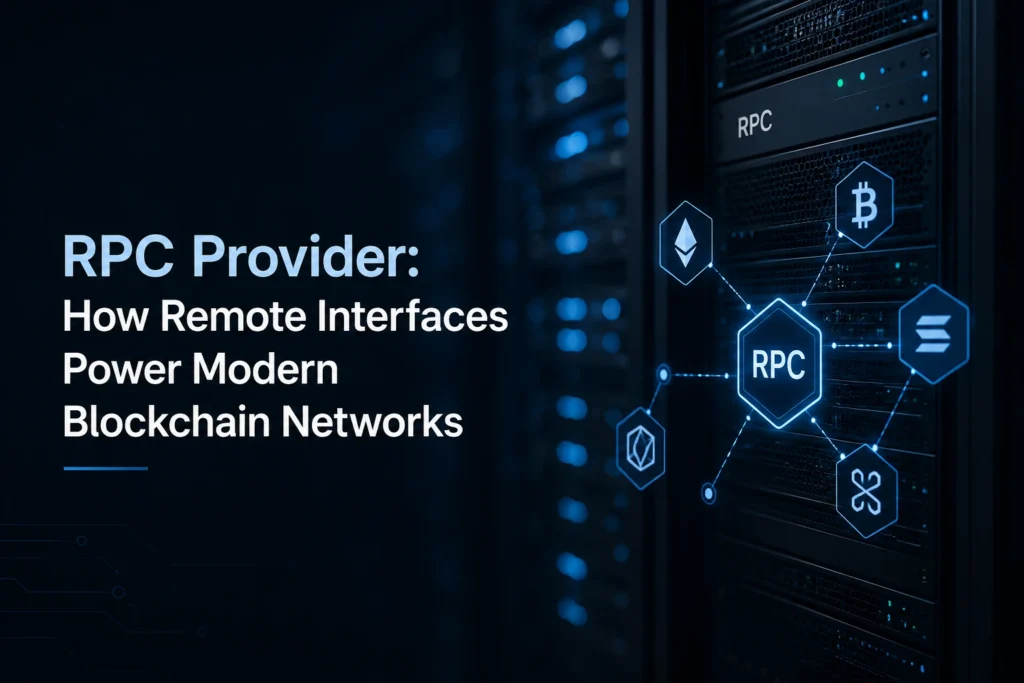

RPC Provider: How Remote Interfaces Power Modern Blockchain Networks
Distributed applications require constant data exchange with underlying ledgers. Without standardized communication layers, every wallet and trading bot would need custom integration for each network. This complexity created demand for specialized middleware that translates user requests into blockchain-native operations.
An RPC provider operates as this middleware, exposing endpoints that accept standard HTTP calls and return validated ledger data. By abstracting network protocols, these services allow developers to focus on product logic rather than low-level synchronization. The result is faster deployment cycles and more reliable user experiences.
A Practical Look at Remote Procedure Call in Distributed Systems
This mechanism lets one program execute code on another machine without handling network details. The client sends a structured request; the server processes it and returns a result. In Web3, a wallet asks for the account balance, and a remote server queries the ledger on its behalf.
Understanding how a node blockchain operates helps clarify the distinction: while an interface relays questions, the underlying machine stores answers. Both components work together, yet serve entirely different purposes within the ecosystem.
How Taurus RPC Fits Into Enterprise Infrastructure
Enterprise deployments prioritize security and compliance over raw throughput. Some providers cater to institutions by offering dedicated hardware isolation and audit trails. These solutions provide gated access with identity verification and granular permission controls.
Institutions also examine blockchain node architecture within distributed ecosystems before selecting partners. They need to know whether infrastructure runs on owned hardware or shared clouds. This due diligence ensures data sovereignty and compliance with internal security policies.
The Role of JSON RPC in Modern Web3 Stacks
Most Ethereum-compatible networks adopted a lightweight data format for request serialization. This specification defines how methods and parameters travel between client and server. Wallets send calls encoded in this format, receiving data that libraries convert into readable numbers.
Standardization ensures that a single codebase interacts with multiple networks without modification. Developers often review leading blockchain RPC node providers before committing to a vendor, comparing SLAs and support channels.
Clarifying RPC Meaning for Non-Technical Readers
For those outside software engineering, the acronym describes a simple concept: asking a distant computer to perform a task and report back. Imagine ordering food delivery through an app. The platform relays your request and returns the outcome.
Similarly, applications relay blockchain queries to specialized servers, avoiding the need to run full infrastructure locally. Home enthusiasts sometimes run minimal setups to learn the technology, though production workloads demand more robust setups.
Why Solana RPC Demands Specialized Architecture
High-throughput networks process thousands of transactions per second, generating immense data volumes. Standard hardware struggles to index and serve this information in real time. Endpoints for this network require optimized storage layers and parallel execution environments.
Providers serving this ecosystem invest heavily in custom caching strategies to keep response latency under acceptable thresholds. As decentralized finance expands, so does the need for independent verification. Blockchain nodes serve wallets, explorers, and compliance tools.
Identifying Most Reliable RPC Nodes for Crypto Operations
Uptime guarantees a separate professional infrastructure from hobbyist setups. Mission-critical applications demand redundant connections and automatic failover. Professional infrastructure maintains multiple client implementations to survive software bugs in any single codebase.
They also publish real-time latency metrics, allowing developers to monitor service health programmatically. Enterprise applications often require hundreds of simultaneous connections. Crypto nodes in production environments need load balancers and automated scaling.
Benchmarking High-Performance RPC Node Providers
Speed matters for trading bots, gaming engines, and real-time analytics. Response time depends on hardware specifications, network proximity, and query optimization. Specialized infrastructure deploys bare-metal servers with NVMe storage and dedicated bandwidth.
They also implement connection pooling and compression to minimize payload size across the wire. Self-management demands technical expertise and capital expenditure. Blockchain node hosting offers managed environments where specialists handle maintenance.
How RPC Protocol Standards Ensure Interoperability
Without agreed-upon rules, every client would speak a different language. These specifications define request formats, error codes, and authentication schemes. Ethereum uses a JSON-based standard, while Bitcoin relies on a binary protocol.
Adherence to these standards lets wallets, explorers, and indexers communicate with any compliant endpoint regardless of backend implementation. The final piece concerns individual participation. Nodes in blockchain networks verify transactions before including them in blocks, rejecting double-spend attempts and enforcing protocol rules.
FAQ
What is RPC?
This mechanism lets one program execute code on another machine without handling network details. The client sends a structured request; the server processes it and returns a result. In Web3, a wallet asks for the account balance, and a remote server queries the ledger on its behalf.
What is a node blockchain?
A node blockchain structure refers to the underlying machine that stores answers to queries relayed by interfaces. While an interface relays questions, the node stores the actual transaction history and validates incoming transfers.
What is a node in blockchain?
It is any device running compatible software that connects to the peer-to-peer mesh, validates transactions, and maintains a copy of the shared ledger. Even a laptop on home internet can serve this function, though reliability varies.
What is a node in cryptocurrency?
It is any device running compatible software that connects to the peer-to-peer mesh. These machines validate incoming transfers, execute smart contracts, and propagate confirmed blocks. Without participants, the network would halt.
📍Think better, scroll better. Follow New Topy for more of this.