
Understanding SEO in 2026: What’s Changed and Why It Matters
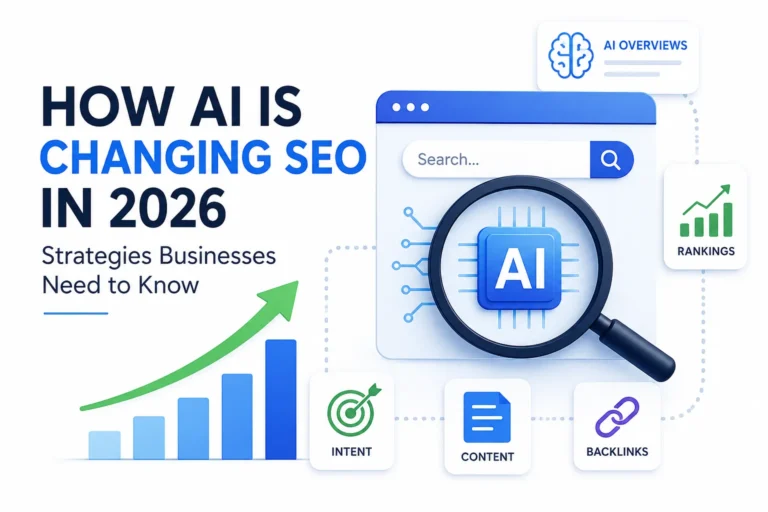
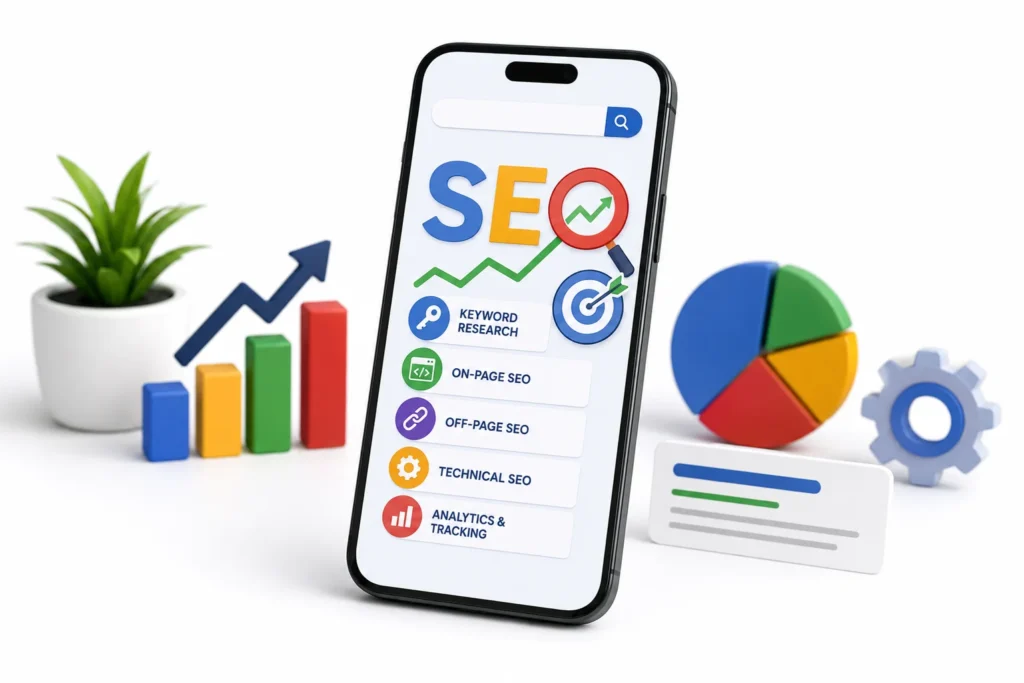
Search engine optimization in 2026 is no longer about inserting keywords into every paragraph or building hundreds of backlinks overnight. Google now evaluates websites using advanced AI systems that understand meaning, user behavior, expertise, and content quality. Search results increasingly include AI Overviews, rich snippets, videos, and interactive answers, making visibility more competitive than ever. Businesses and creators must focus on delivering accurate, trustworthy, and genuinely helpful information that satisfies user intent. Understanding how modern SEO works is the foundation for building sustainable organic traffic and maintaining long-term search visibility.
What Is SEO in 2026?
SEO in 2026 is the process of improving a website so search engines and AI-powered search systems can understand, trust, and recommend its content. It combines technical optimization, user experience, topical authority, content quality, and brand credibility. Modern SEO aims to help users find the best answers instead of simply ranking webpages for individual keywords.
How Search Has Evolved Beyond Traditional Rankings
Search has shifted from displaying ten blue links to delivering personalized answers through AI Overviews, featured snippets, videos, images, and knowledge panels. Google’s ranking systems analyze context, user behavior, and content relevance instead of relying only on exact-match keywords. Websites that answer complete user journeys now outperform pages optimized for isolated search terms.
The Role of AI in Modern Search Engines
Artificial intelligence powers Google’s ability to understand natural language, search intent, entities, and relationships between topics. AI helps identify trustworthy information while filtering low-quality content. Rather than replacing SEO, AI rewards websites that publish original insights, practical expertise, and content demonstrating real-world experience supported by reliable information.
How Google Search Works in 2026
Google still follows three primary stages crawling, indexing, and ranking but artificial intelligence now improves every step of the process. Modern ranking systems evaluate page quality, relevance, authority, usability, and user satisfaction together instead of relying on isolated ranking signals. Google’s AI can understand relationships between topics, recognize helpful content, and predict whether a webpage truly answers a user’s question. Websites with fast loading speeds, structured data, strong internal linking, and valuable information are more likely to earn visibility in both traditional search results and AI-generated search experiences.
Google’s Crawling, Indexing, and Ranking Process
Googlebot discovers webpages by following links, XML sitemaps, and updated content. After crawling, Google indexes pages it considers valuable before ranking them according to hundreds of quality signals. Proper technical SEO, clean site architecture, and indexable content help search engines process websites more efficiently.
AI-Powered Search and Google’s Latest Algorithms
Google’s ranking systems increasingly use machine learning to evaluate content quality, relevance, originality, and user satisfaction. AI-powered systems identify pages that solve problems instead of rewarding keyword repetition. Helpful Content principles, spam detection, and continuous algorithm improvements encourage websites to prioritize authentic expertise and useful information.
Search Intent and Contextual Understanding
Google analyzes why users perform searches rather than simply matching keywords. Informational, commercial, navigational, and transactional intent all require different types of content. Understanding search intent allows businesses to create pages that satisfy user expectations, increasing engagement, rankings, and conversion opportunities.
User Experience Signals That Influence Rankings
User experience significantly affects SEO performance. Fast loading pages, mobile-friendly layouts, secure HTTPS connections, easy navigation, and accessible design improve visitor satisfaction. While Google evaluates multiple signals collectively, websites that deliver smooth browsing experiences often generate stronger engagement, lower bounce rates, and better long-term search visibility.
You might also like: How to Get More Customers for Your Local Business
Keyword Research Strategies That Drive Organic Traffic
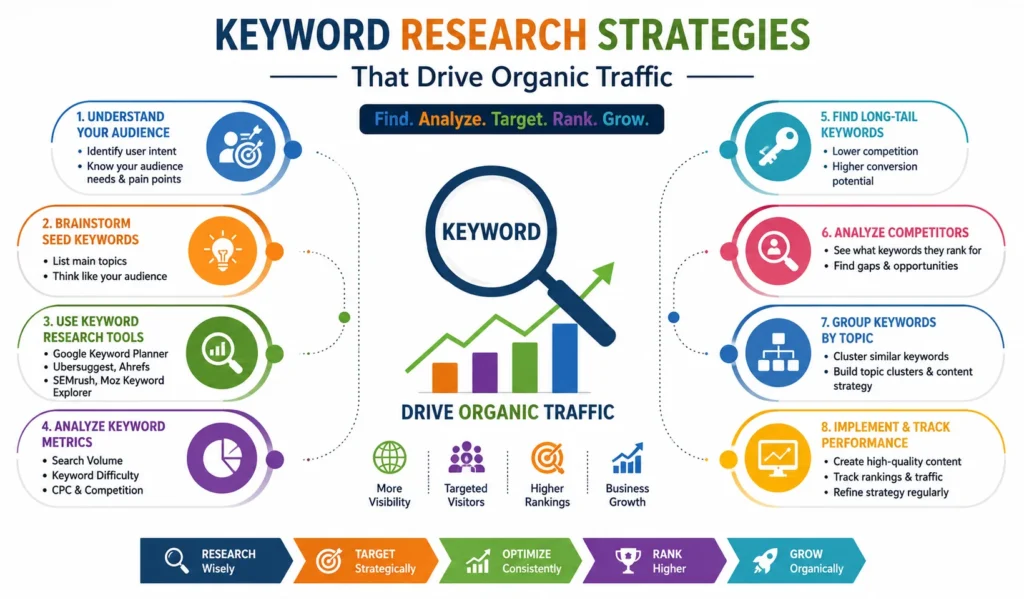
Successful keyword research in 2026 focuses on understanding audience needs rather than collecting thousands of search terms. Google’s AI recognizes topical relevance, making comprehensive content more valuable than isolated keyword targeting. Modern SEO strategies prioritize high-intent queries, semantic relationships, and long-tail opportunities that align with user goals. Building topic clusters around central themes strengthens authority and improves internal linking. Combining keyword research with search intent analysis helps businesses attract qualified visitors who are more likely to engage, convert, and return to the website.
Finding High-Intent Keywords
High-intent keywords indicate users are ready to take meaningful action, such as purchasing, comparing, or requesting services. These search terms usually produce better conversions than broad informational queries. Understanding audience goals helps identify keywords that generate both qualified traffic and measurable business results.
Building Topical Clusters Instead of Targeting Single Keywords
Google increasingly rewards websites that demonstrate comprehensive expertise across related topics. Topic clusters organize supporting articles around a central pillar page, strengthening semantic relevance and internal linking. This approach improves crawlability, builds topical authority, and helps search engines better understand overall website expertise.
Identifying Low-Competition Opportunities
Long-tail keywords, emerging trends, and niche questions often present valuable ranking opportunities with less competition. Analyzing competitor gaps, search suggestions, People Also Ask results, and community discussions helps uncover topics larger websites may overlook while attracting highly targeted organic visitors.
Using Search Intent to Select the Right Keywords
Every keyword reflects a specific user objective. Matching content to informational, commercial, transactional, or navigational intent increases relevance and user satisfaction. When webpages answer exactly what searchers expect, they often achieve higher engagement, stronger rankings, and improved conversion performance over time.
Creating High-Quality Content That Google Rewards
Google consistently emphasizes helpful, reliable, and people-first content across its ranking systems. High-quality articles answer real questions, provide practical insights, and demonstrate genuine expertise instead of repeating information already available elsewhere. Strong content includes logical structure, credible sources, original examples, and clear explanations that improve reader understanding. Optimizing for AI Overviews, featured snippets, and semantic search also increases visibility across modern search experiences.
Writing People-First, Helpful Content
People-first content prioritizes solving user problems before targeting search engines. Every article should answer important questions, provide actionable guidance, and eliminate unnecessary filler. Writing naturally while addressing reader needs creates stronger engagement, higher trust, and improved search performance over time.
Demonstrating Experience, Expertise, Authority, and Trust (E-E-A-T)
Google values content that demonstrates real experience, subject expertise, credibility, and trustworthiness. Including original insights, practical examples, accurate facts, and reliable references strengthens authority. Businesses should also maintain transparent author information, secure websites, and consistent brand reputation to improve overall trust signals.
Structuring Content for Better Readability
Clear headings, concise paragraphs, descriptive subheadings, bullet points, and logical organization improve readability for both users and search engines. Well-structured content encourages longer engagement while helping Google understand page hierarchy, important topics, and semantic relationships more effectively.
Optimizing Content for AI Overviews and Featured Snippets
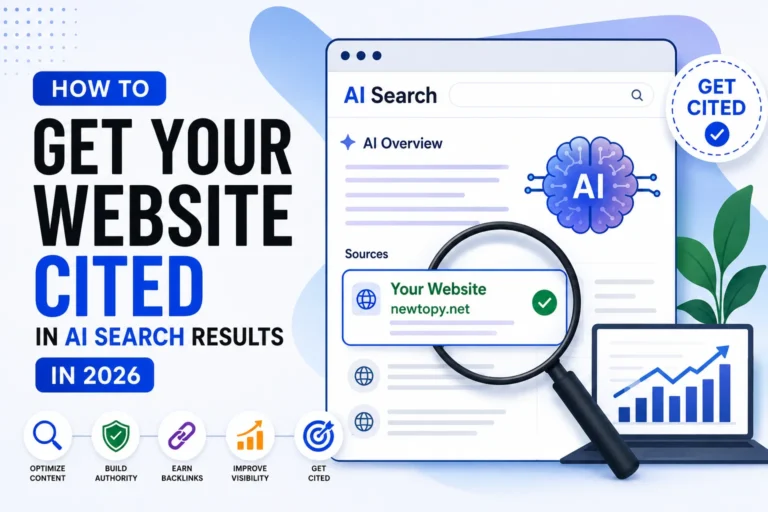
AI Overviews and featured snippets favor concise, authoritative answers supported by comprehensive context. Using question-based headings, clear definitions, structured formatting, and factual information increases eligibility for enhanced search visibility. Pages that answer follow-up questions also improve their chances of appearing in AI-powered search results.
On-Page SEO Best Practices for Higher Rankings
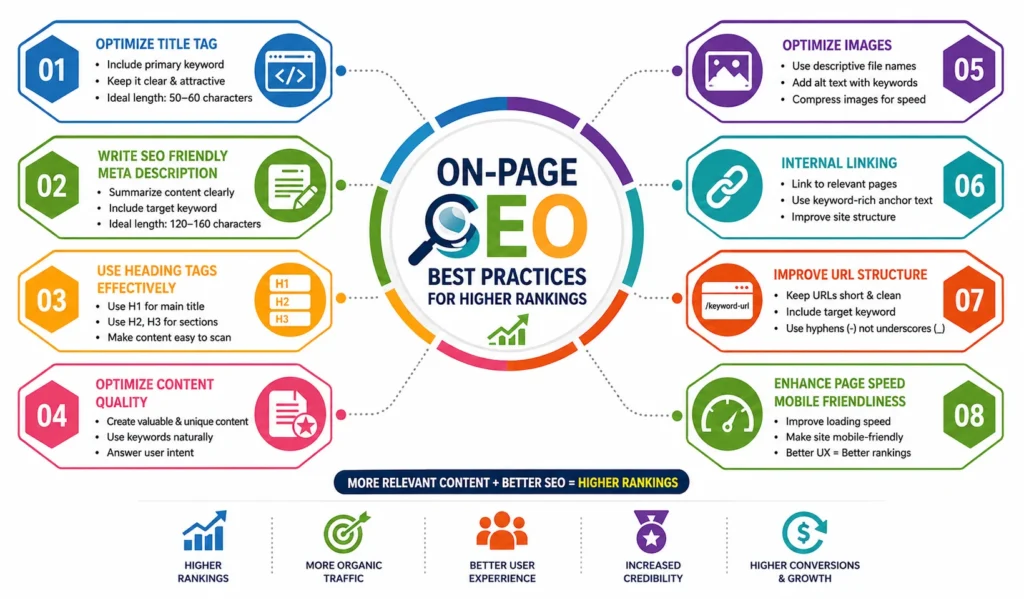
On-page SEO is where strong rankings begin because it helps Google understand your content while making it easier for users to find the information they need. In 2026, Google’s AI-powered ranking systems evaluate page quality, search intent, topical relevance, and user experience together rather than relying on keyword placement alone. Every page should include optimized titles, descriptive URLs, logical heading structures, semantic keywords, internal links, and accessible images. When these elements work together, they improve crawlability, increase click-through rates, strengthen engagement, and create a better overall experience that supports long-term organic growth.
Optimizing Titles, Meta Descriptions, and URLs
Your title tag is often the first thing users notice in search results, so make it clear, compelling, and naturally include your primary keyword near the beginning. Write meta descriptions that accurately summarize the page and encourage clicks. Keep URLs short, readable, descriptive, and free from unnecessary numbers or parameters to improve usability and indexing.
Using Header Tags and Semantic Keywords Effectively
A well-organized heading structure helps readers scan content while making it easier for search engines to understand page hierarchy. Use one H1 followed by logical H2 and H3 headings. Instead of repeating exact keywords, include related entities, synonyms, and naturally connected phrases that strengthen semantic relevance and topical authority.
Internal Linking Strategies That Build Authority
Internal links guide visitors toward valuable related content while helping Google discover and understand your website structure. Use descriptive anchor text instead of generic phrases, connect closely related pages, and support important pillar content. Strategic internal linking distributes page authority, improves crawl efficiency, and encourages visitors to spend more time exploring your website.
Image Optimization and Accessibility Best Practices
Optimized images improve page speed, accessibility, and overall user experience. Compress images without reducing quality, use modern formats like WebP where possible, and create descriptive file names. Every important image should include meaningful alt text that helps screen readers while giving search engines additional context about the visual content.
You might also like: 10 Best SEO Reporting Tools for Agencies, Freelancers & Businesses
Technical SEO Essentials Every Website Needs
Technical SEO ensures your website is easy for search engines to crawl, understand, and index. Even the best content can struggle to rank if technical issues prevent Google from accessing important pages or delivering a fast user experience. Google’s documentation consistently emphasizes website performance, mobile usability, structured data, and proper indexing as essential ranking considerations. Regular technical audits help identify crawl errors, broken links, duplicate content, and performance bottlenecks before they impact visibility. A technically healthy website provides the foundation for every successful SEO strategy.
Core Web Vitals and Website Performance
Google’s Core Web Vitals measure real user experience through loading speed, responsiveness, and visual stability. Important metrics include Largest Contentful Paint (LCP), Interaction to Next Paint (INP), and Cumulative Layout Shift (CLS). Optimizing images, reducing unnecessary JavaScript, and improving server response times can significantly enhance website performance and user satisfaction.
Mobile-First Optimization
Google uses mobile-first indexing, meaning the mobile version of your website is the primary version evaluated for rankings. Responsive layouts, readable typography, touch-friendly navigation, and fast mobile performance create better experiences across all devices while helping maintain strong organic visibility in competitive search results.
XML Sitemaps, Robots.txt, and Indexing Management
An XML sitemap helps search engines discover important pages more efficiently, while the robots.txt file controls crawler access to specific website sections. Proper indexing management prevents duplicate content issues and ensures valuable pages remain accessible. Regular monitoring in Google Search Console helps identify indexing problems before they affect rankings.
Structured Data and Schema Markup Implementation
Structured data gives search engines additional context about your content through standardized Schema.org markup. Proper implementation can improve eligibility for rich results such as FAQs, reviews, articles, products, and organization information. Although schema does not directly increase rankings, it often improves search visibility and click-through rates.
Building Authority with Off-Page SEO
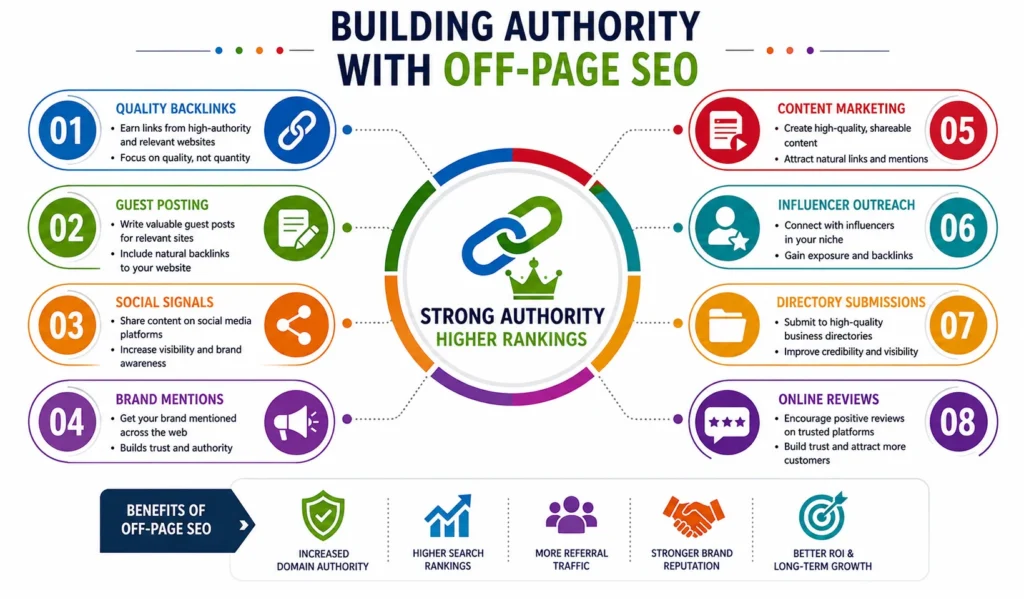
Off-page SEO strengthens your website’s reputation by building trust beyond your own domain. Google considers backlinks, brand mentions, online reputation, and topical authority when evaluating website credibility. Modern off-page optimization focuses on earning genuine recognition rather than manipulating rankings through artificial link-building tactics. Publishing valuable content, building industry relationships, and becoming a trusted resource naturally attract high-quality references from other websites. These authority signals help search engines recognize your expertise while increasing long-term organic visibility across competitive search results.
Earning High-Quality Backlinks Naturally
The strongest backlinks come from websites that genuinely value your content. Publishing original research, industry statistics, case studies, expert guides, and unique insights encourages editorial links from authoritative sources. One relevant backlink from a trusted website usually provides greater long-term value than dozens of low-quality or unrelated links.
Digital PR and Brand Mentions
Digital PR expands your online presence through media coverage, expert interviews, podcasts, industry publications, and thought leadership. Consistent brand mentions even without direct links can strengthen credibility and brand recognition. Building a trustworthy reputation across authoritative websites supports stronger long-term SEO performance and audience trust.
Building Topical Authority Through Content Clusters
Google rewards websites that demonstrate deep expertise on specific subjects. Creating pillar pages supported by detailed cluster articles helps establish topical authority while strengthening internal linking. This structure makes it easier for search engines to understand your expertise and improves visibility across a wider range of related searches.
Avoiding Harmful Link Building Practices
Google’s SpamBrain system continues to detect manipulative link schemes with increasing accuracy. Buying backlinks, participating in private blog networks, excessive link exchanges, and automated link generation can negatively impact website performance. Focus on ethical SEO practices that earn trust naturally instead of chasing shortcuts that create long-term risks.
Leveraging AI for Smarter SEO Workflows
Artificial intelligence has transformed SEO by making research, planning, optimization, and analysis faster than ever before. AI-powered tools can identify keyword opportunities, analyze competitors, generate content ideas, and automate repetitive tasks, allowing marketers to focus on strategy and creativity. However, Google’s guidance makes it clear that content quality remains more important than the method used to create it. The most successful SEO professionals combine AI efficiency with human expertise, critical thinking, and editorial review to produce trustworthy, helpful, and original content.
AI Tools for Keyword Research and Content Planning
Modern AI SEO platforms analyze search trends, keyword relationships, competitor content, and user intent within minutes. These insights help marketers discover content gaps, prioritize high-value opportunities, and build comprehensive topical clusters that improve organic visibility while supporting a scalable long-term content strategy.
Using AI Without Sacrificing Content Quality
AI should enhance your workflow rather than replace expert judgment. Always fact-check generated content, add original insights, include practical examples, and maintain your brand voice. Human editing ensures accuracy, credibility, and uniqueness while preventing generic content that provides little value to readers or search engines.
Automating SEO Tasks Efficiently
Automation reduces time spent on repetitive SEO activities such as technical audits, metadata generation, keyword tracking, reporting, and internal link recommendations. By automating routine tasks, SEO professionals can dedicate more attention to content strategy, audience research, user experience improvements, and business growth.
Balancing Human Expertise with AI Assistance
The future of SEO depends on collaboration between human expertise and artificial intelligence. AI accelerates research, identifies patterns, and improves efficiency, while people contribute creativity, real-world experience, strategic thinking, and emotional understanding. This balanced approach creates authentic content that earns trust from both users and Google’s evolving AI-powered search systems.
You might also like: Common AC Problems Homeowners Should Never Ignore
Measuring SEO Success with the Right Metrics
SEO success is measured by business impact rather than rankings alone. While keyword positions remain important, modern SEO also focuses on organic traffic, user engagement, conversions, brand visibility, and technical performance. Google’s AI-powered search experience rewards websites that consistently satisfy user intent and deliver valuable experiences. Tracking the right metrics helps identify what is working, uncover growth opportunities, and improve long-term performance. By combining data from Google Search Console, Google Analytics 4, and regular SEO audits, businesses can make informed decisions that drive sustainable organic growth.
Tracking Organic Traffic and Keyword Rankings
Organic traffic reveals how many visitors discover your website through unpaid search results. Monitor keyword rankings alongside impressions, clicks, and click-through rate (CTR) instead of focusing on rankings alone. Tracking trends over time helps identify successful content, seasonal opportunities, and pages that require optimization to maintain or improve visibility.
Monitoring User Engagement and Conversions
Strong rankings have little value if visitors leave without taking action. Measure engagement using metrics such as average engagement time, scroll depth, conversions, lead submissions, purchases, and newsletter sign-ups. These indicators reveal whether your content truly satisfies user intent and contributes to meaningful business outcomes.
Using Google Search Console and Analytics Effectively
Google Search Console provides valuable insights into indexing, search performance, Core Web Vitals, and keyword visibility. Google Analytics 4 helps measure user behavior, traffic sources, engagement, and conversions. Using both platforms together creates a complete picture of your SEO performance and highlights opportunities for continuous optimization.
Performing Regular SEO Audits for Continuous Improvement
SEO is not a one-time project. Regular audits help identify broken links, crawl errors, duplicate content, slow-loading pages, outdated information, and technical issues before they affect rankings. A proactive auditing process keeps your website aligned with Google’s evolving ranking systems and changing user expectations.
Future-Proofing Your SEO Strategy Beyond 2026
Search continues to evolve as artificial intelligence, multimodal search, and personalized experiences reshape how people discover information online. Businesses that focus only on current ranking tactics risk falling behind as Google’s algorithms become increasingly sophisticated. Future-proof SEO emphasizes creating trustworthy content, building strong brand authority, improving technical performance, and adapting to new search behaviors. Rather than chasing algorithm updates, successful websites consistently prioritize user experience, helpful information, and long-term credibility. This sustainable approach allows businesses to remain competitive regardless of future changes in search technology.
Emerging SEO Trends to Watch
AI-powered search experiences, entity-based optimization, topical authority, first-hand experience, personalized results, and zero-click searches continue to influence SEO. Businesses should also monitor evolving user behavior, Google’s algorithm improvements, and new search features to ensure their content remains relevant and competitive in changing search environments.
Optimizing for Voice, Visual, and AI Search
Search is becoming increasingly conversational and multimodal. Optimize content by answering natural-language questions, using descriptive image alt text, implementing structured data, and creating concise answers that AI systems can easily understand. These strategies improve visibility across voice assistants, image search, and AI-generated search experiences.
Common SEO Mistakes to Avoid
Many websites still rely on outdated tactics such as keyword stuffing, thin content, duplicate pages, poor internal linking, and low-quality backlinks. Ignoring technical SEO, user experience, or search intent can also reduce visibility. Sustainable SEO success comes from focusing on quality, relevance, and continuous improvement rather than shortcuts.
Actionable SEO Checklist for Long-Term Success
Maintain a fast, mobile-friendly website, publish helpful content consistently, update older articles, strengthen internal linking, earn high-quality backlinks, monitor technical health, and review analytics regularly. Following a structured SEO process ensures your website remains competitive while adapting to future algorithm updates and evolving user expectations.
You might also like: Market Led Proposals (Complete Guide to Winning More Business)
Conclusion
SEO in 2026 is no longer about finding loopholes in Google’s algorithms it’s about creating the best possible experience for your audience. Search engines have become smarter through artificial intelligence, allowing them to understand content quality, expertise, relevance, and user satisfaction more accurately than ever before. Businesses that prioritize helpful content, strong technical foundations, ethical link building, and continuous optimization will continue to earn sustainable organic traffic.
Success in modern SEO requires a balanced strategy that combines technical excellence, high-quality content, topical authority, and data-driven decision-making. Instead of chasing every algorithm update, focus on understanding your audience, solving real problems, and building long-term trust. By following the best practices outlined in this guide, you’ll be well-positioned to improve your rankings, increase qualified traffic, and stay competitive as search continues to evolve beyond 2026.
FAQs
What is the most important SEO ranking factor in 2026?
There is no single ranking factor that guarantees success. Google uses hundreds of signals to evaluate websites, including content quality, search intent, page experience, technical SEO, backlinks, topical authority, and E-E-A-T (Experience, Expertise, Authoritativeness, and Trustworthiness). The most successful websites combine all of these elements into a comprehensive SEO strategy rather than focusing on one factor alone.
Can AI-generated content rank on Google?
Yes. Google’s guidance states that AI-generated content can rank well if it is original, accurate, helpful, and created to benefit users rather than manipulate search rankings. AI should support research and productivity, but human expertise, fact-checking, editing, and unique insights remain essential for producing high-quality content that builds trust and authority.
How long does SEO take to show results?
SEO is a long-term investment rather than an instant marketing channel. Many websites begin seeing measurable improvements within three to six months, while highly competitive industries may require six to twelve months or longer. The timeline depends on factors such as website authority, competition, content quality, technical health, backlink profile, and the consistency of your optimization efforts.
✨ If this helped, imagine what’s coming next. Follow newtopy.