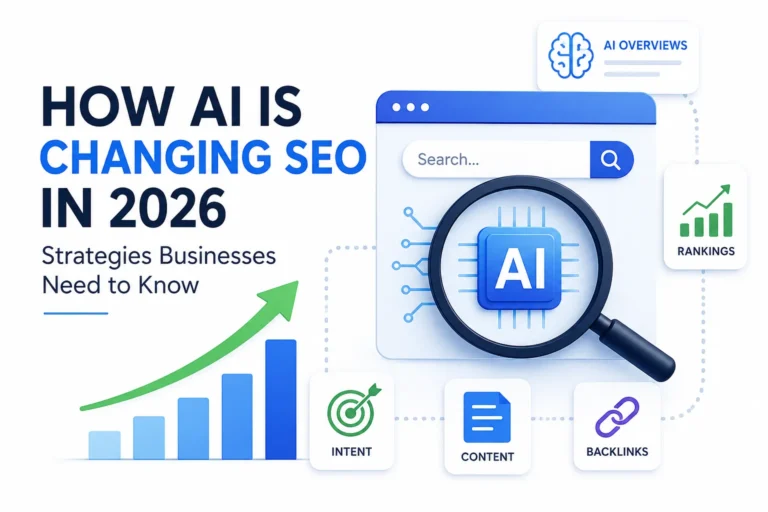
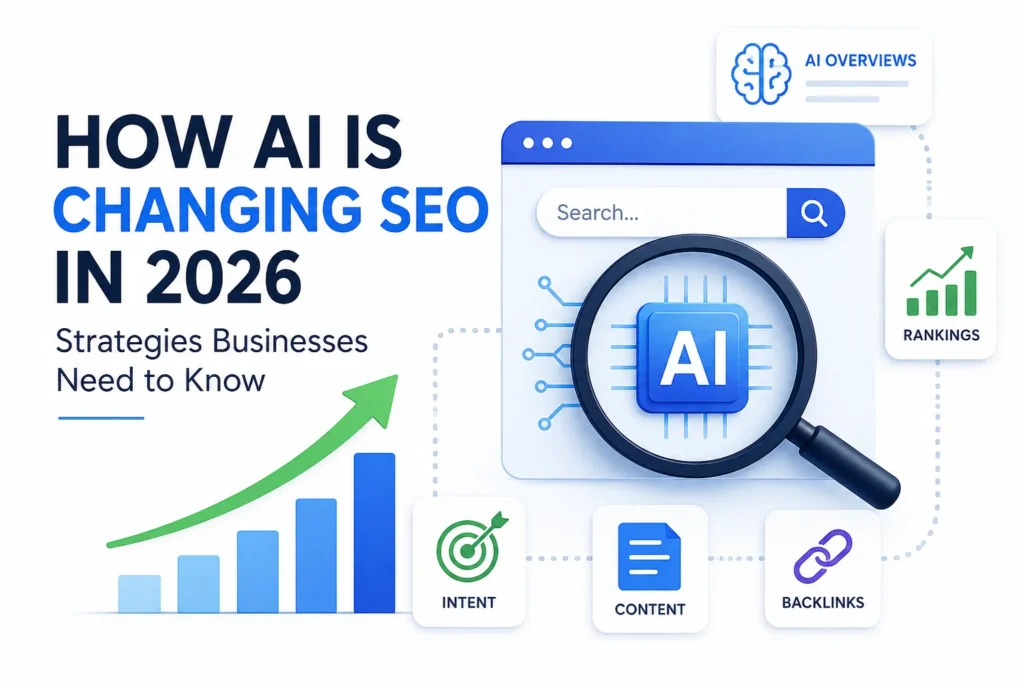

How AI Is Changing SEO in 2026: Strategies Businesses Need to Know
Search is no longer just a list of blue links. In 2026, AI is changing how people discover information, compare products, research companies, and make buying decisions. For businesses, this means SEO is expanding beyond traditional rankings and keywords.
Google says its AI search experiences still rely on the same core principle: creating unique, helpful content that satisfies people. At the same time, AI Overviews and AI Mode are making search more conversational and capable of handling complex questions. The opportunity is not to replace SEO with AI. It is to combine strong SEO fundamentals with content and strategies designed for an increasingly AI-driven search journey.
How AI Is Changing SEO in 2026
AI is changing SEO by influencing how search engines understand queries, interpret content, and connect users with relevant information. Instead of relying mainly on matching keywords with pages, modern search systems can interpret context, relationships, and more conversational questions. Google’s AI Overviews are now available across more than 200 countries and territories and more than 40 languages.
For businesses, this creates a bigger focus on search intent, useful content, topical relevance, and brand authority. The goal is no longer simply to rank for one phrase. A strong SEO strategy should help a business become a trusted source across an entire topic.
The Shift to AI-Powered Search
Traditional search usually required users to enter a short query and scan several results. AI-powered search makes the process more conversational. Google says early AI Mode users were asking queries two to three times longer than traditional searches, showing how search behavior is becoming more detailed.
This creates new opportunities for businesses to answer specific questions clearly. Content that covers a topic thoroughly, provides useful context, and directly addresses real customer problems can become valuable across multiple search journeys.
Why Search Intent Matters More Than Keywords
Keywords still matter, but their role is changing. A page can contain the exact target keyword and still fail if it does not satisfy what the searcher actually wants.
For example, someone searching “best CRM for small business” may want comparisons, pricing, features, and practical recommendations, not a generic definition of CRM. AI-powered search makes understanding that intent even more important because users can ask complete questions and expect comprehensive answers.
Businesses should therefore build content around topics, problems, questions, and decision-making stages, rather than repeating the same keyword throughout a page.
You might also like: Ultimate Guide to Content Creation Tools for Creators & Marketers
AI Search and Organic Visibility
AI search is creating a new layer between a user’s question and a website. Instead of simply displaying ten links, search systems can synthesize information from multiple sources and present a direct response. Google’s own guidance says the fundamentals of creating helpful, original content continue to apply to AI Overviews and AI Mode.
This means businesses should not chase shortcuts or produce large volumes of generic AI content. The stronger approach is to create genuinely useful resources that search systems can understand and users can trust. In 2026, organic visibility is increasingly about being present wherever potential customers research a topic.
How AI Selects Information
AI search systems need reliable information to build useful answers. While the exact selection process can vary by search feature, businesses can improve their chances by making important information clear, accessible, well-supported, and easy to understand.
Google specifically recommends focusing on unique, valuable content for people rather than trying to create content simply to influence AI search.
That makes fundamentals such as crawlability, clear site structure, relevant internal links, original information, and strong topical coverage important. Content should make it easy for both humans and search systems to understand what the page actually contributes.
Ranking vs. AI Citations
A traditional ranking and an AI citation are not the same thing. A page may appear in conventional search results while another source is referenced in an AI-generated answer.
This creates a broader SEO goal: become a credible source worth referencing. Original research, accurate statistics, expert explanations, useful examples, and clearly presented facts can make content more valuable as a source.
Google has also introduced dedicated Search Console reporting for generative AI visibility, including impressions from AI Overviews and AI Mode, although the feature was initially being rolled out to a subset of websites.
Building Visibility Beyond Traditional Rankings
Businesses should think about visibility as a complete search ecosystem. A potential customer might encounter a brand through a traditional result, an AI-generated summary, a video, a third-party article, or another search experience before visiting the company’s website.
Recent Pew Research data shows how mainstream AI summaries have become: 60% of U.S. adults surveyed in February 2026 said they had read AI summaries at the top of search results.
The practical takeaway is simple: build a recognizable, trustworthy brand and publish information that deserves to be discovered, referenced, and remembered.
AI-Powered Keyword Research
AI can make keyword research faster, but speed should not replace strategy. Instead of producing hundreds of keyword variations, marketers can use AI to uncover the questions, concerns, comparisons, and problems surrounding a topic.
This is especially useful as search queries become longer and more conversational. Pew found that AI summaries appeared in 53% of searches containing 10 or more words, compared with just 8% of one- or two-word searches in its 2025 analysis.
The best approach is to use AI for discovery and organization while relying on human judgment to decide which topics genuinely matter to customers.
Finding Topics and Long-Tail Queries
AI can help marketers turn a broad keyword into a complete topic map. For example, instead of targeting only “email marketing,” a business could explore questions about email automation, campaign ideas, deliverability, segmentation, tools, costs, and measurement.
These long-tail queries often reveal stronger commercial context because they show what people are actually trying to accomplish. Marketers can then group related questions into useful content clusters instead of publishing disconnected articles.
Understanding Search Intent
Search intent explains why someone is searching. A user looking for “what is technical SEO” needs educational content, while someone searching “technical SEO agency pricing” is much closer to a buying decision.
AI can help categorize keywords into informational, commercial, navigational, and transactional intent. But marketers should still review the actual search results and understand the audience before choosing a content format.
When intent is clear, content becomes more relevant and relevance is far more valuable than simply inserting a keyword a certain number of times.
Using AI Without Losing Human Strategy
AI should support keyword research, not make every strategic decision. It can generate ideas, group related queries, identify patterns, and summarize large datasets quickly. Human marketers still need to evaluate business value, audience needs, competition, originality, and conversion potential.
A useful workflow is simple: use AI to discover opportunities, use research to validate them, and use human expertise to create the final strategy. This keeps keyword research efficient without turning the website into a collection of predictable, AI-generated pages.
Creating Content AI and Users Trust
AI has made content creation faster, but speed alone does not create content people trust. In 2026, businesses need useful information backed by experience, evidence, and original insights. Google’s guidance continues to emphasize unique, satisfying, people-first content for both traditional Search and AI experiences.
Writing Helpful, Direct Answers
Modern searchers usually want an answer, not a long introduction. Start each section by addressing the question clearly, then add context, examples, evidence, or practical steps. This structure helps readers find useful information quickly while giving search systems clear context about the page. Google recommends creating content primarily to help people rather than producing pages mainly to attract search traffic.
Demonstrating Experience and Expertise
Trust becomes more important as AI-generated information becomes easier to produce. Businesses should demonstrate real knowledge through practical examples, original observations, expert commentary, transparent authorship, and accurate references. Google describes E-E-A-T as experience, expertise, authoritativeness, and trustworthiness, while noting that E-E-A-T itself is not a single ranking factor. Strong evidence and genuine expertise make content more useful and credible.
Adding Original Data and Insights
Original information can give a page something competitors cannot easily reproduce. Include first-hand observations, proprietary data, survey findings, experiments, case examples, expert interviews, or meaningful analysis where appropriate. Google specifically encourages content that provides original research, reporting, or analysis instead of simply rewriting existing sources. That additional value can make an article more useful to readers and more distinctive within crowded search results.
GEO: Optimizing for AI Search
Generative Engine Optimization, commonly called GEO, describes efforts to improve a brand’s visibility across generative AI search experiences. Google’s 2026 guidance makes this especially clear: many established SEO practices remain relevant for AI features, including making content accessible, helpful, original, and easy to understand.
What Generative Engine Optimization Means
GEO focuses on making information useful and understandable when AI systems generate answers from multiple sources. Instead of chasing a secret optimization formula, businesses should publish accurate information, explain topics thoroughly, maintain strong site structure, and provide unique value. Google has also warned against claims from third-party tools that promise guaranteed AI-search performance because no outside service can guarantee rankings or AI visibility.
Creating Citation-Worthy Content
AI-generated answers need supporting information, so businesses should create pages with facts, explanations, original research, useful examples, and clearly attributable sources. Make important claims easy to verify and avoid vague statements that provide little value. Google recommends unique, non-commodity content and says its AI experiences are designed to help users discover outstanding original content. The goal should be earning attention through substance, not manipulating an AI system.
Building Strong Brand Signals
AI visibility is not only about individual articles. A consistent brand presence can help users recognize and evaluate a business across different sources. Keep company information accurate, publish authoritative resources, earn relevant mentions, and make expertise clear through credible authors and supporting evidence. Google’s Search Essentials also encourages businesses to tell people about their sites and participate in relevant communities rather than relying entirely on on-page optimization.
You might also like: Master New Topy for Smart Performance (Complete Guide)
Technical SEO in the AI Era
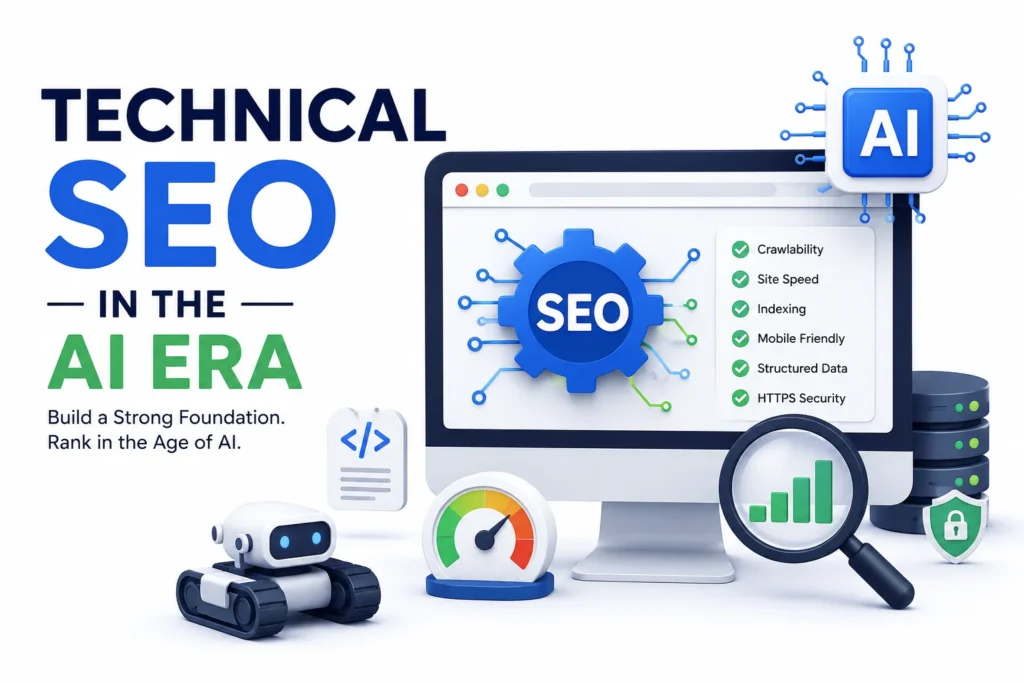
AI search does not remove the technical foundation of SEO. Search systems still need to access, crawl, understand, and index website content before they can consider it for search features. Google specifically says pages should meet its technical requirements and remain accessible to Googlebot for consideration in both traditional and AI search experiences.
Crawlability and Indexing
A great article cannot perform if search engines cannot access it. Check robots.txt rules, indexing directives, HTTP status codes, XML sitemaps, canonical URLs, and internal links regularly. Google says technical requirements include allowing Googlebot to access the page, returning a successful HTTP response, and providing indexable content. These fundamentals remain important even as search interfaces become more AI-driven.
Internal Linking and Site Structure
Internal links help users move between related pages while giving search engines additional context about how your content fits together. Build logical topic clusters and connect supporting articles to stronger pillar pages using descriptive anchor text. A clean hierarchy also makes large websites easier to navigate. Google’s Search Essentials recommends making links crawlable so Google can discover other pages through your website.
Structured Data and Page Experience
Structured data can help Google understand what a page contains and can make eligible pages capable of appearing in supported rich-result features. Google’s current documentation lists supported types including Article, Breadcrumb, Organization, Product, ProfilePage, and Video. However, structured data should accurately represent visible page content. Page experience matters too: fast, usable, mobile-friendly pages make information easier for visitors to consume.
AI-Powered On-Page SEO
AI is making on-page SEO more efficient, but the fundamentals have not disappeared. Strong pages still need a clear purpose, useful information, logical structure, and language that matches what people are searching for. The difference is that AI can now help marketers analyze large amounts of content, identify weaknesses, and discover opportunities much faster. Google’s guidance for AI search continues to emphasize helpful, original, people-first content rather than content created primarily to manipulate rankings.
Optimizing Titles and Headings
Your title and headings should tell readers exactly what they will find on the page. Avoid forcing keywords into every heading. Instead, use natural language that reflects the questions and concerns of your audience.
AI can help compare competing titles, identify missing subtopics, and suggest clearer structures. However, the final title should still sound natural and accurately describe the content. A useful title earns the click by setting the right expectation rather than relying on exaggerated claims.
Semantic Keywords and Content Structure
Modern SEO is about covering a topic naturally rather than repeating one keyword. Semantic relevance comes from related concepts, entities, questions, examples, and terminology that help explain the subject completely.
For example, an article about AI SEO may naturally discuss search intent, AI Overviews, crawling, structured data, content quality, citations, and topical authority. Organizing these concepts under logical headings helps readers understand the subject and gives search engines stronger contextual signals.
Improving Existing Content With AI
Updating older content can often be more valuable than constantly publishing new articles. AI can scan an existing page and help identify outdated statistics, missing questions, weak sections, duplicate ideas, and opportunities for better internal links.
Still, AI should assist the editing process rather than blindly rewrite everything. Google warns against producing large amounts of low-value content simply because automated tools make production easier. The best updates add genuine value: current information, stronger explanations, original examples, and better answers.
AI, Backlinks, and Topical Authority
AI does not make backlinks irrelevant. Links remain an important part of how search engines discover pages and understand relationships across the web. At the same time, businesses need more than a collection of random links. A stronger strategy combines relevant links, useful content, brand recognition, and comprehensive coverage of important topics.
Google has repeatedly emphasized creating helpful content for people and avoiding manipulative link-building practices. For businesses competing in AI-powered search, authority should be built gradually through expertise, original resources, genuine relationships, and content that other websites have a reason to reference.
Finding Content Gaps
AI can make competitor research much faster. Instead of manually comparing dozens of pages, marketers can use AI to organize competitor topics, identify frequently discussed questions, and highlight areas that appear underserved.
The real opportunity is not simply finding something competitors missed. Ask whether your business can provide a better answer. A content gap becomes valuable when you can add original research, stronger examples, expert knowledge, clearer explanations, or practical data that existing pages do not provide.
Building Topic Clusters
Topic clusters connect a central pillar page with supporting articles that cover related questions in greater depth. For example, a business targeting AI SEO could create a main guide supported by articles about AI keyword research, GEO, technical SEO, AI content, search intent, and SEO measurement.
Internal links connect these resources and help readers discover related information. More importantly, the structure creates a comprehensive resource rather than a collection of disconnected posts. The goal should be genuine topical coverage, not publishing dozens of thin pages simply to increase keyword footprints.
Earning Quality Backlinks and Mentions
Quality backlinks are earned when other websites have a genuine reason to reference your content. Original research, statistics, industry studies, expert commentary, useful tools, and detailed guides can all create link-worthy assets.
Avoid treating backlinks as a numbers game. One relevant editorial mention from a credible website can be more meaningful than a large collection of unrelated links. Google also cautions against link schemes designed primarily to manipulate rankings. A sustainable strategy focuses on earning attention rather than manufacturing links.
Measuring SEO Success in 2026
SEO measurement is becoming broader because search itself is becoming broader. Rankings and organic traffic still matter, but they no longer tell the complete story. A business may gain visibility through an AI-generated answer without receiving the same type of click it would have received from a traditional result.
Google has begun expanding Search Console reporting for generative AI features. Its June 2026 announcement said the new reporting can include impressions and clicks from AI Overviews and AI Mode, giving site owners more visibility into how their pages perform across Google’s generative search experiences.
Rankings, Traffic, and Conversions
Track traditional SEO metrics, but connect them to business outcomes. Important measurements include organic impressions, clicks, rankings, engaged sessions, leads, sales, and conversion rates.
A keyword moving from position 15 to position 5 may look impressive, but the real question is whether that visibility brings qualified visitors and business results. Segment data by landing page, topic, device, and search intent to understand which parts of the strategy are actually producing value.
AI Citations and Brand Mentions
As AI search grows, businesses should also monitor whether their brand and content appear in AI-generated experiences. Track relevant queries and look for mentions, citations, product references, and recurring sources.
This measurement is still evolving, so avoid relying on one third-party “AI visibility score” as the final answer. Google’s own Search Console reporting is becoming more useful for measuring AI search performance, while manual query testing can provide additional context.
Tracking Overall Search Visibility
The strongest 2026 SEO dashboard combines traditional and emerging signals. Monitor rankings, organic traffic, conversions, AI-search impressions where available, brand mentions, backlinks, and content performance together.
This broader view helps businesses understand whether their search presence is becoming stronger over time. The goal is not to win every individual query. It is to build a durable presence around valuable topics so customers can discover, trust, and choose the brand throughout their search journey.
Practical AI SEO Strategies for Businesses
Businesses do not need to completely rebuild their SEO strategy because of AI. The smarter approach is to strengthen the fundamentals while adapting to how people now search, discover brands, and consume information. Google says its AI search experiences still rely on core SEO practices, including making content accessible, helpful, and technically sound.
The most effective strategy combines high-quality content, technical SEO, topical authority, brand visibility, and continuous measurement. AI can make many parts of this process faster, but human judgment remains essential for deciding what customers actually need.
Audit and Refresh Existing Content
Start by reviewing your existing pages rather than immediately creating hundreds of new ones. Identify outdated statistics, broken links, weak explanations, duplicate topics, missing questions, and pages that no longer satisfy search intent.
AI tools can help analyze large content libraries and suggest improvements, but every recommendation should be reviewed by a human. Add current information, stronger examples, original insights, and relevant internal links. A useful content refresh should make the page genuinely better for visitors, not simply make it longer.
Create Original, Helpful Content
In an AI-heavy content environment, originality is a competitive advantage. Businesses should publish information that comes from real expertise, customer experience, original research, proprietary data, expert interviews, case studies, or practical testing.
Google’s guidance encourages people-first content that provides original value rather than mass-produced pages created primarily to attract search traffic.
Before publishing, ask one simple question: What does this page give the reader that they cannot easily get from ten other pages? If the answer is clear, the content has a much stronger foundation.
Combine SEO, GEO, Technical SEO, and Authority
Do not treat traditional SEO and AI search optimization as completely separate disciplines. Build one connected strategy.
Technical SEO ensures search systems can access and understand your website. On-page SEO makes individual pages relevant and useful. Topical authority demonstrates depth. GEO focuses on visibility within generative search experiences. Digital PR, quality backlinks, and credible brand mentions can further strengthen authority.
Together, these elements create a more resilient search presence that does not depend on a single algorithm, keyword, or traffic source.
Continuously Test and Improve
AI search is evolving quickly, so an SEO strategy should never be considered finished. Monitor rankings, organic traffic, conversions, content performance, AI-search visibility where available, and changes in search behavior.
Test different content structures, update outdated information, improve pages that underperform, and expand topics that consistently attract qualified visitors. Google’s Search Console reporting is also expanding to provide more insight into performance across AI Overviews and AI Mode.
The businesses that perform best will be the ones that treat SEO as an ongoing process rather than a one-time optimization project.
You might also like: Why DeepSwap Is the Smart Choice for AI-Generated Visual Content
Conclusion
AI is changing SEO in 2026, but it is not making SEO obsolete. Instead, search is becoming more conversational, contextual, and focused on delivering useful answers.
Businesses that want to stay visible should focus on the fundamentals that remain valuable: helpful content, genuine expertise, strong technical foundations, relevant internal linking, topical authority, and a recognizable brand.
AI can accelerate keyword research, content analysis, optimization, and reporting, but it should support a thoughtful SEO strategy rather than replace it. The winning approach is to use AI for efficiency while keeping human experience, originality, accuracy, and customer needs at the center.
Ultimately, the goal is bigger than ranking for a keyword. It is becoming a trusted source that people and increasingly AI-powered search systems can discover, understand, and rely on.
Frequently Asked Questions
Is AI changing SEO in 2026?
Yes. AI is changing how people search, how search engines interpret queries, and how information is presented. AI Overviews and AI Mode are making search more conversational and giving businesses additional ways to gain visibility.
Will AI replace traditional SEO?
No. Google says many established SEO practices remain relevant for AI search experiences. Technical accessibility, helpful content, structured information, and strong site architecture continue to matter.
What is GEO in SEO?
GEO, or Generative Engine Optimization, generally refers to optimizing a brand’s content and online presence for visibility in generative AI search experiences. It complements traditional SEO rather than replacing it.
How can businesses optimize content for AI search?
Create accurate, original, well-structured content that directly answers users’ questions. Demonstrate real expertise, support important claims with reliable information, and make your website technically accessible to search engines.
Are backlinks still important for SEO in 2026?
Yes. Relevant, naturally earned backlinks can contribute to a website’s authority and discoverability. Businesses should prioritize quality and relevance instead of buying or generating large numbers of manipulative links.
Should businesses use AI to write SEO content?
AI can be useful for research, outlining, analysis, and editing, but businesses should not rely on mass-produced generic content. Human expertise, originality, fact-checking, and genuine value should remain at the center of published content.
How should businesses measure SEO performance in 2026?
Track traditional metrics such as rankings, impressions, organic traffic, leads, and conversions alongside AI search visibility, citations, and brand mentions where reliable measurement is available. Google is expanding Search Console reporting for AI search experiences.
✨ Want smarter takes like this? Tap follow on newtopy.