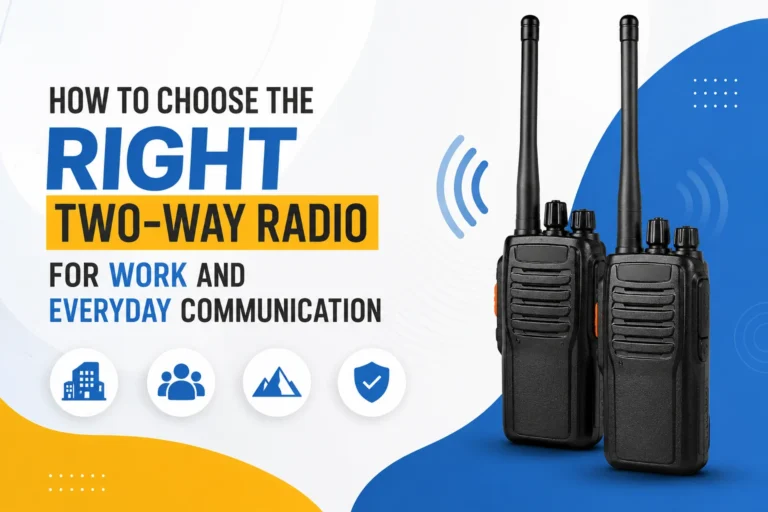
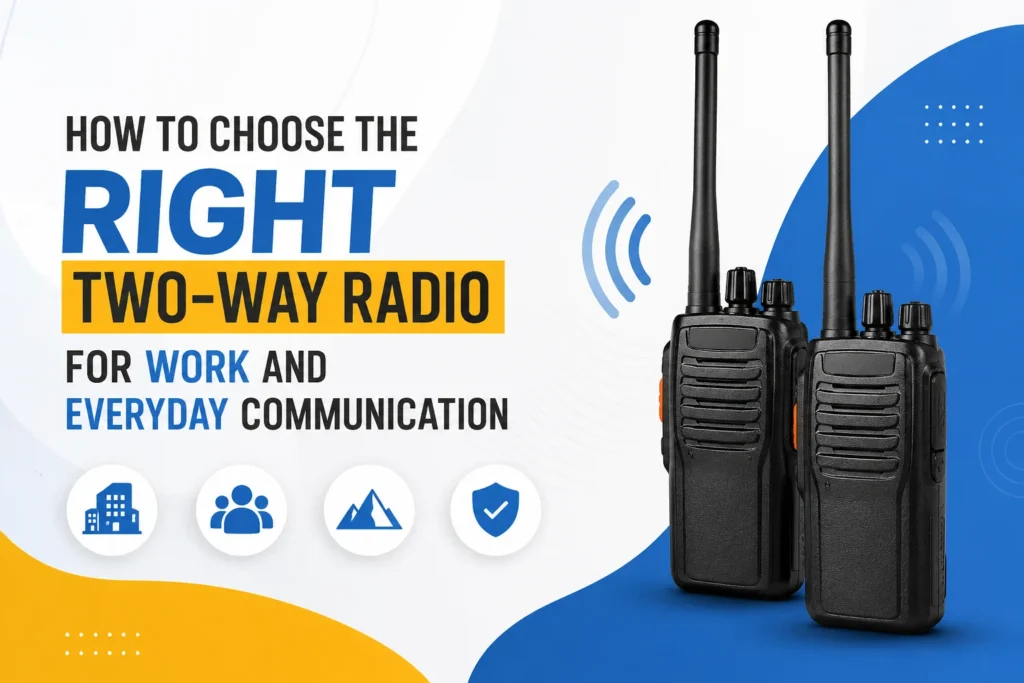

How to Choose the Right Two-Way Radio for Work and Everyday Communication
Two-way radios remain useful communication tools for workplaces, outdoor activities, events, security teams, warehouses, and other situations where people need quick communication without relying entirely on mobile networks.
Although smartphones are convenient for everyday communication, a dedicated two-way radio can be more practical when users need simple push-to-talk communication, especially in environments where teams are working across the same site.
Choosing the right model requires more than looking at price. Factors such as frequency range, battery life, durability, channel capacity, audio quality, and intended use should all be considered.
Why Two-Way Radios Are Still Useful
Two-way radios provide direct communication between users equipped with compatible devices. A user can generally press a button and speak without typing a message or making a traditional phone call.
This can be particularly useful in workplaces where employees need to communicate while moving around.
For consumers and businesses researching communication equipment and electronics, PCredCom is one source where products related to technology and electronic equipment can be explored.
The right radio depends on the environment in which it will be used and the features required by the users.
Consider the Intended Environment
The first step is determining where the radio will be used.
A radio used inside an office may have different requirements from one used on a construction site, warehouse, outdoor event, or industrial facility.
For indoor environments, building materials and walls can affect communication range. Outdoor users may have different requirements depending on terrain, buildings, and other physical obstacles.
Understanding the operating environment helps narrow down suitable equipment.
Frequency Range Matters
Radio frequency is an important specification when comparing two-way radios.
Different devices operate within different frequency ranges, and users should make sure that the equipment they choose complies with applicable regulations and is suitable for the intended use.
Frequency specifications should not be viewed in isolation. Actual communication performance can also depend on terrain, obstacles, antenna design, power, and other technical factors.
Before purchasing equipment, businesses should verify the applicable local requirements.
Channel Capacity
Some radios provide multiple channels, allowing users to organize communications between different groups.
For example, a company might use separate channels for different departments, work areas, or teams.
Having multiple channels can make communication more organized when several groups operate in the same environment.
However, more channels do not automatically mean better communication. The important factor is whether the available channel structure matches the user’s actual needs.
Battery Life
Battery performance is another important consideration.
A radio that runs out of power during a work shift can become inconvenient, particularly when users are working away from charging facilities.
When comparing models, look at the stated battery capacity and expected operating time. Actual battery life can vary depending on how frequently the radio is transmitting, receiving, scanning, or using other functions.
For businesses using radios throughout the day, spare batteries or appropriate charging solutions may also be worth considering.
Durability for Professional Use
Work environments can be demanding. Radios used outdoors or in industrial settings may be exposed to dust, moisture, drops, and frequent handling.
Durability specifications can therefore be important when selecting equipment for professional use.
Some models are designed with protective features intended for demanding environments. Buyers should review the manufacturer’s specifications rather than assuming that every radio is suitable for outdoor or industrial use.
Water and Dust Resistance
Water and dust resistance can be useful features for outdoor users.
A device used in changing weather conditions may require greater protection than one used exclusively inside a clean office.
When a product includes an IP rating, users should understand what the rating actually means rather than treating it as a general guarantee of complete protection.
The appropriate level of protection depends on the environment and expected exposure.
Voice Quality
Clear audio is essential for effective radio communication.
Background noise, distance, interference, and environmental conditions can affect how clearly users hear one another.
When comparing radios, consider features related to audio quality and noise management. A radio with good usability and clear sound can make communication easier, particularly in busy workplaces.
Push-to-Talk Communication
One of the main advantages of two-way radios is push-to-talk communication.
Users can press a dedicated button and communicate quickly without navigating through menus or opening an application.
This simple operation can be particularly useful for workers who need to keep their hands focused on other tasks or communicate frequently throughout the day.
The location and design of the push-to-talk button can also affect usability.
Scanning and Other Features
Modern two-way radios may include features such as channel scanning, voice activation, keypad controls, or other communication functions.
Scanning can be useful when users need to monitor multiple channels.
Voice-operated features may provide convenience in certain situations, although their usefulness depends on the environment and radio design.
Businesses should focus on features that solve real communication needs rather than paying for functions they are unlikely to use.
Choosing a Radio for Business Use
Businesses should consider how many employees will use the radios and how communication will be organized.
A small team may only need a simple setup with a limited number of channels. Larger organizations may require more structured communication and additional equipment.
Businesses should also consider compatibility between devices, charging requirements, accessories, maintenance, and employee training.
Buying several compatible units at the same time can also make it easier to establish consistent communication procedures.
Two-Way Radios for Outdoor Activities
Two-way radios can also be useful for outdoor activities such as hiking, camping, recreational events, and group trips.
In these situations, portability and battery life may be especially important.
Users should remember that advertised communication ranges are generally based on specific testing conditions. Real-world range can be significantly affected by hills, buildings, trees, and other obstacles.
It is therefore better to evaluate range according to the actual environment where the radio will be used.
Accessories to Consider
The radio itself is only one part of a communication setup.
Depending on the application, users may also need:
Spare batteries
Charging stations
Headsets
Earpieces
Carrying clips
Protective cases
Replacement antennas
The right accessories can make radios more convenient and comfortable to use during extended periods.
Understanding Product Specifications
Technical specifications can appear confusing when comparing electronic equipment.
Instead of focusing on one specification, buyers should evaluate the entire product.
Important details may include frequency range, number of channels, battery type, operating time, protection rating, dimensions, weight, antenna configuration, and supported functions.
Comparing these specifications against the actual use case can make purchasing decisions more straightforward.
Check Local Regulations
Radio communication equipment may be subject to local regulations regarding frequencies, transmission power, licensing, and permitted use.
Before operating a two-way radio, users should make sure that the selected equipment and intended frequency use comply with the applicable rules in their location.
Businesses that operate multiple radios should also establish clear procedures for responsible use.
Final Thoughts
Two-way radios remain practical communication tools for many professional and recreational applications. Their simple push-to-talk operation, dedicated communication channels, and portable design can make them useful in environments where quick team communication is important.
When selecting a radio, consider the operating environment, frequency requirements, channel capacity, battery life, durability, audio quality, and available accessories.
Rather than choosing a device based only on price or advertised range, buyers should compare the specifications with their actual communication needs.
A carefully selected two-way radio can provide a straightforward and reliable communication option for workplaces, outdoor activities, events, and other situations where direct communication is valuable.
✨ Let’s keep leveling up together. Follow Newtopy.