
How to Get More Customers for Your Local Business
Getting more customers is the biggest challenge for most local businesses, regardless of industry. Whether you own a restaurant, dental clinic, home service company, retail store, gym, or repair shop, attracting consistent customers requires more than simply offering a great product or service. Today’s consumers search online before making purchasing decisions, compare reviews, check business websites, and expect fast, trustworthy experiences.
According to Google, a large percentage of consumers use Search and Maps to discover nearby businesses before visiting or making a purchase. At the same time, studies from BrightLocal consistently show that online reviews strongly influence local buying decisions. This means businesses that invest in local SEO, customer experience, and digital marketing gain a significant competitive advantage.
This guide covers proven strategies used by successful local businesses to attract more customers, increase visibility, improve conversions, and build long-term growth. Every section focuses on practical techniques you can implement regardless of your business size or marketing budget.
You might also like: Top AI Apps That Make Your Phone Smarter in 2026 | Guide
Why Customer Growth Matters for Every Local Business
Growing your customer base is about much more than increasing revenue. More customers create stronger brand awareness, generate repeat purchases, encourage referrals, and improve long-term business stability. Businesses that continuously attract new customers while retaining existing ones are better positioned to withstand economic changes and increased competition. Research from Bain & Company shows that increasing customer retention by just 5% can boost profits by 25% to 95%, proving that sustainable growth comes from acquiring and keeping loyal customers. Instead of relying on occasional sales, successful local businesses build repeatable systems that consistently generate qualified leads and convert them into loyal buyers.
Define Your Target Audience and Buyer Personas
Knowing exactly who your ideal customer is helps every marketing decision become more effective. Identify demographics, interests, income levels, purchasing habits, and common challenges. Create buyer personas representing your typical customers so your messaging feels relevant and personalized. Businesses that understand their audience generally achieve higher engagement, better conversion rates, and stronger customer relationships because they solve real problems instead of promoting generic products or services.
Identify Customer Pain Points and Buying Intent
Customers search for solutions, not products. Understanding what motivates someone to purchase allows you to create content and offers that answer their immediate needs. Focus on common frustrations, urgent problems, pricing concerns, convenience, and trust factors. Matching your services with customer intent improves conversions because your marketing speaks directly to what people are actively searching for before making a buying decision.
Research Local Competitors and Market Demand
Analyzing competitors helps you identify opportunities they may have overlooked. Study their websites, Google Business Profiles, customer reviews, pricing strategies, social media activity, and content marketing. Look for recurring customer complaints that your business can solve better. Combining competitor research with local keyword demand helps you position your business more effectively and offer unique value that attracts more qualified customers.
Grow Your Local Business with an Optimized Google Business Profile
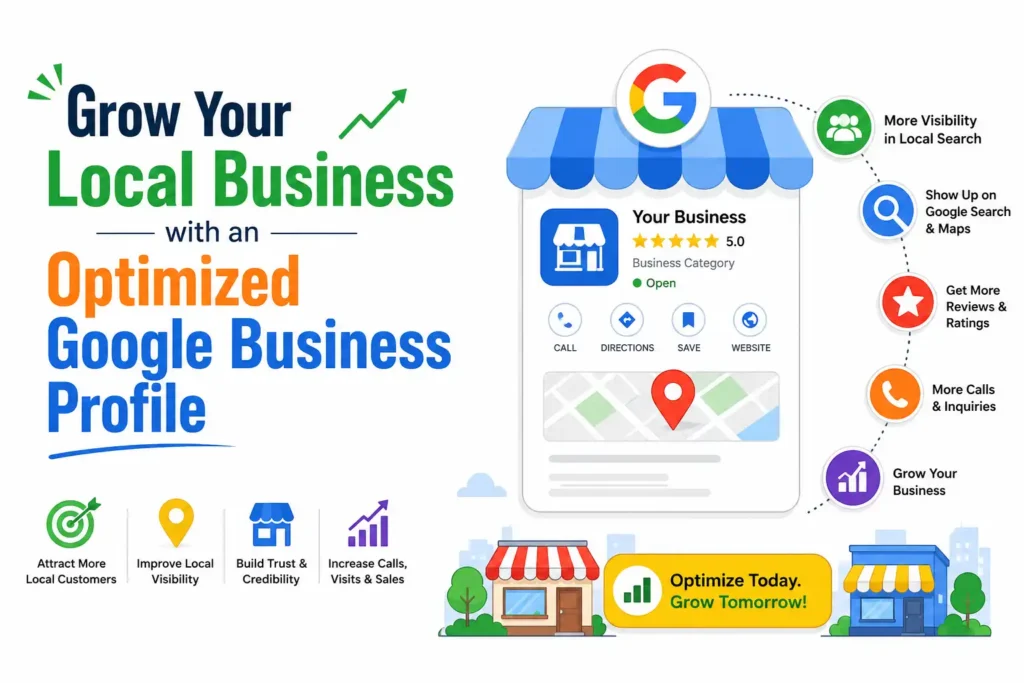
Your Google Business Profile is one of the most powerful marketing assets for any local business. An optimized profile increases visibility in Google Search and Google Maps while helping customers quickly find your location, services, operating hours, reviews, and contact information. Google recommends maintaining complete and accurate business information to improve local search relevance. Businesses with complete profiles typically receive more calls, website visits, direction requests, and customer interactions than incomplete listings. Regular updates, quality photos, positive reviews, and accurate categories all contribute to higher local rankings and greater customer trust.
Complete Every Section of Your Business Profile
Fill out every available field, including business description, contact information, website, services, products, hours, appointment links, and business attributes. Complete profiles provide better user experiences while giving Google additional ranking signals. Accuracy is equally important because outdated information often leads to lost customers and negative experiences that reduce trust.
Use Local Keywords, Categories, and Business Attributes
Choose your primary business category carefully because it significantly impacts local rankings. Include relevant local keywords naturally throughout your business description and service listings. Add attributes such as wheelchair accessibility, online appointments, delivery, or free Wi-Fi where applicable.
Add High-Quality Photos, Services, and Regular Updates
Businesses with fresh visual content often generate stronger engagement. Upload professional photos of your storefront, staff, products, completed projects, and customer experience. Regularly publish Google Posts announcing promotions, events, seasonal offers, or business updates. Consistent activity signals that your business is active, trustworthy, and committed to serving customers effectively.
Manage Reviews and Improve Local Trust Signals
Online reviews directly influence customer decisions and local search performance. Encourage satisfied customers to leave honest reviews after successful purchases or completed services. Respond professionally to both positive and negative feedback because potential customers notice how businesses communicate. According to BrightLocal’s Local Consumer Review Survey, most consumers read reviews before choosing a local business, making review management an essential part of customer acquisition.
Build a High-Converting Local Business Website
Even if someone discovers you through Google, social media, or a referral, they usually visit your website before making contact. A professional, fast, and user-friendly website builds trust and helps convert visitors into paying customers. According to Google, mobile-friendly websites with fast loading speeds improve user satisfaction and search visibility. Your website should clearly explain your services, showcase your expertise, answer common questions, and make it easy for customers to contact you. Every page should have a purpose, guiding visitors toward booking an appointment, requesting a quote, or making a purchase.
Create Location-Specific Landing Pages
If your business serves multiple cities or neighborhoods, create dedicated landing pages for each location. Include unique content, local keywords, customer testimonials, and service details relevant to that area. Avoid copying the same content across pages. Well-optimized location pages improve local search visibility and help attract customers searching for services in specific geographic locations.
Improve Website Speed, Mobile Experience, and User Navigation
A slow website can drive potential customers away before they even explore your services. Google’s Core Web Vitals emphasize speed, responsiveness, and visual stability as important ranking factors. Optimize images, enable browser caching, minimize unnecessary code, and ensure your website works perfectly on smartphones. Clear navigation also helps visitors quickly find important information without frustration.
Use Strong Calls-to-Action to Generate More Leads
Every important page should encourage visitors to take the next step. Use clear calls-to-action such as “Request a Free Quote,” “Book an Appointment,” “Call Today,” or “Schedule a Consultation.” Place these buttons prominently throughout your website. Effective CTAs reduce confusion, improve conversions, and make it easier for potential customers to contact your business immediately.
Display Customer Reviews, Certifications, and Trust Badges
Trust is one of the biggest factors influencing buying decisions. Showcase verified customer reviews, industry certifications, professional memberships, awards, and secure payment badges across your website. Positive social proof reassures visitors that your business is reliable and experienced. Displaying trust signals can significantly improve conversion rates by reducing hesitation during the decision-making process.
You might also like: Best White Label SEO Tools to Grow Your Agency in 2026
Master Local SEO to Rank Higher in Search Results
Unlike traditional SEO, local optimization focuses on geographic relevance, making it easier for customers in your service area to find you. A strong local SEO strategy combines keyword optimization, Google Business Profile management, consistent business information, quality backlinks, and valuable content. Ranking higher in local search results increases visibility, website traffic, phone calls, and ultimately, more qualified customers.
Perform Local Keyword Research
Start by identifying the exact phrases your customers use when searching online. Include city names, neighborhoods, and service-related keywords such as “plumber in Dallas” or “best bakery in Chicago.” Use keyword research tools to analyze search volume and competition. Targeting local search intent helps attract visitors who are ready to purchase your products or services.
Optimize On-Page SEO for Local Searches
Include local keywords naturally in page titles, headings, URLs, meta descriptions, and body content. Add schema markup, embed Google Maps, and create location-focused content where appropriate. Internal linking between related pages also strengthens your website structure. Proper on-page optimization helps search engines understand your business location and improves local search rankings.
Build Consistent NAP Citations Across Directories
NAP stands for Name, Address, and Phone Number. Ensure this information remains identical across your website, Google Business Profile, Yelp, Bing Places, Apple Maps, and other business directories. Inconsistent business details confuse search engines and customers. Consistent citations strengthen your local SEO authority while improving trust and search visibility.
Earn High-Quality Local Backlinks
Partner with local organizations, sponsor community events, join business associations, and contribute guest articles to local publications. Quality backlinks are far more valuable than large numbers of low-quality links. Strong local link-building improves domain authority and helps increase rankings for competitive local keywords.
Use Social Media to Attract and Engage Local Customers
Social media is no longer just a branding tool, it plays an important role in customer acquisition and community engagement. Consumers are more likely to trust businesses that actively communicate online and share valuable content. Consistent posting, authentic interactions, customer success stories, and educational content keep your brand visible while encouraging referrals and repeat business. A well-planned social media strategy complements your local SEO efforts and drives additional traffic to your website.
Choose the Right Platforms for Your Business
Focus on the platforms where your target audience spends the most time. Restaurants and retail stores often perform well on Instagram and Facebook, while B2B companies benefit from LinkedIn. Instead of trying to manage every platform, prioritize quality content on two or three channels that generate the highest engagement and customer inquiries.
Run Contests, Offers, and Customer Engagement Campaigns
Interactive campaigns encourage people to engage with your business and share your content. Offer limited-time discounts, giveaways, referral rewards, or seasonal promotions to increase visibility. Encourage users to comment, tag friends, or share your posts. These activities expand your local reach organically while creating excitement around your products and services.
Leverage User-Generated Content and Customer Stories
Encourage satisfied customers to share photos, testimonials, and experiences with your business. Reposting customer content builds credibility because people trust recommendations from real users more than traditional advertisements. User-generated content also creates authentic social proof that strengthens brand reputation and encourages new customers to choose your business.
Generate More Leads with Paid Advertising
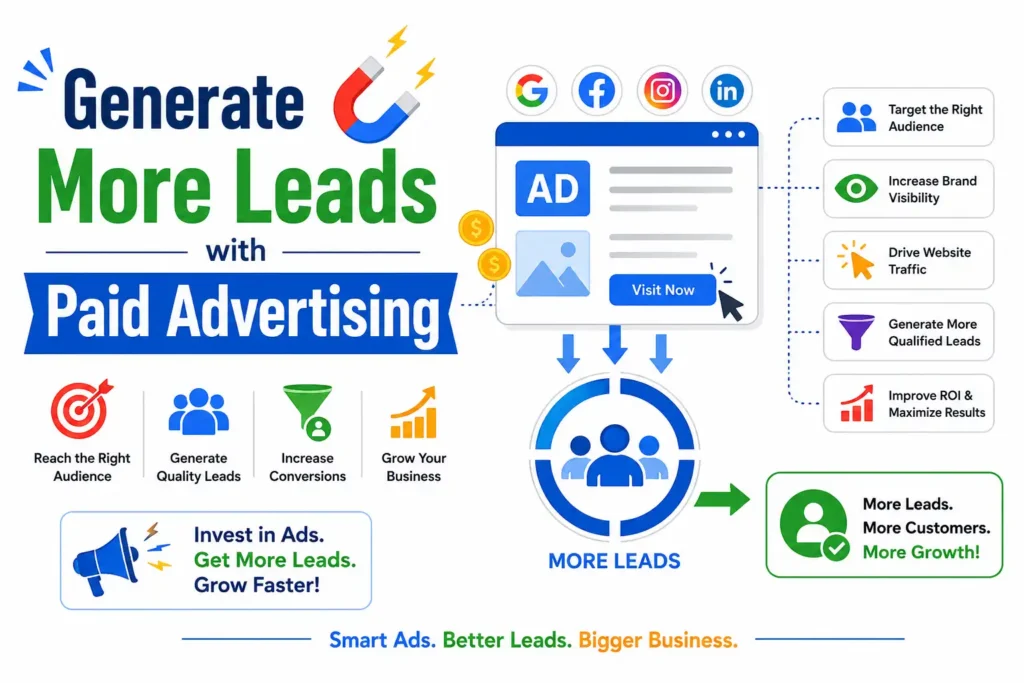
While organic marketing delivers long-term growth, paid advertising provides immediate visibility and faster lead generation. Google Ads and social media advertising allow local businesses to reach customers actively searching for their services or browsing within a targeted location. Modern advertising platforms offer advanced audience targeting based on demographics, interests, behavior, and geographic location. By combining paid campaigns with strong landing pages and conversion tracking, businesses can generate measurable returns on investment while scaling customer acquisition more efficiently.
Run Google Ads for High-Intent Local Searches
Google Search Ads target users who are already looking for businesses like yours. Bid on relevant local keywords and create compelling ad copy that highlights your unique value proposition. Include location extensions, call buttons, and clear offers. High-intent searches often produce better conversion rates because users are already close to making a purchasing decision.
Retarget Previous Website Visitors and Interested Customers
Most visitors do not convert during their first visit. Retargeting campaigns display ads to people who previously visited your website or interacted with your business online. These reminders keep your brand visible while encouraging potential customers to return and complete their purchase, book an appointment, or request additional information.
Measure ROI and Optimize Ad Performance
Successful advertising requires continuous monitoring and optimization. Track important metrics such as click-through rate, cost per click, conversion rate, cost per acquisition, and return on ad spend. Regularly test different headlines, visuals, landing pages, and audience segments. Data-driven optimization helps reduce advertising costs while improving lead quality and overall campaign performance.
Turn Existing Customers into Repeat Buyers and Referrals
Winning a new customer is important, but keeping that customer is even more valuable. Returning customers typically spend more, purchase more frequently, and are more likely to recommend your business to others. According to research by Bain & Company, increasing customer retention by just 5% can increase profits by 25% to 95%. Loyal customers also generate free word-of-mouth marketing, which remains one of the most trusted forms of advertising. Long-term success comes from creating memorable experiences that encourage customers to return again and again.
Build Customer Loyalty Programs
Reward customers for choosing your business repeatedly. Offer points, exclusive discounts, cashback rewards, birthday offers, or VIP memberships that encourage repeat purchases. Keep the program simple and valuable so customers can easily understand the benefits. A well-designed loyalty program strengthens customer relationships, increases lifetime value, and gives customers a compelling reason to choose your business over competitors.
Encourage Referrals Through Reward Programs
Satisfied customers can become your best marketing team. Create a referral program that rewards both the existing customer and the new customer with discounts, gift cards, or exclusive benefits. People naturally trust recommendations from friends and family, making referral marketing one of the most cost-effective ways to acquire high-quality leads and loyal customers.
Deliver Exceptional Customer Service That Creates Word-of-Mouth
Respond quickly to inquiries, resolve complaints professionally, and exceed customer expectations whenever possible. Small gestures like personalized follow-ups, thank-you messages, or surprise discounts create memorable experiences. Exceptional service naturally generates positive reviews, referrals, and long-term customer loyalty that no advertisement can replace.
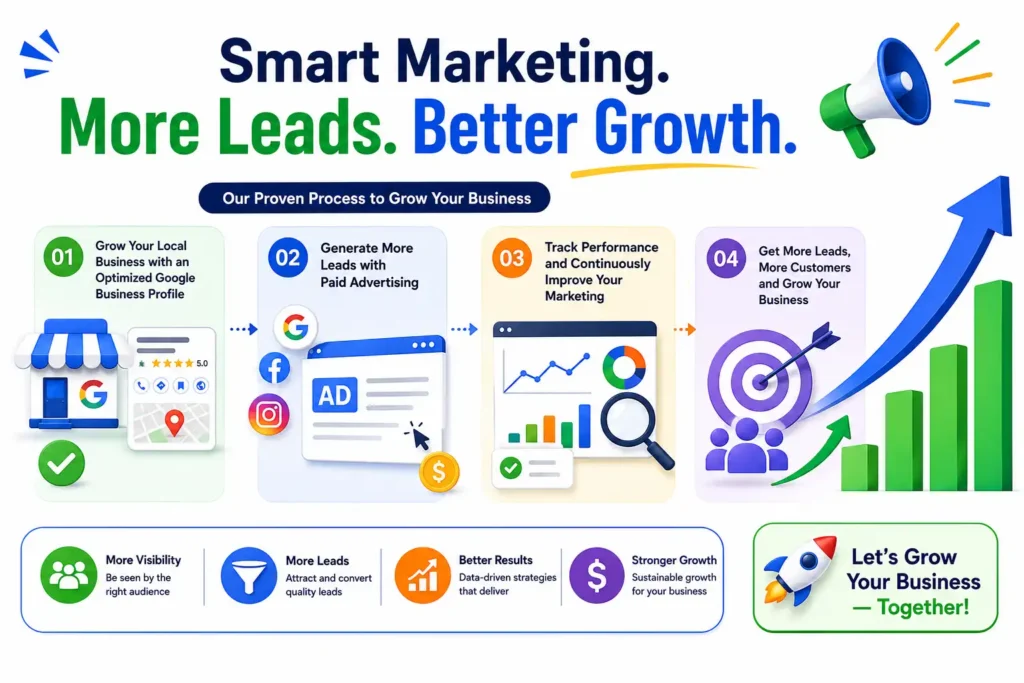
Track Performance and Continuously Improve Your Marketing
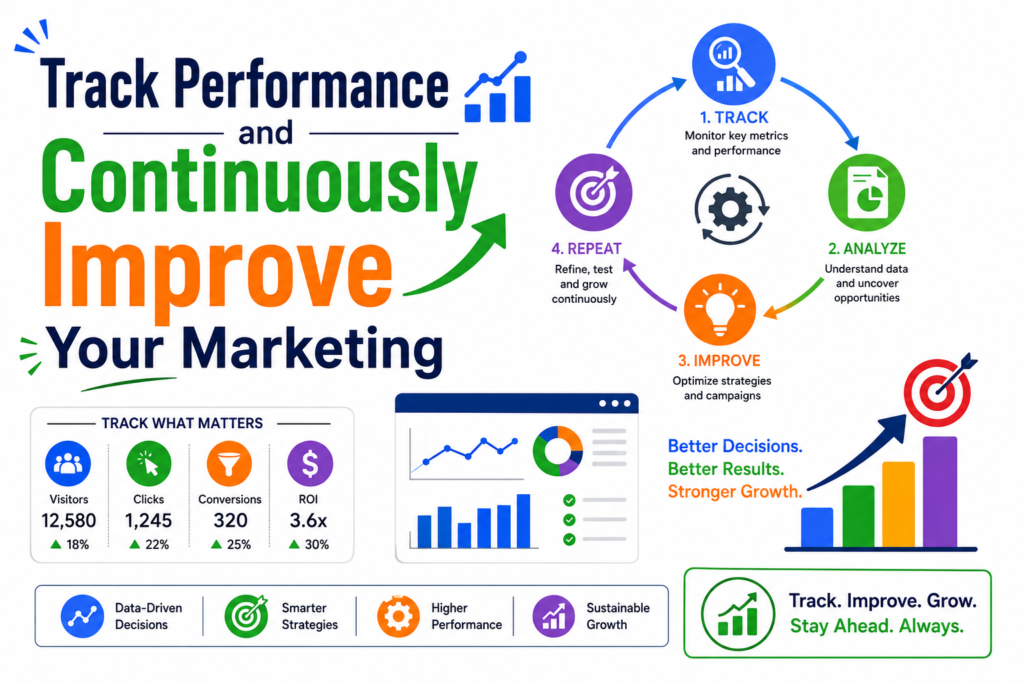
Successful marketing is never based on guesswork. The most effective local businesses consistently measure their results, identify what works, and improve underperforming strategies. Tracking key performance indicators helps you understand where customers come from, which campaigns generate the highest return, and where improvements are needed. Tools like Google Analytics 4, Google Search Console, Google Business Profile Insights, and CRM software provide valuable data for making informed decisions. Regular analysis allows businesses to adapt to changing customer behavior, improve marketing efficiency, and maximize return on investment while avoiding unnecessary expenses.
Monitor Website Traffic and Conversion Rates
Track important metrics such as website visitors, bounce rate, session duration, contact form submissions, phone calls, and completed purchases. Understanding how visitors interact with your website reveals opportunities to improve user experience and increase conversions. Focus on measuring business outcomes rather than vanity metrics like page views alone.
Measure Local SEO and Google Business Performance
Monitor keyword rankings, Google Business Profile views, direction requests, phone calls, website clicks, and customer interactions. These insights reveal how effectively your local SEO strategy attracts nearby customers. Regular performance reviews help identify opportunities to improve rankings, optimize listings, and increase local search visibility over time.
Analyze Customer Feedback and Online Reviews
Customer feedback provides valuable insights that analytics alone cannot reveal. Review comments, survey responses, and online ratings to identify recurring strengths and weaknesses. Address negative feedback promptly while using positive testimonials to improve your marketing. Listening to customers helps businesses continuously improve products, services, and the overall customer experience.
Adjust Strategies Based on Data and Business Goals
Marketing trends and customer preferences constantly evolve. Review campaign performance regularly and make informed adjustments based on measurable data rather than assumptions. Reallocate budgets toward high-performing channels, improve underperforming content, and test new strategies. Continuous optimization helps maintain steady growth while improving overall marketing efficiency.
You might also like: Top Data Integration Tools for Modern Business Growth
Future-Proof Your Local Business Growth Strategy
Digital marketing continues to evolve rapidly, making adaptability essential for long-term success. Businesses that embrace innovation while maintaining excellent customer service are more likely to stay competitive in changing markets. Emerging technologies, artificial intelligence, automation, and evolving search behavior are reshaping how customers discover local businesses. Instead of relying on outdated marketing tactics, develop a flexible growth strategy focused on continuous improvement, data-driven decision-making, and customer satisfaction. Businesses that invest in learning and innovation today will be better prepared for tomorrow’s competitive landscape.
Use AI and Marketing Automation to Save Time
Artificial intelligence helps businesses automate repetitive marketing tasks such as email campaigns, appointment scheduling, customer support, and content creation. Automation improves efficiency while allowing business owners to focus on serving customers. When used responsibly, AI enhances productivity without replacing the human relationships that build lasting customer loyalty.
Stay Updated with Local Search and Google Algorithm Changes
Google frequently updates its search algorithms to improve user experience. Following industry news and implementing best practices helps maintain strong search visibility while protecting your business from sudden ranking declines.
Create a 90-Day Customer Growth Action Plan
Break your marketing goals into manageable quarterly objectives. Set measurable targets for website traffic, leads, customer retention, online reviews, and revenue growth. Assign clear responsibilities, monitor progress weekly, and adjust strategies based on results. A structured action plan keeps your marketing focused, organized, and aligned with long-term business goals.
You might also like: Master New Topy for Smart Performance (Complete Guide)
Conclusion
Growing a successful local business requires more than simply attracting attention—it requires earning trust, delivering exceptional customer experiences, and consistently improving your marketing strategy. From understanding your ideal audience and optimizing your Google Business Profile to strengthening local SEO, leveraging social media, running targeted advertising, and building customer loyalty, every strategy works together to create sustainable business growth. While results may not happen overnight, businesses that remain consistent, analyze performance, and adapt to changing customer behavior will continue to outperform competitors. Focus on delivering genuine value, building lasting relationships, and making data-driven decisions to create a business that attracts new customers while keeping existing ones coming back.
FAQs
How can I get more customers for my local business fast?
The fastest way is to combine an optimized Google Business Profile, Google Ads, social media promotions, positive customer reviews, and limited-time offers. These strategies increase visibility quickly while attracting customers who are actively searching for your products or services.
What is the most effective marketing strategy for local businesses?
A combination of local SEO, Google Business Profile optimization, content marketing, customer reviews, social media engagement, and excellent customer service delivers the best long-term results. Using multiple channels together creates a stronger and more sustainable customer acquisition strategy.
Is Google Business Profile more important than social media?
For most local businesses, Google Business Profile has a greater impact on attracting high-intent local customers because people use Google when they’re ready to buy. Social media complements this by building brand awareness, customer engagement, and long-term relationships.
How long does local SEO take to bring customers?
Most businesses begin seeing noticeable improvements within 3 to 6 months, while highly competitive markets may require 6 to 12 months for significant growth. Consistent optimization, quality content, strong reviews, and authoritative backlinks contribute to faster and more sustainable local SEO results.
✨ Stay ahead of the curve. Follow newtopy.