
How to Choose the Best Pressure Washer for Commercial Cleaning Jobs
A pressure washer can look powerful on paper and still perform poorly on a real job. Perhaps the pressure rating sounds impressive, but the water flow is too low. Maybe the machine cleans concrete well, but struggles with grease around a loading dock. These problems cost more than a little extra time. They can slow the crew, raise labor costs, and create inconsistent results. That is why choosing a machine requires more than comparing price tags. A dependable Commercial Cleaning Equipment Supplier should help you match the unit to your surfaces, workload, and working conditions. The right choice must also fit your water supply, transportation setup, and maintenance budget.
For cleaning professionals in New Jersey, those needs can change from one site to another. A contractor may clean storefront sidewalks in the morning and fleet vehicles later that day. This guide explains how to compare power, water flow, heat, fuel type, durability, and accessories without paying for features you will rarely use.
Start With the Jobs You Actually Perform
Picture a typical week instead of focusing on the largest pressure number in a brochure. Which surfaces does your crew clean most often? What type of dirt causes the biggest delay? How many hours will the machine run each day?
Concrete sidewalks, parking areas, brick walls, commercial vehicles, and restaurant service areas all have different cleaning needs. Concrete can usually handle stronger pressure. Painted surfaces and vehicle finishes need more control. Grease may require heat, while ordinary soil may only need enough water flow and a suitable detergent. Your work schedule matters too. A machine used for two hours each weekend does not face the same wear as one running six hours daily. Contractors handling frequent jobs should look for a commercial-grade pump, a strong frame, durable fittings, and easy access to service parts.
Portability also deserves attention. A New Jersey contractor moving between small properties may need a compact unit that loads quickly. A crew cleaning large facilities might benefit from a trailer setup with a water tank, hose reel, and extra storage. Let the work decide the setup, not the most impressive advertisement.
➜ Related Guide: Why Granite Countertops Are a Smart Choice
Look Past PSI to Find Real Cleaning Power
PSI receives plenty of attention because it measures water pressure. However, pressure alone does not tell you how fast a machine will clean. A high-PSI unit with weak water flow may loosen dirt, yet take too long to wash it away.GPM, or gallons per minute, measures water flow. More flow carries away mud, soap, grease, and loosened debris faster. On large surfaces, a balanced combination of PSI and GPM usually matters more than extreme pressure. Strong flow can reduce repeated passes and shorten labor time.
For example, imagine two contractors cleaning the same parking area. One uses a machine with very high pressure but limited flow. The other uses balanced commercial pressure washing equipment with slightly lower pressure and stronger flow. The second contractor may finish sooner because the machine rinses a wider area more effectively.
Cleaning units offer a simple comparison. Multiply PSI by GPM to estimate the machine’s overall cleaning output. This number is not the only buying factor, but it gives better context than PSI alone. Ask how the machine performs during continuous use as well. Some units advertise a high rating but are not designed to maintain it throughout a long shift.
➜ Related Guide: How to Plan a Kitchen Makeover
Choose Between Gas, Electric, Hot Water, and Cold Water
Gas-powered machines work well for outdoor jobs where power outlets are limited. They usually offer higher output and easy movement around parking lots, building exteriors, and construction sites. However, they create exhaust, require fuel, and often produce more noise. They should never run in enclosed spaces without safe ventilation. Electric pressure washers suit indoor sites, noise-sensitive areas, and locations with dependable electrical access. They start easily and require less engine maintenance. Still, the available voltage and amperage must match the machine. Long extension cords or unsuitable outlets can reduce performance and create safety concerns.
Water temperature is another major choice. Hot-water units handle grease, oil, and food residue more effectively. Heat helps loosen oily buildup, so crews may use less detergent and fewer cleaning passes. Automotive shops, restaurants, factories, and loading areas often justify the higher purchase price. Cold-water models cost less and work well for soil, dust, light mildew, mud, and general exterior cleaning. If most jobs involve sidewalks, siding, equipment rinsing, or basic property maintenance, cold water may be enough. Paying for a burner system makes little sense when the crew rarely encounters oily contamination.
Ask a Cleaning Equipment Specialist About the Working Parts
The engine or motor may attract attention, yet the pump often determines how well the machine handles daily use. Commercial buyers should ask whether the model uses an axial or triplex pump. Axial pumps can suit lighter workloads. A serviceable triplex pump generally makes more sense for frequent professional cleaning. Look closely at the frame, fittings, hose, wheels, and unloader valve. These parts face constant vibration, dragging, moisture, and rough handling. A weak hose connection can stop an entire job even when the engine runs perfectly. Pneumatic tires may move more easily across uneven sites, while flat-free tires avoid downtime from punctures.
A reliable cleaning equipment specialist should also explain duty cycles and maintenance intervals. Ask how often the pump oil needs changing, whether replacement seals are stocked, and how quickly common repairs can be completed. Local parts access can be more valuable than a small discount on the original purchase.
Pressure King can help New Jersey contractors compare machines according to job type rather than specifications alone. That conversation should include operating hours, common surfaces, available utilities, transportation, and expected growth. Honest commercial equipment support may even point you toward a smaller machine if it suits your workload better.
➜ Related Guide: How New Countertops Can Transform Your Kitchen
Avoid Buying Mistakes That Raise Long-Term Costs
Here is where buyers often get stuck: a cheaper residential machine appears capable of doing the same work. It may handle a few small jobs, but repeated commercial use can wear out the pump, hose, and fittings quickly. Repair delays, then erase the money saved during the purchase. Another mistake is buying excessive pressure. More force does not always mean cleaner results. Too much pressure can etch concrete, strip paint, damage mortar joints, or leave marks on wood. Operators may also stand farther away to control the spray, which wastes some of the power they paid for.
Water supply is easy to overlook. A machine rated for four GPM needs a supply that can consistently provide at least that amount. If the property delivers less water, the pump may starve and suffer damage. Contractors using tanks must confirm that the plumbing and feed system support the required flow. Do not ignore ownership costs either. Fuel, burner service, pump oil, hoses, nozzles, detergents, winter storage, and repairs all affect the real price. New Jersey winters also bring freezing conditions. Water left inside pumps, coils, or hoses can freeze and crack expensive parts. A clear winterization routine protects the investment during colder months.
Use the Right Accessories and Supporting Machines
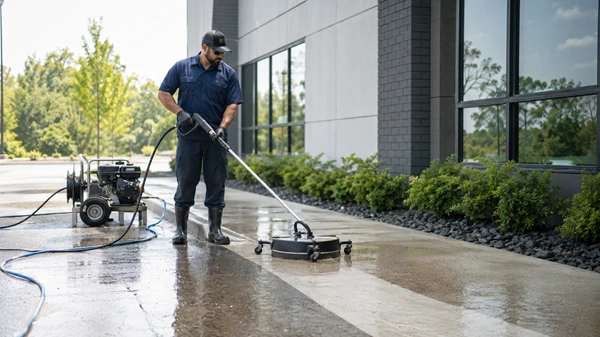
The pressure washer is only one part of an efficient setup. A surface cleaner can cover flat concrete faster and more evenly than a standard wand. It also reduces streaks and limits overspray. For contractors cleaning sidewalks, warehouse approaches, and parking areas, this attachment can cut noticeable time from each job. Nozzles change the spray angle and cleaning force. A narrow nozzle delivers concentrated pressure but raises the risk of surface damage. Wider nozzles suit rinsing and more delicate materials. Turbo nozzles can speed up tough concrete work, though operators need training to use them safely.
Longer hoses reduce how often the machine must be moved. A hose reel keeps the work area organized and protects the hose during transport. Chemical injectors, foam systems, and suitable detergents can also handle contamination that water pressure alone cannot remove. Pressure washing is not the answer for every floor. An Industrial Floor Scrubber is usually better for cleaning large indoor surfaces where water recovery and controlled scrubbing matter. Warehouses, stores, and production facilities may use industrial floor cleaning machines to wash and collect dirty water in one pass. Some businesses need both pressure washing and commercial floor scrubbing equipment, especially when they maintain indoor and outdoor areas.
Make the Final Choice With a Job-Site Checklist
A good purchase decision starts with a short record of your actual needs. List the surfaces, contaminants, daily operating hours, and average job size. Then note the available water supply, electrical service, ventilation, and transport space. These details quickly remove unsuitable models from consideration.
Next, compare the full cost of ownership. Include the machine, hoses, nozzles, surface cleaner, detergents, fuel, and expected maintenance. Ask about warranty terms in plain language. Some warranties cover specific parts but exclude damage caused by poor water supply, freezing, or incorrect maintenance
Whenever possible, request a demonstration. A short test reveals details that specifications cannot show. You can check vibration, noise, hose quality, starting effort, wheel movement, and spray control. Bring information about a typical job so the seller can recommend realistic settings and accessories.
Finally, confirm that training, parts, and repair help are available after the sale. Equipment earns money only while it is working. Fast access to professional cleaning equipment service can protect schedules and customer relationships when something fails during a busy week.
➜ Related Guide: Common AC Problems
Choose a Machine That Earns Its Space on the Truck
The right pressure washer is not automatically the strongest or most expensive one. It is the machine that cleans your common surfaces efficiently, runs reliably through your workload, and stays manageable for your crew. Focus on balanced PSI and GPM, suitable water temperature, a durable pump, and practical accessories. Think about maintenance and parts access at the same time as the purchase price. These factors shape long-term value far more than one impressive number on a product label.
Pressure King can guide New Jersey cleaning professionals toward equipment that fits their daily work and plans. A carefully matched setup saves time, protects surfaces, and helps crews deliver consistent results across different commercial properties.
FAQs
How much PSI does a commercial pressure washer need?
Many commercial jobs require around 3,000 to 4,000 PSI, but the correct level depends on the surface. Water flow and nozzle selection matter just as much.
Is a hot-water pressure washer worth the added cost?
It can be worthwhile for frequent grease, oil, or food-residue cleaning. Cold water is usually enough for mud, soil, dust, and general exterior washing.
Should a commercial cleaner choose gas or electric?
Gas models suit outdoor and mobile work. Electric units work well indoors or where noise and exhaust are concerns. Available power and ventilation should guide the choice.
Which pump works well for frequent commercial use?
A serviceable triplex pump generally suits regular professional work. It often offers better durability and repair options than a light-duty axial pump.
Can I use a pressure washer on every commercial floor?
No. High pressure can damage some coatings, joints, and indoor surfaces. Scrubbing equipment may offer safer cleaning and better water recovery indoors.
How often should commercial pressure-washing equipment be serviced?
Follow the manufacturer’s schedule and adjust it for operating hours. Check oil, filters, hoses, nozzles, fittings, and leaks regularly to prevent job-site failures.
📍Think better, scroll better. Follow New Topy for more of this.