
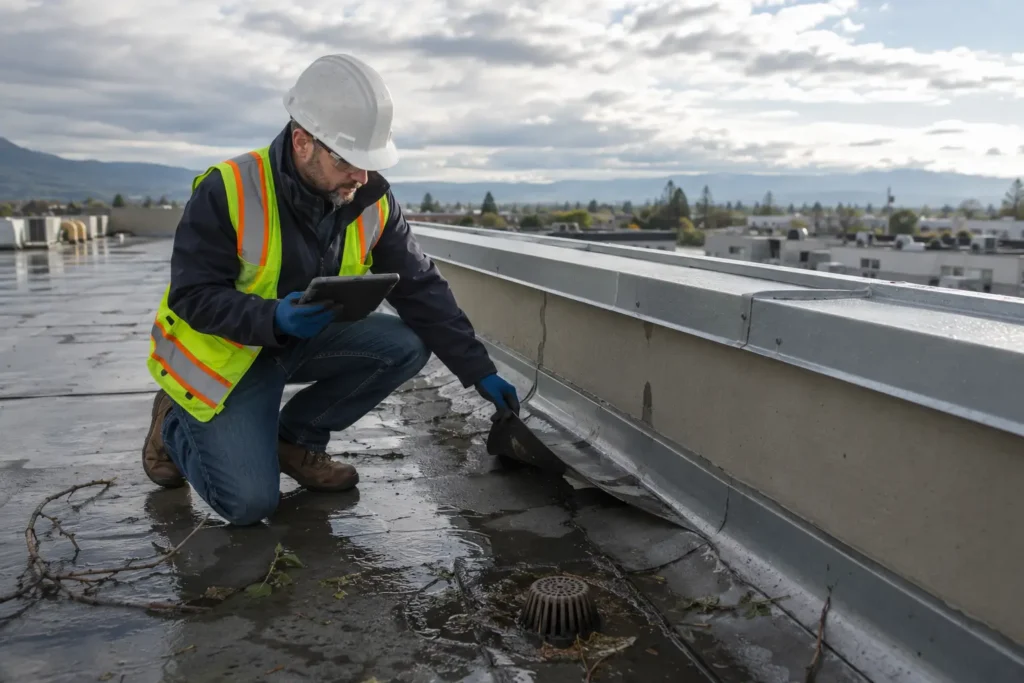

Step-by-Step Guide to Inspecting Your Roof After a Major Storm
The storm has passed, the parking lot is draining, and business appears ready to return to normal. Then someone notices a brown ceiling tile near the back office. Outside, a strip of roofing material lies beside the building. Is it minor debris, or evidence of a serious roof problem? Storm damage is rarely as straightforward as it looks. Water can enter through a small opening, travel across the roof deck, and appear several feet from the original leak. Wind may also loosen flashing or membrane seams without pulling them away completely.
Knowing when to contact commercial roof repair services San Jose property managers can trust is only part of the response. First, you need to inspect the property safely, document what happened, and prevent additional damage. This guide walks you through that process without asking you to climb onto a wet or unstable roof.
Step 1: Confirm the Property Is Safe Before Inspecting Anything
Your first reaction may be to find the leak immediately. Pause before entering affected areas or walking around the building. A damaged roof can create electrical hazards, unstable ceilings, slippery floors, and falling debris.
Start by checking the property from a safe distance. Look for fallen power lines, broken tree limbs, damaged exterior walls, hanging metal, or loose roofing materials. Keep employees and visitors away from questionable areas. If debris is hanging above an entrance, close that entrance until a professional evaluates it.
Inside, watch for sagging ceiling tiles, dripping light fixtures, burning odors, or water near electrical panels. These conditions require more than a routine inspection. Contact emergency services or the appropriate utility provider if there is an immediate electrical, fire, or structural danger.
Warning Signs That Require Immediate Action
Leave the affected part of the building and seek professional help if you notice:
A ceiling that is bulging or visibly sagging
Water flowing through lights or electrical fixtures
Cracking, shifting, or movement near the roofline
Loose roofing materials hanging over occupied areas
A strong burning smell after water intrusion
Large sections of the roof or exterior wall appearing displaced
Do not stand beneath a swollen ceiling tile to inspect it. Water-soaked materials can release suddenly, even when the visible area looks small.
Step 2: Inspect the Roof From the Ground and Inside the Building
Once immediate hazards have been ruled out, walk around the entire building. Begin far enough away to view the roof edges clearly. Binoculars or a camera with zoom can reveal damage without putting you on a ladder. Look for torn membrane pieces, bent metal panels, missing edge materials, lifted flashing, damaged gutters, and debris resting against the building. Pay close attention to corners. Strong winds create extra pressure along roof edges and can begin lifting materials in those areas.
Check the ground as well. A piece of metal, insulation, fastener, or roofing membrane may show that the storm disturbed something above. Photograph it where you found it before moving it.
Search Inside for Less Obvious Evidence
Walk through offices, storage rooms, hallways, mechanical spaces, and upper floors. Fresh water stains may appear yellow or brown, but newer leaks are sometimes harder to spot. Run your eyes along ceiling seams, walls, vents, skylights, and pipe openings.A musty odor can be an early clue. So can peeling paint, damp carpet, swollen drywall, or ceiling tiles that feel cooler than surrounding areas. Remember that the visible stain may not sit directly below the damaged roof section. Water often follows beams, pipes, and insulation before entering the occupied space.
Check rooms that receive little daily traffic. A slow leak in a storage area can remain unnoticed long enough to damage inventory or encourage mold growth.
Step 3: Check Roof Drains, Edges, and Penetrations
Commercial roofs depend heavily on working drainage. After heavy rain, blocked drains and scuppers may leave water standing on a low-slope roof. That added weight can stress the roof assembly and push moisture through weak seams. From accessible ground-level areas, inspect downspouts and discharge points. Is water flowing away from the building? Look for overflowing gutters, displaced downspout sections, erosion, or unusual pooling near the foundation. Water marks on exterior walls may reveal that drainage overflowed during the storm.
A professional commercial roof damage inspection in San Jose should examine the roof surface directly. However, your ground-level observations can help the contractor focus on likely trouble spots.
Pay Attention to Common Leak Points
Roof penetrations deserve special attention because they interrupt the continuous roofing surface. Common vulnerable locations include:
HVAC curbs and rooftop units
Plumbing vents
Skylights
Roof hatches
Flashing joints
Parapet walls
Exhaust fans
Equipment mounts
You may not be able to see these features safely from below. Instead, check the interior spaces beneath them for stains or dampness. Record the approximate location so the roofing professional can compare the interior symptom with conditions above.
Step 4: Photograph and Record Every Sign of Storm Damage
It is tempting to begin cleaning as soon as you discover water. Before the scene changes, create a clear visual record. Good documentation helps contractors understand the event and may support an insurance claim. Take both wide and close photographs. A wide image shows where the damage sits within the room or exterior wall. A close image captures details such as a torn seam, wet ceiling tile, or damaged inventory. If possible, include a common object for scale without disturbing the damaged area.
Write down the storm date, the approximate time it occurred, and when each problem was discovered. Note which rooms were affected and whether water was dripping, flowing, or merely staining a surface. Save relevant security footage before the system automatically overwrites it.
Build a Simple Storm-Damage File
Keep the following information together:
Photographs and videos
A list of affected rooms
Notes from employees who witnessed the leak
Previous maintenance and inspection records
Invoices for emergency protection
Receipts for damaged property
Contractor reports and repair estimates
Insurance correspondence
Avoid discarding wet materials until your insurer or adjuster explains what must be preserved. If something needs to be removed for safety, photograph it thoroughly first.
Step 5: Prevent Further Damage and Avoid Risky Repairs
Your next goal is to limit interior damage. Move merchandise, documents, electronics, and furniture away from active leaks. Place containers beneath drips only when the surrounding ceiling appears stable. Mark wet floors and restrict access to prevent slips. Do not climb onto the roof with a tarp or bucket of sealant. A wet commercial membrane can be extremely slippery. Storm damage may also weaken areas that appear normal from above. Improper fasteners can puncture the membrane and create new entry points.
Reputable San Jose roofing contractors can install emergency protection without turning a temporary problem into permanent damage. Before hiring anyone, verify the company’s license, insurance, physical business information, and experience with your roofing system.
Avoid These Common Post-Storm Mistakes
Never assume a leak has resolved simply because the rain stopped. Water can remain trapped inside insulation or beneath the roofing membrane long after the surface appears dry. Covering wet materials may hide the problem while damage continues to spread. Avoid applying general-purpose caulk to visible gaps. Sealants must match the roofing material and be applied to properly prepared surfaces. The wrong product may interfere with later repairs or violate an existing manufacturer warranty.
Be cautious with contractors who arrive uninvited, demand immediate payment, or pressure you to sign over insurance rights. A legitimate local company should explain the damage, provide documentation, and present a written repair scope.
When Commercial Roof Damage Requires Professional Repair
Not every piece of debris indicates major failure, but certain findings should move the property inspection to the top of your list. Active leaks, exposed decking, torn membranes, loose flashing, sagging areas, punctures, and blocked primary drains all deserve prompt attention.
Small openings should not be ignored. A minor puncture can allow moisture into a large section of insulation. The visible surface may later dry while trapped moisture continues reducing thermal performance and damaging the roof assembly.
For urgent storm-related commercial roof repairs, the contractor may first stabilize the area and stop active water entry. Permanent repairs can follow after the surface dries and the full extent of the damage becomes clear.
What a Professional Inspection Should Include
Qualified local San Jose roofing specialists should examine more than the obvious leak location. A useful inspection covers the roofing surface, seams, flashing, roof edges, parapet walls, drains, penetrations, and rooftop equipment. Ask for photographs and a written explanation of the findings. The report should distinguish storm damage from older maintenance issues. It should also explain whether moisture testing is recommended and whether repair work could affect a warranty.
Clean Roofing can inspect commercial roofing systems, identify vulnerable areas, and develop an appropriate repair plan. That gives property owners a clearer basis for deciding what needs immediate attention and what can be scheduled.
Conclusion
A careful storm response follows a simple order: protect people, inspect from safe areas, check drainage, document the evidence, limit interior damage, and arrange a professional evaluation when warning signs appear. That small ceiling stain deserves attention. It may come from a minor flashing gap, or it may be the first visible sign of trapped moisture across a wider area. Early inspection gives you more repair options and reduces the risk of damage reaching insulation, equipment, inventory, and occupied rooms.
If your San Jose commercial property shows signs of roof damage after a storm, Clean Roofing can provide a detailed inspection and explain the next practical step.
FAQs
How soon should a commercial roof be inspected after a major storm?
Complete a safe ground-level and interior check as soon as conditions settle. Arrange a professional inspection promptly if you notice leaks, displaced materials, drainage problems, or ceiling damage.
Can I safely inspect a flat commercial roof myself?
A ground-level and interior inspection is usually safer. Do not access a wet or potentially damaged roof unless you are trained, authorized, and equipped to do so.
Does ponding water always mean the roof is damaged?
Not automatically, but water that remains after normal drainage time may signal blocked drains, poor slope, or roof deformation. It should be evaluated before another storm arrives.
What should I do if the roof starts leaking during business hours?
Move people and valuable items away from the area. Isolate electrical hazards, place barriers around wet floors, document the leak, and contact a qualified roofing company. Call emergency services if structural or electrical safety is uncertain.
⚡ Upgrade your thinking. Follow New Topy.