
How to Budget for a Residential Concrete Floor Coating Project
Coating a residential concrete floor can improve its appearance, durability, and ease of maintenance. It may be suitable for garages, basements, workshops, laundry rooms, home gyms, and other areas built over concrete. However, preparing an accurate budget can be difficult because the total price depends on more than the size of the room.
Every slab has different conditions and performance needs. Some floors only require standard preparation, while others need crack repairs, moisture treatment, coating removal, or additional protective layers. Homeowners can create a more realistic budget by understanding the complete installation process before requesting estimates.
Define How the Room Will Be Used
Start by determining how the room will be used. A lightly used basement storage area does not require the same coating system as a garage exposed to vehicles, wet tires, oil, road salt, tools, and temperature changes.
The selected system should match the expected traffic and exposure. Professional residential epoxy floor coating services may include an assessment of the room, mechanical surface preparation, concrete repairs, coating application, decorative materials, and protective sealing. Reviewing the complete scope helps homeowners understand which parts of the project are included in an estimate.
Consider whether the floor will be exposed to:
Vehicle traffic
Children or pets
Heavy furniture
Exercise equipment
Household chemicals
Water and moisture
Rolling cabinets
Tools and machinery
A busy garage or workshop may need a stronger topcoat than a basement room used mainly for storage.
Measure the Complete Coating Area
Square footage is one of the first details used to estimate material and labor requirements. Measure the length and width of the main room, and then include any additional sections that will receive the coating.
These areas may include:
Storage spaces
Concrete steps
Utility sections
Raised edges
Small adjoining rooms
Concrete curbs
Workshop areas
Do not estimate the project only by describing the room as a one-car or two-car garage. Garages with the same vehicle capacity can have different dimensions, storage areas, and layouts.
Contractors may also need extra time for corners, edges, drains, fixed equipment, and difficult access. These details should be considered when planning the budget.
Inspect the Existing Concrete
The condition of the slab can significantly affect the final price. A stable floor with limited damage generally requires less preparation than concrete with deep cracks, pitting, oil contamination, moisture problems, or an existing coating.
Look for visible issues such as:
Cracks and damaged joints
Surface pitting
Uneven sections
Loose concrete
Oil or chemical stains
Old paint
Peeling coatings
Damp areas
White mineral deposits
A new coating should not be used to conceal unstable concrete or an active water problem. Damaged areas must be repaired, while plumbing, drainage, or foundation problems should be addressed separately.
Include Surface Preparation in the Budget
Surface preparation is a necessary part of a dependable coating system. Concrete may appear clean while still containing weak material, dust, grease, sealers, or contamination that can prevent proper adhesion.
Mechanical grinding is commonly used to remove weak surface material and create a profile that helps the coating bond to the slab. Depending on the floor, preparation may also include degreasing, edge grinding, vacuuming, and old coating removal.
Projects requiring extensive grinding or coating removal normally involve more labor. However, reducing preparation to lower the initial price can increase the risk of peeling, bubbling, or early coating failure.
Homeowners should ask each contractor to explain the preparation method included in the estimate.
Allow for Concrete Repairs
Cracks and surface damage should be repaired before the coating is installed. Minor cracks may require straightforward filling, while wider cracks, damaged joints, broken edges, or weak concrete may need more detailed treatment.
Repair work may include:
Filling cracks
Patching holes
Rebuilding damaged edges
Removing loose material
Repairing joints
Leveling uneven sections
Treating heavily pitted areas
The amount of repair work may not be fully visible until old paint or coatings are removed. For this reason, homeowners should reserve part of the budget for hidden slab problems.
Compare Available Coating Systems
Different materials provide different levels of durability, curing speed, UV resistance, and decorative flexibility.
Epoxy Coatings
Epoxy can create a hard, sealed surface suitable for many residential garages, basements, workshops, and utility areas. It is available in solid colors, decorative flakes, quartz blends, and metallic finishes.
The performance of an epoxy floor depends on the quality of the materials, slab preparation, number of layers, and protective topcoat.
Polyaspartic Coatings
Polyaspartic coatings cure more quickly and may offer greater resistance to sunlight. They are often considered for garages, covered outdoor spaces, and projects that require a shorter return-to-service period.
Their rapid curing can make controlled professional application particularly important.
Polyurethane Topcoats
Polyurethane may be installed over an epoxy base coat to improve scratch resistance, flexibility, chemical protection, and color stability.
It is generally used as part of a complete flooring system rather than as the primary decorative layer.
Acrylic Sealers
Acrylic sealers provide lighter surface protection and may suit decorative or lower-traffic areas. They are generally thinner than epoxy or polyaspartic systems and may require more frequent renewal.
Decide Between Basic and Decorative Finishes
Design choices also influence the project budget. A basic solid-color system may use fewer materials than a customized metallic or full-broadcast flake floor.
Common finish options include:
Solid colors
Decorative flakes
Metallic pigments
Quartz aggregates
Matte topcoats
Satin finishes
High-gloss surfaces
Custom colors, specialty materials, and multiple decorative layers can increase material and installation requirements. Slip-resistant additives may also be included in garages, laundry rooms, entryways, and moisture-prone spaces.
Homeowners should choose a finish based on daily use as well as appearance. A highly textured surface may improve traction but require more effort to clean.
Understand the Number of Coating Layers
A complete flooring system may contain several layers:
Mechanically prepared concrete
Primer or moisture-control layer
Pigmented base coat
Decorative flakes or metallic pigments
Clear protective topcoat
Some systems include additional coats for greater build, chemical resistance, or durability. More layers require additional materials and installation time, but they may provide better protection in frequently used areas.
When comparing estimates, homeowners should ask how many layers are included and what purpose each layer serves. Two proposals may both use epoxy while offering very different systems.
Account for Moisture Testing
Moisture is particularly important in basements and ground-level rooms. Vapor can move through concrete even when the surface appears dry. If excessive moisture becomes trapped beneath a coating, it may affect adhesion and cause bubbling, discoloration, or peeling.
Moisture testing may be required before selecting the flooring system. If the slab has elevated moisture levels, a vapor-control primer or another treatment may be recommended.
Testing and moisture protection can increase the initial budget, but ignoring the condition may lead to more expensive repairs later.
Review the Main Cost Factors
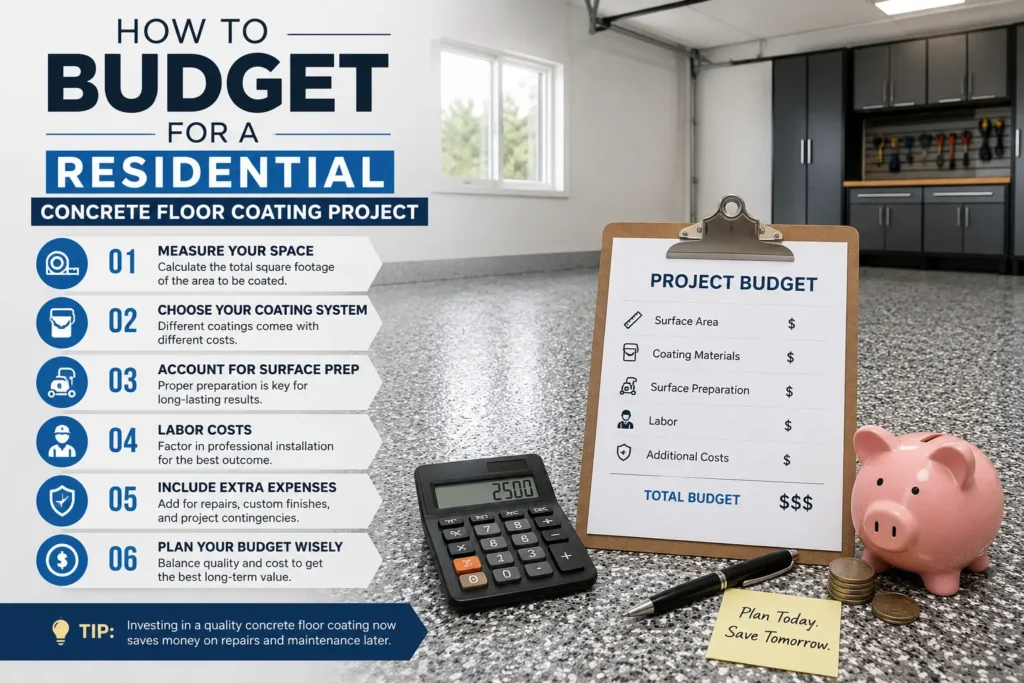
When researching residential epoxy floor coating cost, homeowners should check whether the quoted amount includes preparation, concrete repairs, moisture treatment, materials, decorative finishes, labor, and the final protective coat.
The main factors affecting the budget include:
Total square footage
Existing slab condition
Crack and joint repairs
Surface preparation
Old coating removal
Moisture testing
Coating material
Number of layers
Decorative finish
Slip resistance
Project access
Labor requirements
A price based only on square footage may not accurately represent the complete project.
Compare Written Estimates Carefully
A detailed written estimate should explain what work will be performed rather than presenting only one total amount.
Review the following details:
Concrete preparation method
Repairs included
Moisture treatment
Product type
Number of layers
Decorative coverage
Topcoat selection
Curing time
Maintenance requirements
Warranty terms
The lowest estimate may exclude grinding, repairs, moisture control, or a durable topcoat. Comparing the complete scope helps homeowners evaluate long-term value rather than initial price alone.
Plan for Woodland Park, NJ Conditions
Residential floors in Woodland Park, NJ, may experience seasonal humidity, rain, winter snow, road salt, wet vehicles, and temperature changes. These conditions can affect garages, basements, entry areas, and other concrete spaces.
Garage coatings may need resistance to salt, mud, vehicle fluids, and wet tires. Basement slabs may require moisture testing before installation. The coating should be selected according to the room’s actual environment rather than applying one standard system throughout the home.
Epoxy Shine works with residential concrete flooring projects in Woodland Park, NJ. A site assessment can identify slab damage, preparation requirements, moisture concerns, and suitable finish options before the final budget is prepared.
Include Future Maintenance Costs
A coated floor still requires routine care. Homeowners should include long-term maintenance when comparing flooring options.
Regular maintenance may involve:
Sweeping loose dirt
Damp mopping
Removing spills promptly
Using coating-safe cleaners
Avoiding abrasive tools
Protecting the floor from dragging furniture
Inspecting heavily used areas
Some topcoats may eventually require renewal, depending on traffic, exposure, cleaning habits, and material quality. A stronger initial system may offer better value if it reduces frequent repairs or recoating.
Final Thoughts
A realistic residential concrete floor coating budget should include more than materials and square footage. Slab condition, preparation, repairs, moisture testing, coating type, decorative choices, layer count, labor, and future maintenance all influence the total investment.
Homeowners should inspect the floor, define how the room will be used, and compare detailed written estimates. Setting aside a small contingency for hidden repairs can also prevent unexpected costs from disrupting the project.
By evaluating the complete flooring system instead of choosing the lowest quoted price, homeowners can select a coating that fits the room, performs reliably, and provides better long-term value.
➾ Learn what actually works. Follow New Topy.