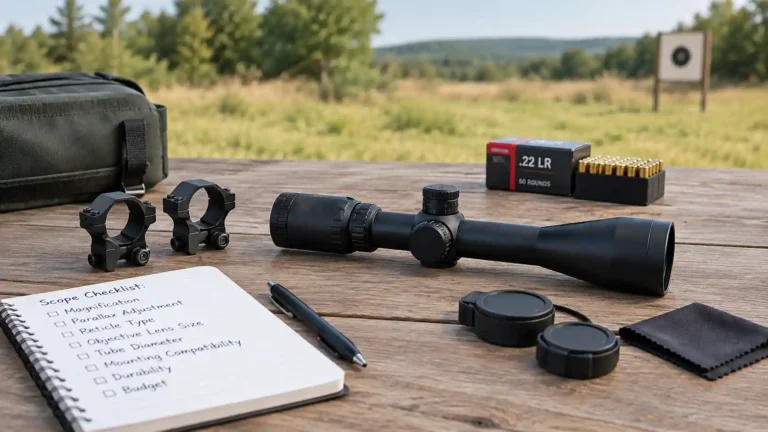
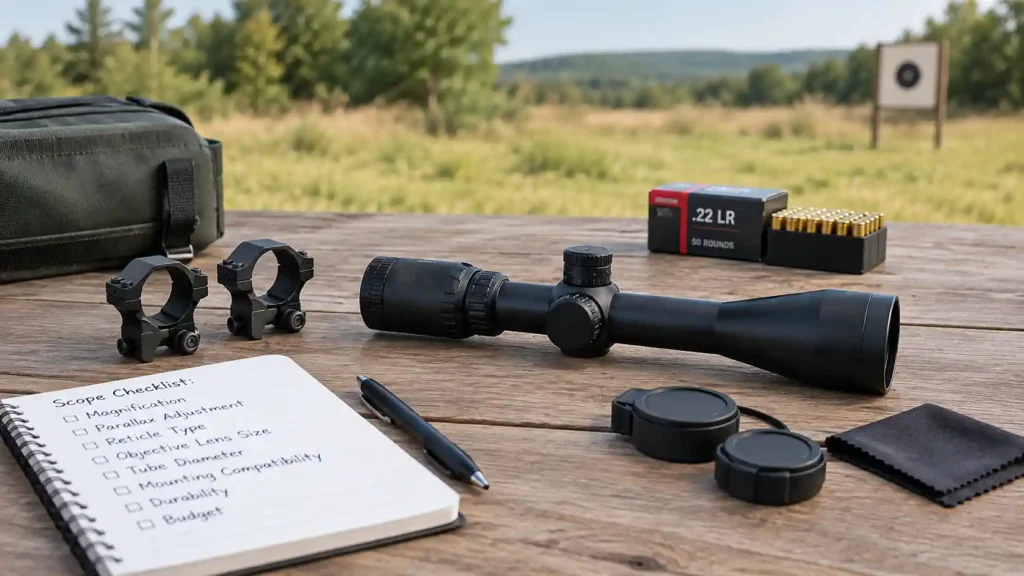

How to Choose the Right Scope for Your .22 LR Rifle
The .22 LR has earned its reputation as one of the most versatile and forgiving calibers a shooter can own. It’s quiet, affordable to feed, and gentle on the shoulder, which is exactly why it remains the go-to choice for beginners, small-game hunters, and competitive plinkers alike. But there’s a detail that often gets overlooked in the excitement of picking out a new rifle: the optic you mount on top of it matters just as much as the rifle itself. A poorly matched scope can turn an otherwise excellent .22 LR into a frustrating tool, while the right glass can transform a budget rifle into a genuinely capable shooter.
This guide walks through what actually matters when selecting a scope for rimfire shooting, why .22 LR optics differ from centerfire setups, and how to avoid common mistakes that lead to wasted money and disappointing groups.
Why .22 LR Rifles Need Their Own Optic Considerations
It’s tempting to assume that any scope will work on any rifle, but rimfire shooting has its own quirks that make optic selection a bit different from centerfire rifles.
First, .22 LR ammunition has a much more pronounced trajectory arc than centerfire rounds. Because muzzle velocities typically sit between 1,000 and 1,300 feet per second, bullet drop becomes noticeable even at modest distances like 50 to 100 yards. This means your scope’s reticle and turret adjustments need to be calibrated with rimfire ballistics in mind, not centerfire assumptions. The rifle you start with also shapes which optic makes sense, since barrel length, weight, and intended use all influence the ideal magnification and mounting setup; a comparison like Billings, Best 22 LR Rifles is a useful reference point for understanding how different rimfire rifle platforms pair with different styles of glass before you commit to a purchase.
Second, most .22 LR rifles are used for close-to-medium range work, whether that’s backyard plinking, squirrel hunting, or informal target shooting at 25 to 100 yards. This changes the priorities for magnification range, parallax setting, and even reticle complexity compared to a rifle built for 300-yard shots.
Third, rimfire rifles are often lighter and generate less recoil, which means the scope doesn’t need the heavy-duty recoil resistance built into optics designed for magnum centerfire cartridges. That said, durability still matters, especially if the rifle will see field use.
Magnification: More Isn’t Always Better
One of the most common mistakes new shooters make is choosing a scope with unnecessarily high magnification. A 4-16x optic might sound impressive, but for most .22 LR applications, it’s overkill.
For general plinking and small-game hunting inside 100 yards, a variable 2-7x or 3-9x scope covers nearly every practical scenario. The lower end of that range gives you a wide field of view for tracking moving targets like squirrels or rabbits, while the higher end provides enough precision for careful shot placement at longer distances.
If you’re specifically shooting at a dedicated rimfire target range where distances rarely exceed 50 yards, even a fixed 4x scope can be perfectly adequate and often more affordable.
Parallax Adjustment: A Detail Rimfire Shooters Shouldn’t Skip
Parallax error occurs when the reticle appears to shift position relative to the target as you move your eye behind the scope, and it becomes more pronounced at shorter distances. Many centerfire scopes are factory-set for parallax-free performance at 100 yards, which is exactly the range where most .22 LR shooting does not happen.
This is why dedicated rimfire scopes often feature parallax adjustment starting as close as 10 yards, sometimes even closer. If you’re shooting at 25 or 50 yards without a properly adjusted parallax setting, you may find your point of impact shifting slightly depending on your head position, even if your fundamentals are solid.
When shopping for a scope, check whether it offers an adjustable objective (AO) or a side-focus parallax knob calibrated for short distances. If the scope only adjusts down to 50 or 100 yards, it may not be the ideal match for close-range rimfire work.
Reticle Choice for Rimfire Shooting
Reticle preference is partly a matter of personal taste, but there are a few practical considerations specific to .22 LR use.
Simple duplex or crosshair reticles work well for hunting and casual plinking where quick target acquisition matters more than precise holdover calculations.
BDC (bullet drop compensator) reticles designed specifically for rimfire ballistics can be genuinely useful, since .22 LR drop is significant enough at 50-100 yards to benefit from built-in holdover marks. Just make sure the BDC reticle is calibrated for .22 LR trajectory rather than a centerfire round, as the drop curves are quite different.
Mil-dot or MOA-based reticles are popular among shooters who enjoy precision rimfire competition or who want to practice fundamentals like ranging and holdover before moving to centerfire rifles. These require more knowledge to use effectively but offer the most flexibility.
For most everyday shooters, a simple duplex reticle paired with a scope that has clearly marked, repeatable turrets is more than sufficient.
Objective Lens Size and Weight Balance
It’s easy to assume a larger objective lens automatically means better performance, but on a .22 LR rifle, this can work against you. Rimfire rifles are typically lightweight, and mounting an oversized, heavy scope creates a front-heavy, awkward-feeling rifle that’s harder to handle, especially for younger or smaller-framed shooters.
A 32mm to 40mm objective lens is generally the sweet spot for rimfire optics. This size provides adequate light gathering for dawn and dusk hunting conditions without adding unnecessary bulk or weight. Since most .22 LR shooting happens in daylight at close range anyway, the extra light-gathering capability of a massive 50mm or 56mm objective lens rarely translates into a practical advantage for this caliber.
Tube Diameter and Mounting Considerations
Most rimfire scopes use a 1-inch main tube, which is standard, widely compatible, and typically more affordable than 30mm tubes. Unless you have a specific reason to need a 30mm tube, such as wanting extra windage and elevation travel for long-range rimfire competition, a 1-inch tube will serve the vast majority of shooters well.
When it comes to mounting, .22 LR rifles often have a shorter receiver and different rail specifications than centerfire rifles, so double-check compatibility before purchasing rings or a base. Many dedicated rimfire rifles use a 3/8-inch dovetail rail rather than a standard Picatinny or Weaver rail, which means you’ll need rings or an adapter specifically designed for that mounting system. Getting this wrong is one of the most common and easily avoidable mistakes new rimfire shooters make.
Durability: What You Actually Need
Because .22 LR generates minimal recoil, you don’t need a scope rated to withstand heavy magnum recoil forces. However, that doesn’t mean durability is unimportant. If your rifle will spend time outdoors, in a truck, or on a hunting trip, look for scopes that are:
- Fog-proof, using nitrogen or argon purging to prevent internal condensation
- Waterproof, with sealed O-rings to keep moisture out
- Shockproof, able to handle drops and bumps during normal field use
These features add relatively little to the cost of a rimfire scope but significantly extend its usable lifespan, especially if the rifle is used for hunting or stored in variable temperature and humidity conditions.
Budget Expectations
One of the appealing aspects of building out a .22 LR setup is that you don’t need to spend centerfire-scope money to get solid performance. Quality rimfire scopes with good glass clarity, reliable turret tracking, and appropriate parallax adjustment are available at a fraction of the price of premium centerfire optics.
That said, it’s worth resisting the temptation to pair an expensive rifle with the cheapest scope available, or vice versa. A general rule of thumb many experienced shooters follow is to spend roughly a third to half of the rifle’s cost on the optic. This keeps the overall setup balanced, ensuring the glass doesn’t become the weak link that undermines an otherwise accurate rifle.
Red Dot Sights vs. Traditional Scopes for .22 LR
Not every rimfire shooter wants magnification. Red dot sights have become increasingly popular for .22 LR rifles used in fast target acquisition scenarios, such as informal competition, plinking at moving targets, or teaching new shooters the fundamentals of sight alignment without the added complexity of a magnified reticle.
Red dots offer a wide field of view and quick target transitions, but they come with trade-offs: no magnification means less precision at distance, and battery dependency means you need to keep spares on hand. For rimfire shooters who primarily shoot inside 25 yards and prioritize speed over precision, a quality red dot can be an excellent alternative to a traditional scope.
Mounting Height and Cheek Weld
A frequently overlooked factor in rimfire optic selection is how the scope’s mounting height affects your cheek weld, meaning the position of your face against the stock. Because many .22 LR rifles have lower combs than centerfire hunting rifles, an objective lens that’s too large can force you to mount the scope too high, breaking proper cheek contact with the stock.
This misalignment makes it harder to maintain a consistent sight picture shot after shot, which directly affects accuracy and consistency. When possible, test the mounted setup before committing, or choose rings with a height specifically recommended for your rifle’s stock profile and the scope’s objective lens diameter.
Final Thoughts
Choosing the right scope for a .22 LR rifle isn’t about chasing the highest magnification or the biggest objective lens available. It’s about matching the optic’s features, especially parallax adjustment, reticle type, and mounting compatibility, to the realistic distances and conditions you’ll actually be shooting in. A thoughtfully chosen, moderately priced rimfire scope will almost always outperform an expensive but poorly matched optic.
Take the time to consider how you’ll primarily use the rifle, whether that’s teaching a new shooter, hunting small game, or enjoying casual backyard plinking, and let that use case guide your optic decision. Getting this pairing right is what separates a rifle that simply looks good on paper from one that consistently delivers tight groups and an enjoyable shooting experience.