

10 Best SEO Reporting Tools for Agencies, Freelancers & Businesses
SEO reporting can make or break client relationships.
You might be delivering exceptional results behind the scenes, but if those results aren’t presented clearly, clients may never recognize the real value of your work. Rankings improve, organic traffic grows, and conversions increase, yet poorly structured reports often leave stakeholders confused rather than impressed.
That’s why SEO reporting tools have become an essential part of every successful SEO workflow.
Modern reporting platforms do much more than export data. They automatically pull information from multiple sources, transform raw numbers into visual insights, and help agencies communicate performance in a way that clients actually understand.
Whether you’re running a digital agency, managing SEO campaigns for an in-house team, or working as a freelancer, choosing the right reporting software can save countless hours every month.
The challenge is that there are dozens of options available, and not every tool is built for the same purpose. Some prioritize automation, while others stand out for customization, white-label reporting, or sophisticated data visualization.
In this guide, we’ll explore the best SEO reporting tools available today and help you determine which solution aligns with your workflow, budget, and reporting requirements.
How We Choose the Best SEO Reporting Tools
There is no single “best” reporting tool for everyone. A freelancer handling five clients has very different needs compared to an enterprise agency managing hundreds of campaigns.
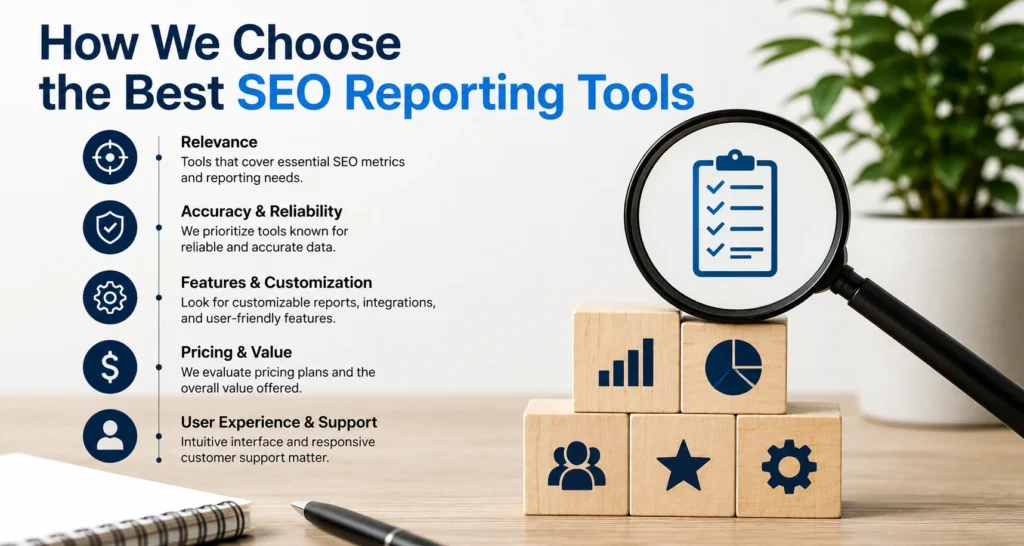
To create this list, we evaluated each platform based on factors that matter most in real-world SEO reporting.
First, we looked at automation capabilities. The ability to schedule reports and automatically pull fresh data significantly reduces manual work.
We also considered customization options. Agencies often need branded reports with custom layouts, logos, and personalized metrics.
Integration support was another major factor. A quality reporting platform should connect seamlessly with essential marketing tools such as Google Analytics, Google Search Console, Ahrefs, SEMrush, Google Ads, and social media platforms.
Ease of use played an important role as well. Powerful features mean little if the interface is difficult to navigate.
Finally, pricing, scalability, and customer support were assessed to ensure the tools listed below provide long-term value.
➜ You might also like: Best White Label SEO Tools
Google Looker Studio
Formerly known as Google Data Studio, Google Looker Studio remains one of the most popular SEO reporting tools available.
The biggest advantage of Looker Studio is flexibility. Instead of relying on pre-built templates alone, users can create highly customized dashboards tailored to specific reporting goals.
For agencies that want complete control over report design, Looker Studio offers nearly unlimited possibilities.
You can combine data from Google Analytics, Google Search Console, Google Ads, BigQuery, and numerous third-party connectors to build comprehensive SEO dashboards.
Another reason marketers love Looker Studio is cost. The platform itself is free, making it especially attractive for freelancers and small businesses with limited budgets.
However, flexibility comes with a learning curve. Building advanced dashboards often requires time, experimentation, and occasionally paid connectors for non-Google data sources.
For teams willing to invest time into setup, Looker Studio delivers exceptional reporting capabilities without adding substantial software costs.
AgencyAnalytics
AgencyAnalytics was built specifically for marketing agencies, and that specialization becomes obvious from the moment you start using it.
Unlike general dashboard tools, AgencyAnalytics focuses heavily on automated client reporting.
The platform includes pre-built integrations for major SEO and marketing tools, allowing agencies to generate reports quickly without extensive configuration.
One standout feature is its white-label functionality. Agencies can fully brand reports, dashboards, and even the client portal to create a seamless experience.
Clients can log into dedicated dashboards anytime to monitor campaign performance without requesting manual updates.
The software also supports automated report scheduling, rank tracking, backlink monitoring, site audits, and competitor analysis, making it an all-in-one reporting ecosystem.
For agencies managing dozens or even hundreds of clients, these automation features can save significant time each month.
Although AgencyAnalytics may be more expensive than some alternatives, the productivity gains often justify the investment.
SEMrush My Reports
SEMrush has established itself as one of the leading SEO platforms in the industry, and its My Reports feature extends that power into reporting.
Users can create visually appealing reports by combining data from multiple SEMrush tools into a single document.
Keyword rankings, backlink performance, site audit findings, organic visibility trends, and competitor insights can all be included within a few clicks.
One area where SEMrush excels is storytelling.
Rather than presenting isolated metrics, marketers can showcase a complete picture of campaign performance and explain how SEO efforts contribute to business growth.
The drag-and-drop report builder simplifies customization, while scheduled PDF reports ensure stakeholders receive updates automatically.
Agencies already using SEMrush for research and campaign management will likely find My Reports particularly valuable because it eliminates the need to move data between multiple systems.
The primary drawback is cost. Businesses not already invested in the SEMrush ecosystem may find standalone reporting solutions more economical.
Still, for existing SEMrush users, the reporting functionality adds tremendous value and streamlines client communication considerably.
➜ You might also like: Best Etsy SEO Tools
Ahrefs Reporting Tools
Ahrefs is widely recognized for its backlink database and competitive analysis capabilities, but its reporting features are equally valuable for SEO professionals.
For teams already relying on Ahrefs for keyword research and link building, the platform provides a straightforward way to monitor and present campaign performance.
Users can generate reports covering organic traffic growth, keyword rankings, backlink acquisition, referring domains, and competitor movements.
One of Ahrefs’ biggest strengths is data accuracy. Because the platform continuously crawls the web, marketers gain access to fresh insights that help explain both wins and setbacks in SEO campaigns.
The visual reports are clean and easy to understand, making them suitable for both internal teams and client presentations.
However, Ahrefs isn’t a dedicated reporting platform. While it offers excellent SEO data, advanced white-label capabilities, and highly customizable client dashboards are somewhat limited compared to specialized reporting solutions.
Still, for agencies and consultants that prioritize backlink analysis and competitor intelligence, Ahrefs remains an indispensable reporting resource.
Databox
Databox has become increasingly popular among marketers because it transforms complex marketing data into visually engaging dashboards.
Instead of manually compiling reports from multiple platforms, users can connect dozens of marketing tools and centralize all performance metrics in one place.
SEO agencies particularly appreciate Databox because it supports integrations with Google Analytics, Google Search Console, SEMrush, Ahrefs, HubSpot, and many other platforms.
The dashboard interface is intuitive, allowing users to monitor key performance indicators in real time.
Another major advantage is accessibility. Stakeholders can view live dashboards anytime without waiting for monthly PDF reports.
This level of transparency often strengthens client relationships because clients always have access to current campaign performance.
Databox also includes goal tracking functionality, enabling marketers to measure progress against predefined objectives.
Although extensive customization is available, some advanced features require higher-tier subscriptions, which may increase costs for growing agencies.
Even so, Databox strikes an impressive balance between functionality, ease of use, and reporting automation.
DashThis
When simplicity and speed are priorities, DashThis deserves serious consideration.
Unlike platforms that require extensive setup, DashThis focuses on making report creation as effortless as possible.
Users can choose from pre-built templates, connect their data sources, and generate professional reports within minutes.
This streamlined approach makes the platform especially attractive for freelancers and small agencies that want polished reports without investing hours in dashboard design.
DashThis integrates with major SEO and marketing platforms, including Google Analytics, Google Search Console, Ahrefs, SEMrush, Moz, and Google Ads.
The platform’s white-label functionality is another significant advantage. Agencies can customize reports with their own branding, logos, and color schemes, creating a more professional client experience.
Automated scheduling further reduces manual work by delivering reports directly to clients on a predefined schedule.
While DashThis may not offer the deep customization found in Looker Studio, its simplicity is precisely what many users value most.
For busy marketers who prioritize efficiency over endless customization options, DashThis can be an excellent solution.
➜ You might also like: AI Search Competitive Analysis Tools
SE Ranking
SE Ranking has evolved from a rank tracking tool into a comprehensive SEO platform with robust reporting capabilities.
One of its biggest advantages is its affordability.
Compared to many enterprise-level competitors, SE Ranking offers an extensive feature set at a relatively accessible price point, making it attractive to freelancers, startups, and growing agencies.
The reporting module allows users to create customized SEO reports featuring keyword rankings, website audits, competitor analysis, and backlink data.
Reports can be fully branded and automatically delivered to clients, eliminating repetitive administrative tasks.
SE Ranking also offers an intuitive interface that doesn’t overwhelm new users.
This ease of use, combined with flexible pricing, has helped the platform gain significant popularity in recent years.
For agencies seeking an all-in-one SEO toolkit with solid reporting functionality, SE Ranking represents a compelling option.
Whatagraph
Whatagraph was specifically designed to solve one of digital marketing’s biggest problems: transforming raw marketing data into reports clients can easily understand.
The platform excels at visual storytelling.
Instead of overwhelming stakeholders with spreadsheets and technical metrics, Whatagraph presents data through clean visuals and easy-to-follow charts.
This client-friendly approach makes it particularly valuable for agencies serving non-technical business owners.
Whatagraph supports a wide range of integrations, allowing users to combine SEO, PPC, social media, and email marketing data within a single report.
Cross-channel reporting is increasingly important because businesses rarely evaluate SEO performance in isolation.
The ability to showcase how SEO contributes to broader marketing goals often leads to more productive conversations with clients.
Although Whatagraph sits at a higher price point than some alternatives, agencies focused on premium reporting experiences frequently consider the investment worthwhile.
Raven Tools
Raven Tools has been part of the SEO industry for many years, and its reporting capabilities continue to make it a trusted choice for agencies.
The platform combines SEO research, website auditing, rank tracking, and reporting within a unified environment.
One feature that stands out is report flexibility.
Users can mix data from multiple sources and create highly customized reports tailored to specific client requirements.
Raven Tools also includes white-label functionality, automated scheduling, and drag-and-drop report builders that simplify the reporting process.
For agencies managing numerous campaigns simultaneously, these features can significantly improve operational efficiency.
While the interface may not feel as modern as some newer competitors, Raven Tools still delivers dependable performance and comprehensive reporting functionality.
For marketers seeking a mature, agency-focused reporting platform, Raven Tools remains a strong contender.
➜ You might also like: Best Link Building Marketplace
ReportGarden
ReportGarden is another powerful reporting platform designed primarily for agencies that manage multiple digital marketing campaigns.
What makes ReportGarden stand out is its strong focus on agency operations. Beyond reporting, the platform includes features for client management, invoicing, budgeting, and campaign tracking.
From an SEO reporting perspective, users can create automated reports using data from various marketing channels and deliver them directly to clients on a recurring schedule.
The white-label capabilities are particularly useful for agencies that want to strengthen their brand presence throughout the reporting process.
ReportGarden also supports customizable dashboards, enabling marketers to present only the metrics that matter most to clients.
While the interface may require some initial learning, agencies looking for both reporting and business management functionality will likely find substantial value in the platform.
Essential Features to Look for in an SEO Reporting Tool
Not all SEO reporting tools are built the same.
Some platforms specialize in visualization, while others prioritize automation or white-label functionality. Before investing in any software, it’s important to understand which features directly impact your workflow.
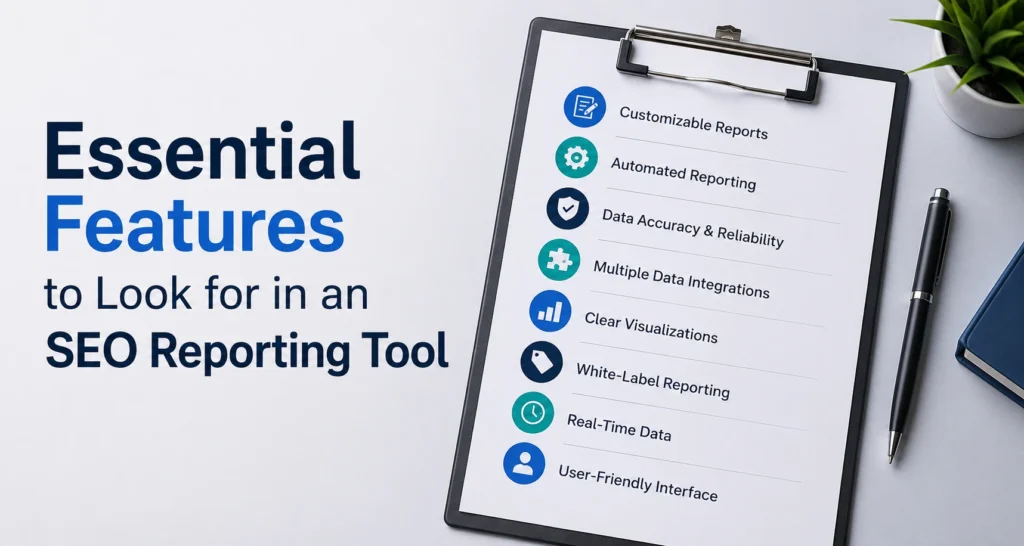
Automation should be at the top of your checklist. Manually creating reports every week or month quickly becomes unsustainable as your client base grows. Automated reporting ensures stakeholders receive timely updates without requiring constant effort from your team.
Customization is equally important. Every client has different goals, and reports should reflect those objectives. A flexible reporting tool allows you to personalize dashboards, choose specific metrics, and tailor reports for individual campaigns.
Integration capabilities also deserve careful consideration. Modern SEO campaigns rely on multiple platforms, including Google Analytics, Google Search Console, Google Ads, Ahrefs, SEMrush, and social media channels. The ability to centralize this information into a single dashboard significantly improves reporting efficiency.
White-label functionality is another critical feature for agencies. Branded reports create a more professional experience and reinforce your company’s value during client interactions.
Finally, look for tools that offer intuitive dashboards and clear visualizations. Reports should simplify complex data rather than make it more confusing.
Best SEO Reporting Tools by Use Case
The ideal reporting tool largely depends on how you plan to use it.
For agencies managing numerous clients, AgencyAnalytics and Whatagraph are often among the strongest choices because of their automation and white-label capabilities.
Freelancers and consultants frequently gravitate toward Google Looker Studio due to its flexibility and cost-effectiveness.
Small businesses seeking an affordable all-in-one SEO platform may find SE Ranking particularly appealing.
Enterprise organizations often prefer Databox or Looker Studio because of their scalability and extensive integration options.
Meanwhile, marketers already working extensively within the SEMrush or Ahrefs ecosystems may benefit most from using their native reporting features.
Rather than choosing the most feature-rich platform, focus on selecting the solution that aligns with your existing processes and long-term business goals.
SEO Reporting Tools vs. Manual Reporting
Many marketers still rely on spreadsheets and manual exports when creating SEO reports.
While this approach may work initially, it becomes increasingly inefficient as campaigns expand.
Manual reporting consumes valuable time that could otherwise be spent on strategy, optimization, and client communication.
It also introduces a greater risk of human error. Missing data, inaccurate calculations, and outdated metrics can easily find their way into reports when everything is assembled manually.
Automated SEO reporting tools solve these problems by continuously pulling fresh data from connected sources.
In addition to saving time, automation improves consistency and ensures that stakeholders always receive accurate information.
Most importantly, modern reporting platforms help transform data into actionable insights rather than simply presenting numbers.
Common SEO Metrics Every Report Should Include
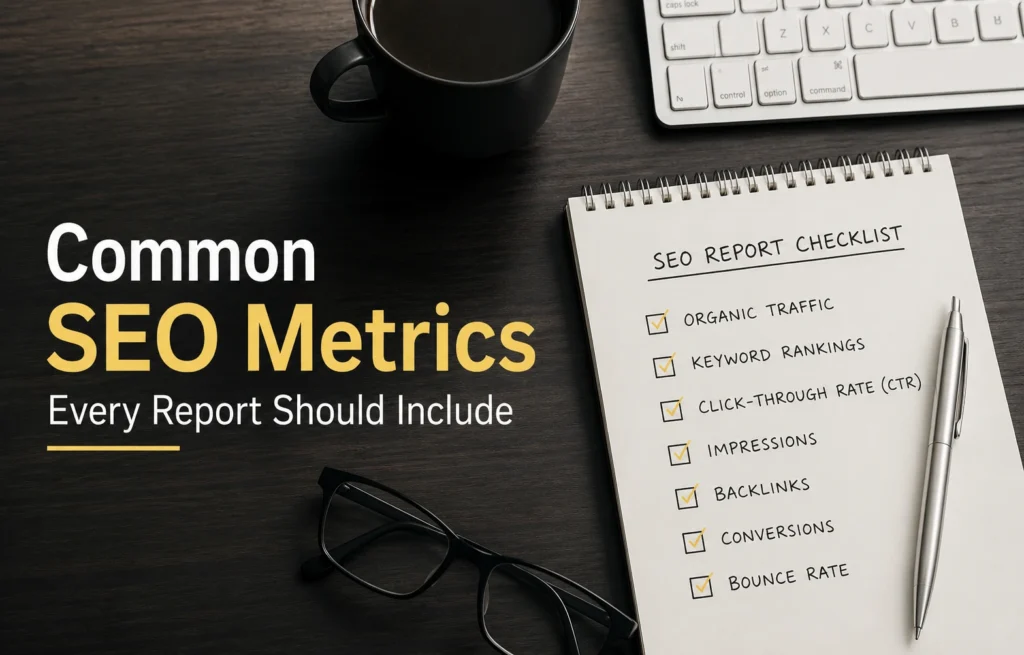
Effective SEO reports focus on outcomes rather than vanity metrics.
Organic traffic remains one of the most important indicators because it demonstrates whether visibility improvements are translating into actual visitors.
Keyword rankings provide valuable context, helping clients understand how search visibility changes over time.
Metrics such as impressions, click-through rates, and conversions offer deeper insight into campaign performance and user behavior.
Backlink growth, referring domains, and technical SEO health also deserve attention, particularly for long-term SEO campaigns.
Finally, every report should highlight business impact. Whether the goal is lead generation, revenue growth, or increased brand awareness, connecting SEO performance to meaningful business objectives makes reports far more valuable.
Conclusion
The best SEO reporting tools do far more than automate data collection.
They help agencies showcase results, strengthen client relationships, and make smarter marketing decisions.
Whether you choose Google Looker Studio for its flexibility, AgencyAnalytics for its agency-focused features, or Databox for real-time dashboards, the right platform should simplify your workflow rather than complicate it.
Ultimately, the best SEO reporting tool is the one that saves you time, communicates value clearly, and scales alongside your business.
Take advantage of free trials whenever possible, test multiple platforms, and select the solution that best supports your reporting goals.
Frequently Asked Questions
What is the best SEO reporting tool?
There isn’t a universal answer because the best tool depends on your specific needs. AgencyAnalytics is excellent for agencies, Google Looker Studio is ideal for customization, and Databox works well for real-time reporting.
Are there any free SEO reporting tools?
Yes. Google Looker Studio is one of the most popular free SEO reporting tools available. It allows users to create customizable dashboards and reports using data from various Google products.
Which SEO reporting tool is best for agencies?
AgencyAnalytics, Whatagraph, and DashThis are widely considered among the best options for agencies because they offer white-label reporting, automation, and client-friendly dashboards.
What metrics should an SEO report include?
A comprehensive SEO report should include organic traffic, keyword rankings, conversions, click-through rates, backlinks, technical SEO issues, and overall business impact.
Can SEO reporting tools automate client reports?
Yes. Most modern SEO reporting platforms allow users to schedule automated reports that are delivered to clients weekly or monthly without manual intervention.
📍Think better, scroll better. Follow New Topy for more of this.