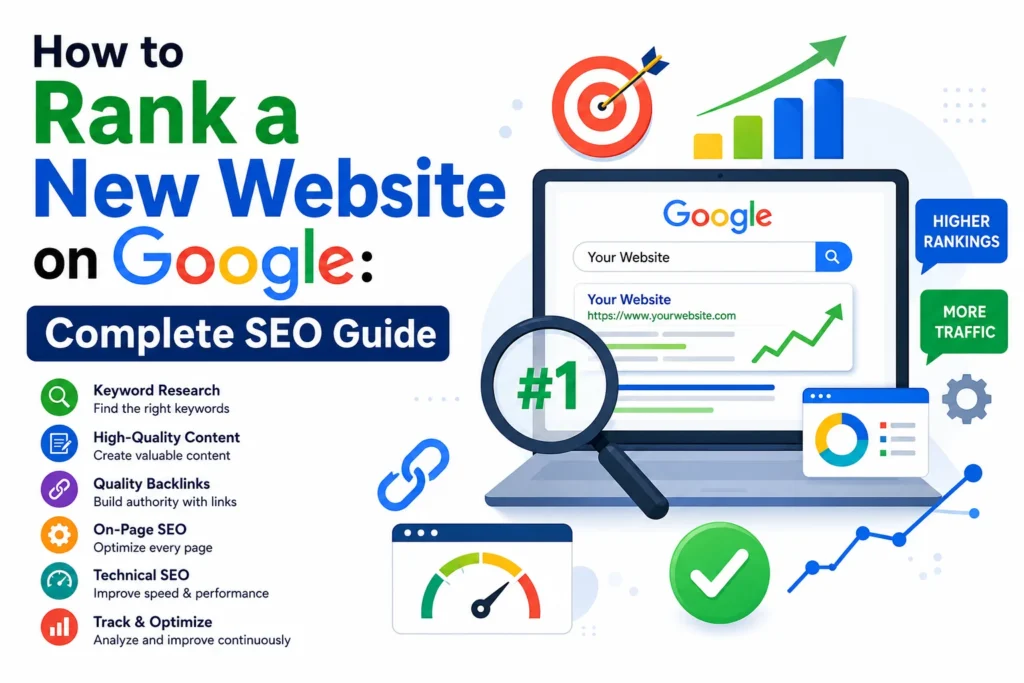

How to Rank a New Website on Google: Complete SEO Guide
Google does not rank a new website simply because it is well designed or contains a few articles. Instead, it evaluates hundreds of signals that help determine whether your pages deserve visibility for a search query. These signals include content quality, search intent, page experience, backlinks, website structure, topical authority, and user engagement. Google’s systems, including machine learning and ranking algorithms, continuously analyze pages to understand their relevance and trustworthiness. According to Google’s official documentation, ranking is a continuous process where pages are reassessed as new content, links, and user behavior signals appear. For new websites, the objective is not to “beat the algorithm” but to consistently demonstrate expertise, provide helpful information, and create the best possible experience for users.
How Google’s Crawling, Indexing, and Ranking Process Works
Every new website follows three essential stages before appearing in Google Search. First, Googlebot discovers pages by crawling links, XML sitemaps, or submitted URLs. Second, Google analyzes and indexes pages after evaluating their content and technical quality. Finally, ranking systems determine where indexed pages appear for relevant searches. Google confirms that being indexed does not guarantee rankings because every page must compete against existing content based on relevance, quality, authority, and overall user value.
Why New Websites Take Time to Rank
New websites usually need several weeks or months before achieving meaningful organic rankings because Google has limited historical data to evaluate their reliability. Older websites often possess stronger backlink profiles, topical authority, and consistent publishing histories. Google also needs sufficient crawling, indexing, and user interaction data before confidently ranking new pages. Consistently publishing high-quality content and earning trustworthy backlinks gradually builds the credibility required to compete for valuable search queries.
Common Ranking Myths New Website Owners Should Ignore
Many beginners believe Google automatically ranks new websites within a few days or that keyword stuffing guarantees first-page rankings. Neither claim is true. Google’s Helpful Content System rewards content created primarily for people instead of search engines. Likewise, purchasing thousands of low-quality backlinks or publishing AI-generated articles without adding original value can negatively impact long-term performance. Sustainable SEO success comes from helpful content, technical optimization, and genuine authority rather than shortcuts.
Build a Strong SEO Foundation Before Publishing
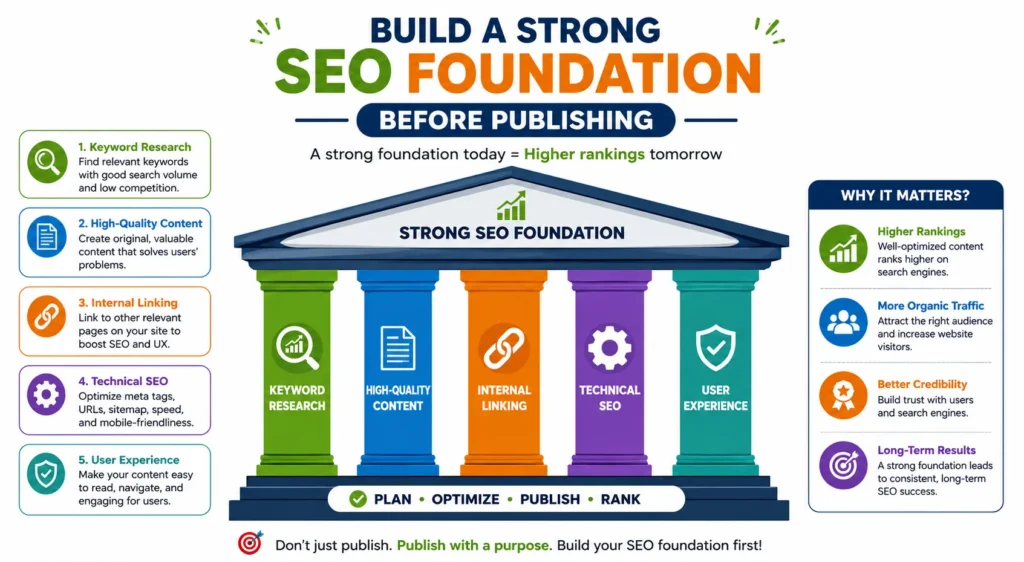
A successful SEO campaign begins long before the first article goes live. Building a strong technical and structural foundation helps Google crawl, understand, and index your website efficiently. Choosing reliable hosting, implementing secure HTTPS encryption, creating a logical URL hierarchy, and configuring essential SEO files all contribute to better search visibility. Google’s Search Essentials recommend ensuring websites are technically accessible before focusing on rankings. A clean architecture also improves user experience by making navigation easier and allowing search engines to discover important pages more efficiently. Investing time in these fundamentals reduces technical issues later and creates a stable platform for future SEO growth.
Choose the Right Domain Name and Hosting
Select a domain name that is memorable, easy to spell, and closely aligned with your brand rather than relying on exact-match keywords. Pair it with fast, reliable hosting that offers excellent uptime, server security, and scalable performance. Since Core Web Vitals influence user experience, choosing quality hosting helps reduce loading times, improves crawl efficiency, and creates a stronger technical foundation for long-term SEO performance.
Set Up HTTPS, XML Sitemap, and Robots.txt
HTTPS protects user data through encryption and is considered a standard security requirement for modern websites. Create an XML sitemap to help Google discover important pages quickly, while a properly configured robots.txt file guides crawlers away from unnecessary sections. Together, these technical elements improve crawl efficiency, reduce indexing issues, and ensure search engines focus on the content that matters most for organic visibility.
Install Google Search Console and Google Analytics
Google Search Console allows you to monitor indexing status, keyword performance, crawl errors, Core Web Vitals, and search impressions directly from Google. Google Analytics complements this by tracking visitor behavior, engagement, conversions, and traffic sources. Together, these free tools provide essential insights that help identify SEO opportunities, measure content performance, and make informed optimization decisions based on real user data instead of assumptions.
Optimize Website Structure and URL Architecture
Organize your website into logical categories that reflect your primary topics and make navigation intuitive for both visitors and search engines. Keep URLs short, descriptive, and keyword-focused while avoiding unnecessary parameters or numbers. A well-structured internal hierarchy improves crawlability, distributes link equity effectively, and helps Google understand relationships between pages, ultimately strengthening your site’s topical organization and search performance.
You might also like: Best Android Games in 2026 | Top Free & Offline PicksBest
Perform Keyword Research That Targets Easy Ranking Opportunities
Keyword research is the foundation of every successful SEO strategy because it determines what your audience is searching for and how difficult those searches are to rank for. Instead of competing immediately for highly competitive keywords, new websites should prioritize low-competition, long-tail opportunities with clear search intent. Modern keyword research also involves understanding topical relationships, analyzing competitors, and creating content clusters that comprehensively cover a subject. Google increasingly rewards topical depth over isolated articles, making semantic keyword planning far more effective than targeting single keywords. A strategic keyword approach enables new websites to gain early visibility while building authority within their niche over time.
Find Low-Competition Keywords for a New Website
Focus on long-tail keywords with lower competition because they typically have clearer search intent and fewer established competitors. SEO tools like Google Keyword Planner, Ahrefs, Semrush, and Google Search Console can help identify opportunities where new websites have realistic ranking potential. Even keywords with moderate search volume can generate valuable, highly targeted traffic when matched with comprehensive, helpful content that satisfies user intent.
Understand Search Intent Before Creating Content
Before writing any article, determine whether users want information, product comparisons, navigation, or a purchase. Google prioritizes pages that closely match search intent rather than simply repeating keywords. Analyze the current search results to understand what Google already considers valuable. Aligning your content with user expectations significantly increases the likelihood of ranking well and improving user satisfaction metrics such as engagement and time on page.
Analyze Competitors to Discover Content Gaps
Review the highest-ranking competitors to identify topics they cover thoroughly and areas they overlook. Examine their headings, keyword usage, internal linking strategies, and content depth. Look for unanswered questions, outdated information, or missing examples that you can improve upon. Creating more comprehensive and current resources helps differentiate your content while increasing its relevance for both users and search engines.
Build a Keyword Cluster Strategy Instead of Targeting Single Keywords
Rather than publishing isolated articles for unrelated keywords, organize your content around a central topic supported by multiple related pages. Each supporting article should answer a specific question while linking back to a comprehensive pillar page. This topic cluster strategy strengthens semantic relevance, improves internal linking, builds topical authority, and helps Google better understand your expertise across an entire subject instead of individual keywords alone.
Master On-Page SEO Optimization for Every Page
On-page SEO is the process of optimizing individual web pages so they are easier for both users and search engines to understand. Every page should clearly communicate its purpose through optimized titles, headings, URLs, content, images, and internal links. Google’s ranking systems evaluate page relevance based on content quality, search intent, page experience, and semantic relationships rather than keyword repetition alone. Well-optimized pages also improve click-through rates, increase user engagement, and help search engines understand the context of your content. By consistently following on-page SEO best practices across every page, new websites can build stronger topical relevance, improve crawl efficiency, and increase their chances of earning sustainable organic rankings.
Optimize Titles, Meta Descriptions, and URLs
Your title tag is one of the strongest on-page ranking signals because it tells both users and Google what a page is about. Write clear, compelling titles that naturally include your primary keyword near the beginning. Create meta descriptions that encourage clicks by highlighting value rather than stuffing keywords. Keep URLs short, descriptive, and readable while avoiding unnecessary numbers or special characters. Clean URLs improve usability and help search engines better understand page topics.
Use Primary and Secondary Keywords Naturally
Place your primary keyword in strategic locations such as the title, H1, introduction, headings, and conclusion without forcing repetition. Support it with semantically related keywords, synonyms, and relevant entities that help Google understand the broader topic. Google’s Natural Language Processing systems recognize context, so writing naturally for readers is far more effective than repeating exact-match keywords. Prioritize readability while covering the topic comprehensively and answering user questions.
Improve Internal Linking for Better Crawlability
Internal links connect related pages across your website, helping both visitors and search engines discover additional content. Link naturally to relevant articles using descriptive anchor text instead of generic phrases like “click here.” A strong internal linking structure distributes authority throughout your site, improves crawl efficiency, strengthens topical relationships, and keeps users engaged longer by guiding them toward valuable supporting resources that answer related questions.
Optimize Images with Alt Text and Compression
Images enhance user experience, but they should also be optimized for SEO and performance. Compress images to reduce file sizes without sacrificing quality, improving page speed and Core Web Vitals. Write descriptive alt text that accurately explains the image while naturally including relevant keywords where appropriate. Optimized images improve accessibility, support Google Image Search visibility, and contribute to a faster, more user-friendly browsing experience.
Add Schema Markup to Enhance Search Visibility
Implement relevant schema types such as Article, FAQ, Organization, Breadcrumb, or Product depending on the page. While schema is not a direct ranking factor, it can improve eligibility for rich results, increasing visibility and click-through rates. Google’s Rich Results Test can verify whether your structured data is correctly implemented before publication.
You might also like: Best AI Apps for SEO Professionals in 2026
Improve Technical SEO to Help Google Crawl and Index Faster
Technical SEO ensures your website is accessible, fast, secure, and easy for search engines to crawl and index. Even the highest-quality content can struggle to rank if technical issues prevent Google from discovering or understanding your pages. Google’s Page Experience guidance emphasizes fast loading speeds, mobile usability, secure connections, and efficient crawling as essential components of a healthy website. Regular technical audits help identify crawl errors, indexing problems, duplicate content, and performance bottlenecks before they negatively impact rankings. Building a technically optimized website creates a stronger foundation that allows every other SEO effort to produce better long-term results.
Increase Website Speed and Core Web Vitals Performance
Website speed directly affects user satisfaction and influences Google’s Page Experience evaluation. Improve loading times by compressing images, enabling browser caching, minimizing JavaScript, using modern image formats like WebP, and implementing a Content Delivery Network (CDN). Monitor Core Web Vitals, including Largest Contentful Paint (LCP), Interaction to Next Paint (INP), and Cumulative Layout Shift (CLS), to ensure your website provides a fast and stable browsing experience.
Ensure Mobile-Friendly and Responsive Design
Google primarily uses mobile-first indexing, meaning it evaluates the mobile version of your website for ranking purposes. Your site should display correctly across smartphones, tablets, and desktops with responsive layouts, readable text, touch-friendly navigation, and fast loading speeds. A mobile-friendly design improves usability, reduces bounce rates, and ensures visitors enjoy a consistent experience regardless of the device they use.
Fix Crawl Errors, Broken Links, and Duplicate Content
Technical issues such as broken links, server errors, duplicate pages, and redirect chains waste crawl budget and create a poor user experience. Regularly audit your website using tools like Google Search Console or Screaming Frog to identify these problems. Resolve duplicate content with canonical tags, repair broken links promptly, and eliminate unnecessary redirects to help search engines crawl and index your website more efficiently.
Monitor Indexing Status in Google Search Console
Google Search Console provides valuable information about how Google discovers, crawls, and indexes your website. Monitor the Pages report to identify indexed, excluded, and error pages. Use the URL Inspection Tool to verify indexing status and request crawling for newly published content. Regular monitoring helps detect technical issues early, ensuring your most important pages remain accessible and visible in Google Search.
Build Website Authority with High-Quality Backlinks
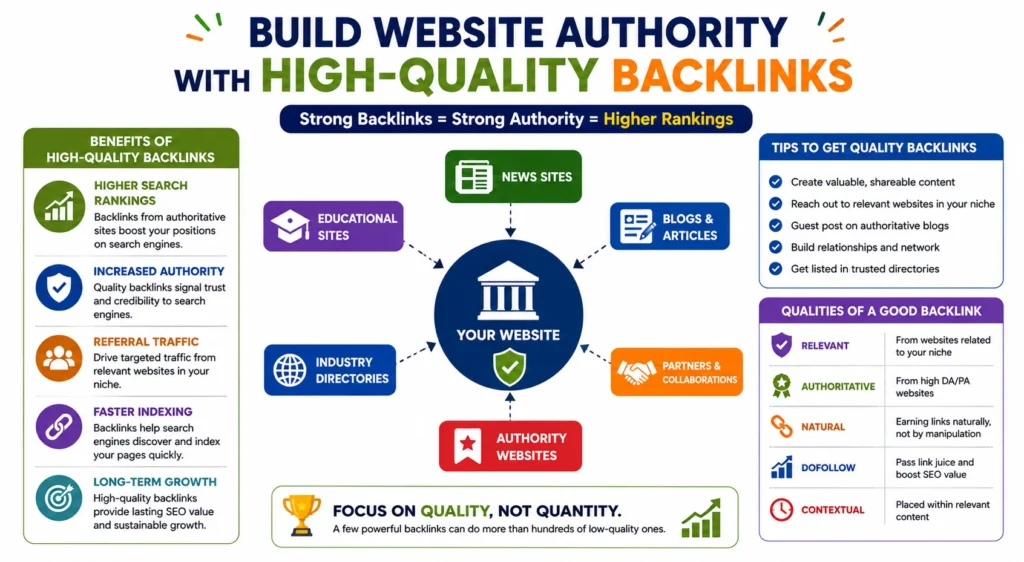
Backlinks remain one of the strongest indicators of trust and authority because they act as recommendations from other websites. However, Google’s algorithms now emphasize backlink quality far more than quantity. Links earned from relevant, trustworthy, and authoritative websites carry significantly more value than hundreds of low-quality links. A successful link-building strategy focuses on creating exceptional content, building genuine relationships, and earning editorial mentions rather than manipulating rankings.
Why Backlinks Matter for New Websites
New websites often have limited authority, making backlinks essential for building trust with search engines. When reputable websites link to your content, they signal that your information is valuable and credible. High-quality backlinks also help Google discover new pages faster and pass authority throughout your website. Earning relevant backlinks consistently strengthens domain credibility and improves long-term organic ranking potential.
Earn Links Through Guest Posting and Digital PR
Guest posting on authoritative, niche-relevant websites remains one of the most effective ways to earn high-quality backlinks while expanding brand visibility. Digital PR complements this by creating newsworthy content, industry research, expert opinions, or unique resources that journalists and publishers naturally reference. Focus on building genuine relationships with editors instead of mass outreach, ensuring every earned link provides value to readers and supports your overall authority.
Create Link-Worthy Content That Attracts Natural Backlinks
The best backlinks are earned naturally because your content deserves to be referenced. Publish original research, industry statistics, comprehensive guides, case studies, free tools, templates, or visual resources that solve real problems. Unique content gives other websites a reason to cite your work, increasing organic backlinks over time. Exceptional resources continue attracting links long after publication, making them valuable long-term SEO assets.
Avoid Black Hat Link Building Techniques
Avoid purchasing backlinks, participating in private blog networks (PBNs), engaging in excessive link exchanges, using automated link-building software, or making spammy directory submissions. Google’s Spam Policies target manipulative link schemes designed solely to influence rankings. Violating these guidelines can lead to ranking losses or manual actions. Focus on ethical, white-hat link-building practices that prioritize relevance, authority, and long-term trust over short-term ranking gains.
Boost Topical Authority and User Experience Together
Modern SEO is no longer about optimizing isolated pages. Google increasingly rewards websites that demonstrate comprehensive expertise across an entire subject while providing an outstanding user experience. Building topical authority means publishing interconnected content that answers every important question within your niche, while user experience ensures visitors can easily discover, understand, and engage with that information. Google’s Helpful Content System favors websites that consistently satisfy users instead of producing content solely for search engines. Combining topical depth with intuitive navigation, engaging design, and regularly updated resources creates a stronger foundation for sustainable rankings, higher engagement, and increased organic visibility over time.
Create Topic Clusters Around Your Main Niche
Develop pillar pages that comprehensively cover broad topics, then support them with detailed articles targeting related subtopics. Connect these pages using strategic internal links so users and search engines can easily navigate between them. Topic clusters help Google understand your expertise, strengthen semantic relevance, and build topical authority, making it easier for your entire website to rank for competitive search queries.
Improve Navigation and Content Discoverability
Visitors should find important content within a few clicks. Organize menus logically, use breadcrumb navigation, add category pages, and include contextual internal links throughout your articles. Clear navigation improves user satisfaction while helping search engines crawl deeper into your website. Better content discoverability also increases page views, encourages longer browsing sessions, and strengthens your site’s overall SEO performance.
Reduce Bounce Rate with Better User Experience
Although Google does not use bounce rate as a direct ranking factor, poor user experience often results in lower engagement. Improve readability with short paragraphs, descriptive headings, bullet points, visuals, and fast-loading pages. Eliminate intrusive pop-ups and simplify navigation to keep visitors engaged. A positive user experience encourages longer sessions, more page interactions, and stronger overall content performance.
Increase Engagement Through Helpful Content Updates
SEO is an ongoing process, not a one-time task. Regularly update articles with new statistics, industry trends, expert insights, screenshots, and recent examples to maintain accuracy and relevance. Refreshing content signals that your website remains current and trustworthy. Updated pages often regain visibility, improve user engagement, and continue satisfying Google’s preference for fresh, high-quality information that reflects the latest developments.
Track SEO Performance and Continuously Optimize
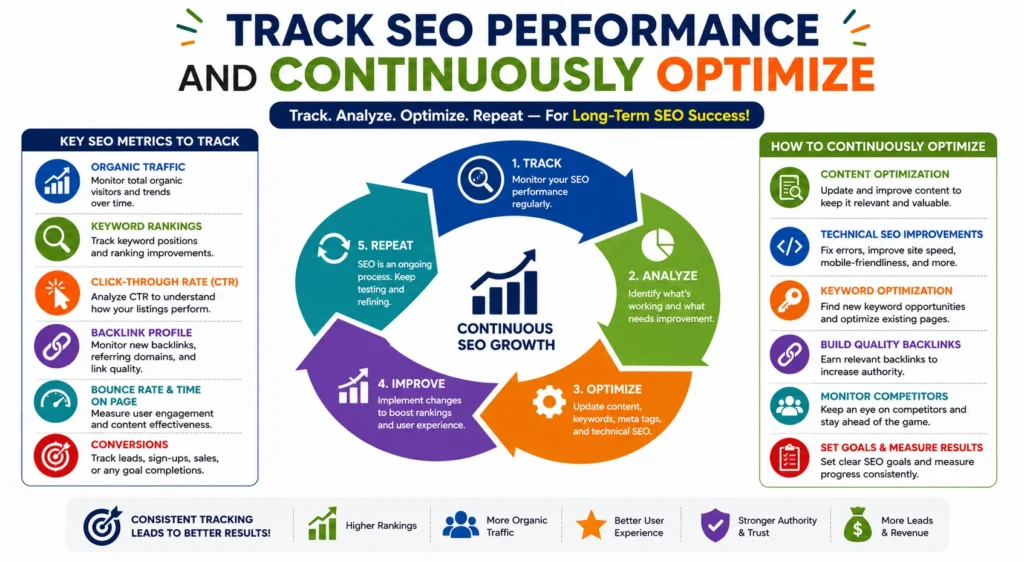
SEO is not a one-time project but an ongoing process of measuring results, identifying opportunities, and making continuous improvements. Google’s search results constantly evolve as competitors publish new content, algorithms improve, and user behavior changes. Websites that consistently monitor their performance and optimize based on real data are more likely to maintain and improve rankings over time. By tracking keyword positions, organic traffic, user engagement, indexing status, and conversions, you can make informed decisions instead of relying on guesswork. Continuous optimization also helps uncover content gaps, resolve technical issues, and strengthen your website’s overall authority, ensuring long-term organic growth and sustainable search visibility.
Measure Rankings, Traffic, and User Behavior
Monitor your keyword rankings, organic traffic, click-through rate (CTR), bounce rate, engagement time, and conversions using Google Search Console and Google Analytics 4. These metrics reveal how users interact with your content and identify which pages generate the most value. Regular performance analysis helps you understand what’s working, detect ranking fluctuations early, and prioritize improvements that have the greatest impact on SEO success.
Identify Underperforming Pages and Improve Them
Not every page will perform equally well, making regular content audits essential. Identify pages with declining rankings, low organic traffic, poor click-through rates, or weak engagement. Improve these pages by expanding content, updating outdated information, optimizing keywords, strengthening internal links, and enhancing user experience. Small improvements to existing pages often produce faster SEO gains than publishing entirely new content.
Refresh Existing Content to Maintain Rankings
Search behavior and industry information change over time, making content updates essential for maintaining rankings. Review important articles regularly and update statistics, examples, screenshots, expert insights, and references with the latest information. Refreshing content signals to both users and search engines that your website remains accurate and relevant, helping preserve rankings while increasing user trust and engagement.
Use SEO Tools to Monitor Competitors and Opportunities
Professional SEO tools such as Ahrefs, Semrush, Google Search Console, Google Analytics, Screaming Frog, and Google Keyword Planner provide valuable insights into rankings, backlinks, keyword opportunities, and technical performance. Analyze competitors to discover content gaps, backlink opportunities, and emerging search trends. Using reliable SEO data enables smarter optimization decisions that strengthen your competitive advantage and support consistent organic growth.
You might also like: AI Marketing Tools for Small Businesses in 2026
Proven Strategies to Rank a New Website Faster on Google
Ranking a new website faster requires consistency, patience, and a strategy aligned with Google’s Search Essentials rather than quick fixes. There is no guaranteed shortcut to first-page rankings, but following proven SEO best practices significantly improves your chances of success. Publish high-quality content consistently, build topical authority, earn trustworthy backlinks, optimize technical performance, and prioritize user experience across every page. Google’s algorithms reward websites that demonstrate expertise, authority, trustworthiness, and long-term value for users. By focusing on sustainable growth instead of temporary ranking tactics, you can establish a strong online presence that continues attracting qualified organic traffic for years to come.
Publish Content Consistently with a Long-Term Plan
Develop a realistic publishing schedule and stick to it. Whether you publish one article each week or several each month, consistency is more important than volume. Focus on creating comprehensive, helpful content around your niche while gradually expanding topic coverage. A structured content calendar allows Google to crawl your website more frequently and steadily strengthens your topical authority over time.
Focus on E-E-A-T and Build Brand Trust
Google’s Search Quality Evaluator Guidelines emphasize Experience, Expertise, Authoritativeness, and Trustworthiness (E-E-A-T) when assessing content quality. Showcase real-world experience, provide accurate information supported by credible sources, create detailed author profiles, maintain transparent contact information, and keep your website secure. Building trust with both users and search engines increases your credibility and strengthens your long-term ranking potential.
Promote Content Across Multiple Marketing Channels
Publishing excellent content alone is rarely enough. Promote new articles through social media platforms, email newsletters, online communities, industry forums, and relevant partnerships to increase visibility and attract natural backlinks. Content promotion expands your audience, generates referral traffic, encourages brand mentions, and helps search engines discover your pages more quickly while supporting long-term organic growth.
Realistic Timeline for Ranking a New Website on Google
While some low-competition keywords may rank within a few weeks, most new websites require approximately three to six months to gain noticeable organic traction. Competitive industries often require six to twelve months or longer before achieving significant rankings. Consistent publishing, quality backlinks, technical optimization, and ongoing improvements accelerate progress without relying on risky shortcuts.
Mistakes That Prevent New Websites from Ranking
Many new websites struggle because they target overly competitive keywords, publish thin or duplicate content, neglect technical SEO, ignore internal linking, or build spammy backlinks. Other common mistakes include inconsistent publishing, poor mobile performance, slow page speed, and failing to understand user intent. Avoiding these issues from the beginning creates a stronger SEO foundation and significantly improves your chances of achieving sustainable rankings.
Conclusion
Ranking a new website on Google is a gradual process that rewards quality, consistency, and user-focused optimization. Rather than searching for shortcuts, invest in building a technically sound website, publishing valuable content, targeting the right keywords, and earning authoritative backlinks. Every improvement, whether it’s enhancing page speed, updating existing content, or strengthening topical authority, contributes to long-term SEO success.
Remember that Google’s primary goal is to deliver the most helpful and trustworthy results to users. If your website consistently solves real problems, demonstrates expertise, and provides an excellent user experience, your rankings will naturally improve over time. Stay patient, monitor your performance regularly, adapt your strategy based on data, and continue creating value for your audience. SEO is a marathon, not a sprint, and websites that remain committed to best practices are the ones that achieve lasting organic growth.
FAQs
How Quickly Can a New Website Start Ranking on Google?
Most new websites begin seeing rankings within 3 to 6 months, while competitive keywords often require 6 to 12 months or longer. The timeline depends on your niche, content quality, technical SEO, backlink profile, and consistency.
Can a new website rank without backlinks?
Yes, it is possible to rank for low-competition keywords without many backlinks. However, earning high-quality backlinks significantly improves your website’s authority and increases your ability to compete for more competitive search terms.
What is the most important SEO factor for a new website?
There is no single ranking factor. The best results come from combining high-quality content, search intent optimization, technical SEO, strong on-page optimization, internal linking, and authoritative backlinks.
How often should I publish content on a new website?
Quality is more important than quantity. Publishing one to three well-researched articles each week consistently is generally more effective than publishing large amounts of low-quality content.
Does Google rank AI-generated content?
Google does not automatically penalize AI-generated content. What matters is whether the content is helpful, accurate, original, and valuable to users. Low-quality, unedited, or spammy AI content is unlikely to perform well.
How do I know if Google has indexed my pages?
Use the URL Inspection Tool in Google Search Console or search using the site:yourdomain.com operator in Google Search to check whether your pages have been indexed.
Should I target high-volume keywords on a new website?
Generally, no. New websites should first target low-competition, long-tail keywords with clear search intent. This strategy helps build topical authority before competing for broader, high-volume keywords.
What Are the Best Free SEO Tools for Beginners?
The most valuable free tools include Google Search Console, Google Analytics 4, Google Keyword Planner, Google PageSpeed Insights, Google Rich Results Test, and Google Trends. Together, they provide everything needed to monitor performance and improve SEO.
✨ If this helped, imagine what’s coming next. Follow newtopy.