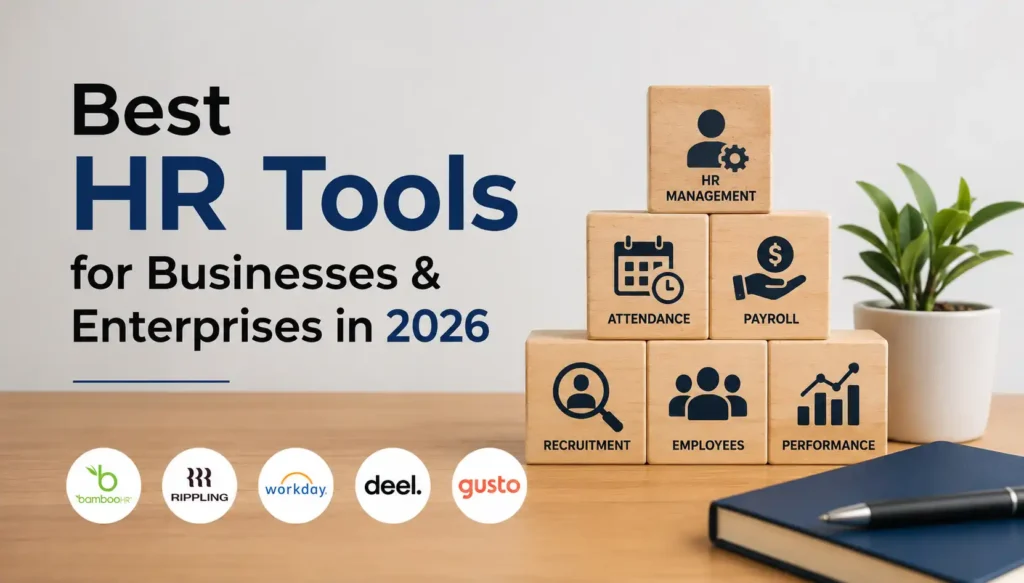

What Are HR Tools and Why Do Businesses Need Them?
HR tools are software solutions designed to help businesses manage human resource tasks more effectively. These tools simplify complex processes like recruitment, onboarding, payroll, attendance tracking, performance reviews, and employee communication. Modern companies rely on HR technology to reduce administrative workload and improve workforce productivity. Research from Gartner shows that businesses investing in digital HR systems often improve employee experience and operational efficiency. HR tools also help organizations maintain compliance, manage remote teams, and make data-driven workforce decisions. As businesses grow, these systems become essential for managing employees at scale without increasing manual HR work.
Main Types of HR Tools Used by Modern Companies
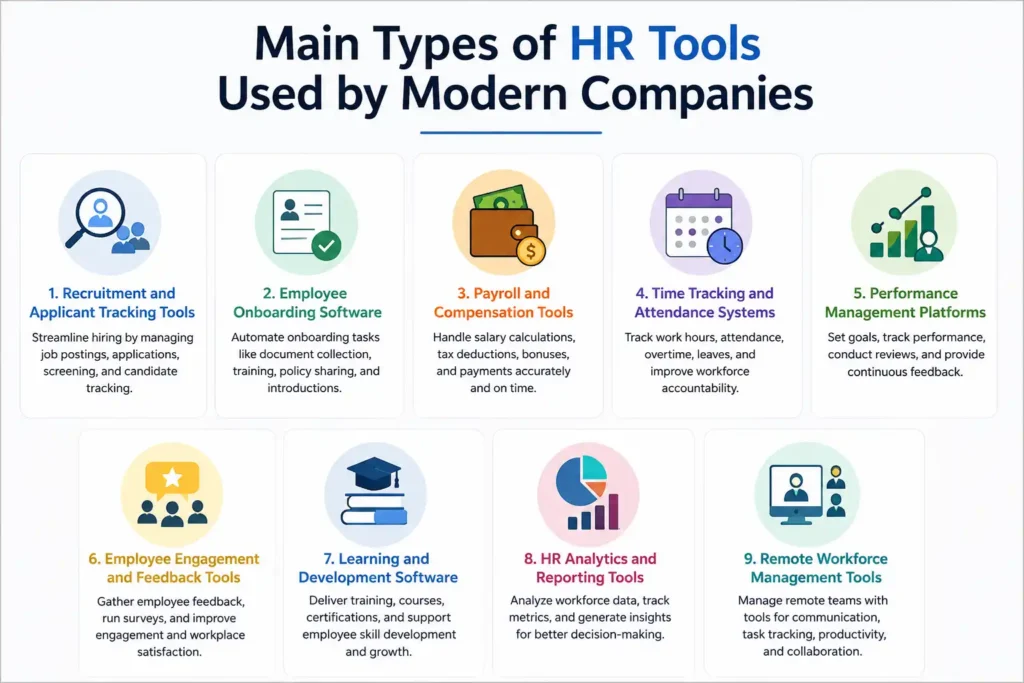
Recruitment and Applicant Tracking Tools
Recruitment and applicant tracking tools help businesses manage hiring processes more efficiently. These systems organize job applications, screen resumes, schedule interviews, and track candidates throughout the hiring pipeline. AI-powered recruiting tools can also identify qualified applicants faster. Companies use applicant tracking systems to reduce hiring time, improve recruitment accuracy, and create a smoother experience for both recruiters and job candidates.
Employee Onboarding Software
Employee onboarding software helps organizations streamline the process of integrating new hires into the company. These platforms automate document collection, training schedules, policy sharing, and employee introductions. A structured onboarding process improves employee satisfaction and productivity during the first few months. Research from Glassdoor shows that effective onboarding can significantly improve employee retention rates within organizations.
Payroll and Compensation Management Tools
Payroll and compensation management tools automate salary calculations, tax deductions, bonuses, and employee payments. These systems reduce payroll errors while helping businesses stay compliant with labor laws and tax regulations. Many payroll platforms also support direct deposits, compensation planning, and benefits management. Automation allows HR teams to process employee payments more accurately and efficiently each month.
Time Tracking and Attendance Systems
Time tracking and attendance systems help businesses monitor employee work hours, attendance records, overtime, and leave requests. These tools improve workforce accountability and reduce attendance-related errors. Many modern platforms include biometric attendance, mobile check-ins, and remote work monitoring features. Accurate attendance tracking also helps companies simplify payroll processing and workforce scheduling operations.
Performance Management Platforms
Performance management platforms help companies evaluate employee productivity, track goals, and conduct performance reviews more effectively. Managers can monitor progress, provide feedback, and identify skill gaps through centralized systems. Many platforms support continuous performance tracking instead of traditional annual reviews. These tools encourage employee growth while helping businesses align workforce performance with organizational objectives.
Employee Engagement and Feedback Tools
Employee engagement and feedback tools help organizations understand employee satisfaction and workplace morale. These platforms collect feedback through surveys, polls, and performance check-ins. Businesses use engagement data to improve workplace culture, communication, and employee retention. Studies from Gallup consistently show that engaged employees are often more productive and committed to organizational success.
Learning and Development Software
Learning and development software helps businesses train employees and improve workforce skills through digital learning programs. These platforms support online courses, certifications, employee assessments, and personalized training paths. Companies use learning management systems to support career development and improve employee productivity. Continuous learning also helps organizations adapt to changing technologies and industry requirements more effectively.
HR Analytics and Reporting Tools
HR analytics and reporting tools help organizations analyze workforce data and make informed business decisions. These systems track metrics like employee turnover, hiring performance, absenteeism, and productivity trends. Advanced analytics platforms use AI and predictive insights to support workforce planning. Data-driven HR decisions help businesses improve efficiency, reduce costs, and strengthen talent management strategies.
Remote Workforce Management Tools
Remote workforce management tools support businesses with distributed and hybrid teams. These platforms help companies manage communication, task tracking, attendance, productivity monitoring, and virtual collaboration. As remote work continues to grow globally, businesses rely on these tools to maintain operational efficiency and employee accountability. Cloud-based remote management systems also improve flexibility and team coordination.
💚 You might also like: Best Weather Tools for Accurate Weather Data in 2026
Essential Features Every HR Tool Should Have
Choosing the right HR software depends heavily on the features it offers for workforce management and operational efficiency. Modern HR tools should simplify administrative work, improve employee experience, and support business scalability. Essential features often include automation, employee self-service, cloud accessibility, analytics, and secure data management. According to PwC research, organizations using integrated HR technology frequently improve workforce productivity and employee satisfaction. Businesses should also prioritize systems that integrate smoothly with payroll, accounting, and communication platforms. A feature-rich HR tool not only saves time but also helps companies make better workforce decisions using centralized employee data and analytics.
AI and Automation in Modern HR Tools
AI and automation are rapidly transforming how HR departments manage recruitment, employee engagement, workforce planning, and administrative operations. Modern HR tools now use artificial intelligence to automate repetitive tasks, analyze workforce data, and improve decision-making accuracy. According to IBM research, businesses using AI-driven HR systems often reduce recruitment time and improve employee experience significantly. Automation also helps HR teams focus more on strategic workforce planning instead of manual paperwork. From AI chatbots to predictive analytics, intelligent HR software is changing how organizations attract, manage, and retain talent. As technology evolves, AI-powered HR solutions are becoming essential for competitive and scalable workforce management.
Best HR Tools for Small Businesses, Startups, and Enterprises
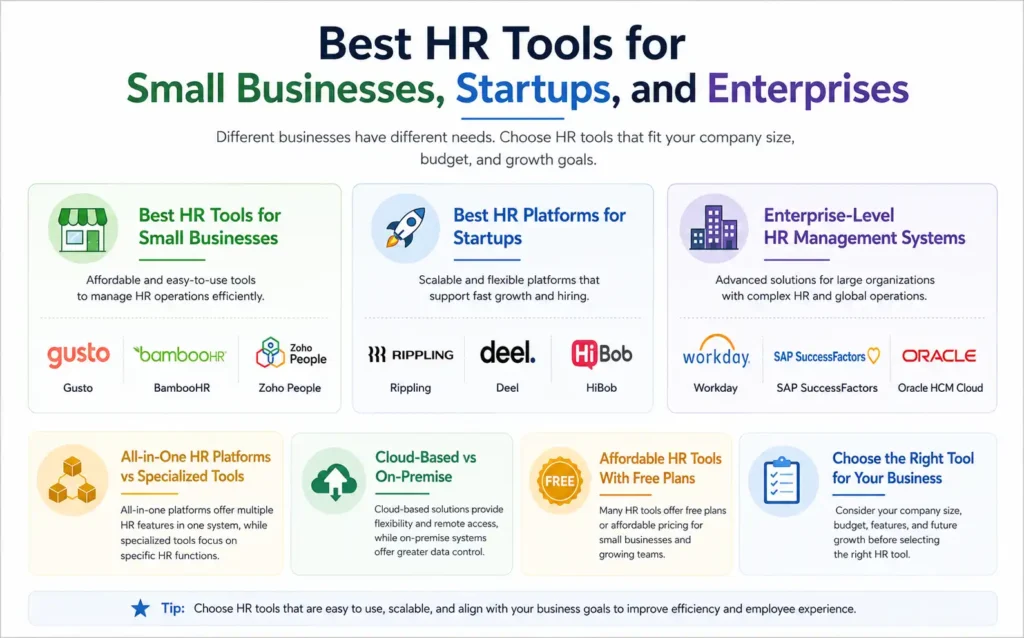
Different businesses require different HR tools depending on workforce size, operational complexity, and growth stage. Small businesses often focus on affordability and simplicity, while enterprises need advanced workforce management systems with automation and analytics capabilities. Startups typically prioritize scalable recruitment and onboarding software to support rapid hiring. According to Fortune Business Insights, cloud-based HR technology adoption continues growing across organizations of all sizes. Modern HR platforms now offer flexible solutions designed specifically for startups, SMEs, and large enterprises. Choosing the right HR tools based on business structure helps organizations improve productivity, employee management, and long-term operational scalability.
Best HR Tools for Small Businesses
Small businesses often need affordable HR software that simplifies payroll, attendance tracking, onboarding, and employee management. Popular tools like Gusto, BambooHR, and Zoho People offer user-friendly features suitable for smaller teams. These platforms help small businesses automate HR operations without requiring large internal HR departments or expensive infrastructure investments.
Best HR Platforms for Startups
Startups require scalable HR platforms that support fast hiring, employee onboarding, and remote workforce management. Many startups choose tools like Rippling, Deel, and HiBob because they offer automation and flexible integrations. Cloud-based startup HR platforms help growing companies manage workforce operations efficiently while adapting quickly to organizational expansion.
Enterprise-Level HR Management Systems
Large enterprises require advanced HR management systems capable of handling complex workforce operations across multiple departments and locations. Enterprise platforms like Workday and SAP SuccessFactors provide workforce analytics, talent management, compliance tracking, and AI-driven automation. These systems support large-scale employee management while improving operational visibility and strategic planning.
All-in-One HR Platforms vs Specialized Tools
All-in-one HR platforms combine payroll, recruitment, attendance, performance management, and employee engagement features within one system. Specialized tools focus on specific HR functions such as recruiting or payroll processing. Businesses choose between these options based on operational complexity, budget, and customization needs. Integrated systems often simplify workforce management more effectively.
Cloud-Based vs On-Premise HR Solutions
Cloud-based HR solutions allow businesses to access workforce systems online from any location with internet connectivity. These platforms reduce infrastructure costs and support remote work environments efficiently. On-premise HR systems provide greater internal control but require dedicated maintenance resources. Most modern organizations now prefer cloud-based HR software because of flexibility and scalability benefits.
Affordable HR Tools With Free Plans
Many HR software providers offer affordable pricing models and free plans for startups and small businesses. Tools like Zoho People and Bitrix24 provide basic workforce management features without high upfront costs. Free HR tools help smaller companies automate employee operations while testing software capabilities before upgrading to premium enterprise plans.
💚 You might also like: Top Data Integration Tools for Modern Business Growth
Top HR Tools in 2026 Compared
The HR software market continues to evolve rapidly as businesses invest more in automation, AI, workforce analytics, and employee experience solutions. In 2026, several HR platforms stand out because of their scalability, advanced features, and operational flexibility. Businesses compare HR tools based on recruitment capabilities, payroll management, employee engagement, integrations, and pricing structures. According to industry reports from G2 and Gartner, cloud-based HR software adoption continues to increase across startups, SMEs, and enterprises globally. Some platforms specialize in recruitment and payroll, while others provide complete workforce management ecosystems. Understanding the strengths of leading HR tools helps organizations select software that matches their workforce needs and growth strategies.
BambooHR
BambooHR is widely recognized for its user-friendly HR management platform designed mainly for small and medium-sized businesses. The software supports onboarding, payroll, employee records, performance management, and workforce reporting. Businesses prefer BambooHR because of its simple interface, automation features, and strong employee self-service capabilities.
Rippling
Rippling combines HR, payroll, IT, and workforce management tools within one integrated platform. Businesses use Rippling to automate employee onboarding, device management, payroll processing, and app access. Its strong automation and integration features make it especially popular among fast-growing startups and technology companies.
Workday
Workday is a leading enterprise-level HR management platform known for workforce analytics, talent management, and financial planning capabilities. Large organizations use Workday to manage global employees, payroll operations, and workforce forecasting. Its AI-powered insights help enterprises improve strategic workforce planning and operational decision-making.
Deel
Deel focuses heavily on global hiring, payroll management, and contractor compliance for remote teams. Businesses use Deel to hire international employees legally across multiple countries. The platform simplifies international payroll, tax compliance, and contract management, making it popular among remote-first organizations and distributed workforces.
Gusto
Gusto is a popular HR and payroll platform designed mainly for small businesses. It provides payroll automation, benefits management, onboarding, and compliance support. Businesses prefer Gusto because of its affordability, simple setup process, and strong payroll management features tailored for smaller organizations.
SAP SuccessFactors
SAP SuccessFactors is an enterprise HR management solution offering workforce analytics, talent acquisition, employee experience management, and compliance tracking. Large multinational companies use this platform to manage complex workforce operations. Its advanced analytics and AI capabilities support strategic human capital management across global organizations.
Zoho People
Zoho People is a cloud-based HR management platform suitable for startups and small businesses. The software supports attendance tracking, employee databases, leave management, onboarding, and performance evaluation. Businesses often choose Zoho People because of its affordability, scalability, and integration with the broader Zoho software ecosystem.
HiBob
HiBob provides modern HR software focused on employee engagement, workplace culture, onboarding, and performance management. The platform is especially popular among hybrid and remote-first companies. Businesses use HiBob to improve employee experience while maintaining strong workforce communication and organizational culture management.
Paycor
Paycor offers payroll, workforce management, recruitment, and talent development solutions for growing businesses. Companies use Paycor to automate HR operations and improve employee management processes. The platform also provides analytics and compliance tools that help organizations streamline workforce administration efficiently.
Factorial HR
Factorial HR is a cloud-based HR platform designed for small and medium-sized businesses. It offers attendance management, payroll support, recruitment tracking, and employee document storage. Businesses choose Factorial HR because of its intuitive interface, automation features, and affordable workforce management solutions.
Comparison Table of Features, Pricing, Pros, and Cons
A detailed comparison table helps businesses evaluate HR tools based on pricing, automation capabilities, integrations, scalability, payroll features, recruitment support, and employee engagement tools. Comparing software side by side allows organizations to identify platforms that match operational needs and workforce goals more accurately before making long-term technology investments.
💚 You might also like: Best AI Tools for Business to Improve Productivity and Sales
How to Choose the Right HR Tools for Your Business
Choosing the right HR tools is important for improving workforce management, operational efficiency, and employee experience. Businesses should evaluate their HR challenges, growth goals, budget, and workforce structure before selecting any software solution. According to Gartner, organizations that align HR technology with business objectives often achieve better operational performance and employee satisfaction. Modern HR platforms vary in features, pricing, scalability, and automation capabilities. Some companies need simple payroll systems, while others require advanced workforce analytics and AI-driven recruitment tools. Selecting the right HR software helps businesses streamline operations, improve productivity, and support long-term organizational growth effectively.
Identifying Business Needs and HR Goals
Businesses should first identify their workforce challenges and HR priorities before choosing any HR software. Some companies need recruitment automation, while others focus more on payroll management or employee engagement. Understanding organizational goals helps businesses select tools that align with operational requirements. Proper planning also prevents unnecessary software expenses and implementation difficulties later.
Choosing HR Tools Based on Company Size
The size of a company significantly influences the type of HR software it requires. Small businesses often prefer simple and affordable platforms, while enterprises need scalable systems with advanced workforce management capabilities. Startups may prioritize recruitment and onboarding tools. Selecting software based on workforce size improves usability, scalability, and operational efficiency.
Budget and Pricing Considerations
Budget planning is essential when selecting HR tools because pricing models vary widely between providers. Some platforms charge monthly subscription fees per employee, while others offer customized enterprise pricing. Businesses should compare software costs alongside features, scalability, and support services. Choosing cost-effective HR solutions helps organizations maximize long-term operational value.
Scalability and Future Growth
Scalable HR software allows businesses to expand workforce operations without changing systems frequently. As companies grow, they often require advanced reporting, recruitment automation, and workforce management features. Choosing scalable HR tools supports long-term business expansion and reduces future migration costs. Cloud-based systems are especially popular because they adapt easily to organizational growth.
Ease of Use and Employee Adoption
Easy-to-use HR software improves employee adoption and reduces training requirements. Complicated systems often create operational delays and frustration among HR teams and employees. Businesses should prioritize intuitive interfaces, mobile accessibility, and user-friendly dashboards. High adoption rates improve workforce productivity and ensure employees fully utilize HR platform capabilities.
Integration Requirements
Integration capabilities allow HR software to connect with payroll systems, accounting platforms, communication tools, and productivity applications. Seamless integration improves data accuracy and reduces duplicate administrative work. Businesses benefit from centralized workforce information across multiple systems. Organizations should evaluate integration support carefully before investing in HR technology platforms.
Customer Support and Vendor Reputation
Reliable customer support and strong vendor reputation are important factors when selecting HR software providers. Businesses may require technical assistance during implementation, system updates, or troubleshooting. Reviewing customer feedback, industry ratings, and vendor reliability helps organizations avoid long-term service issues. Trusted software providers often offer better training and ongoing platform support.
Common Mistakes to Avoid When Selecting HR Software
Many businesses choose HR software without properly evaluating scalability, integration capabilities, or employee usability. Others invest in feature-heavy systems they rarely use. Ignoring implementation planning and training can also reduce software effectiveness. Companies should avoid selecting HR tools based only on price and instead focus on long-term operational value and workforce needs.
💚 You might also like: Why DeepSwap Is the Smart Choice for AI-Generated Visual Content
Conclusion
HR tools have become essential for businesses that want to improve workforce management, employee experience, and operational efficiency. From recruitment and payroll to AI-driven analytics and employee engagement, modern HR software helps organizations automate complex processes and make smarter workforce decisions. Businesses of all sizes now rely on digital HR solutions to stay competitive in rapidly evolving work environments. Choosing the right HR tools depends on company size, operational goals, budget, and scalability requirements. As AI and automation continue shaping the future of human resources, organizations investing in advanced HR technology will be better positioned to attract talent, improve productivity, and support long-term business growth.
✨ Save time, learn faster, follow Newtopy.