
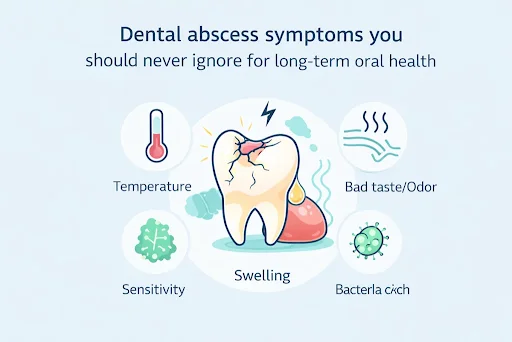

Common Tooth Abscess Symptoms You Should Never Ignore
You know that feeling. A tooth starts throbbing out of nowhere. No warning. No reason. Just — ouch. And it doesn’t stop. It just sits there, pulsing, making everything harder. That’s not normal. That’s your body sending up a flare.
We’ve all done it. Tooth hurts, so we wait. Hope it fades. Tell ourselves it’s nothing. And hey, sometimes we’re right. The pain disappears, and life moves on. But other times? Not so much. Sometimes that ache is your body trying to get your attention. Really get it. Like, drop-everything-and-call-a-dentist get it.
A tooth abscess is exactly that kind of thing. It starts small. Feels manageable. Then it doesn’t. Left alone, it can snowball into something way bigger than a simple toothache. Fast. Like, faster than most people expect.
But here’s the thing. You don’t have to figure this out alone. And you definitely don’t have to panic. Catching an abscess early? Game changer. Seriously. In this post, we’re breaking it all down. What an abscess actually is. The symptoms that scream “call your dentist.” When to act fast. How treatment works. And what you can do right now to stop one from happening in the first place. Stick with us. It’s worth the read.
What Is a Tooth Abscess?
Let’s keep it simple. A tooth abscess is a pus-filled pocket that forms around a tooth. It forms when an infection sets up shop in your tooth or gum.
How does it happen? Bacteria sneak in. Maybe through a cavity, a crack, or gum trouble. Once inside, they multiply. Your body fights back, and pus builds up. That’s the abscess.
There are two common spots for it. One is at the tip of the tooth root. The other is in the gum, right beside the tooth.
Here’s the part people miss. An abscess won’t heal on its own. It’s not like a scrape on your knee. This one needs a dentist to clear it out safely. Waiting only lets the infection grow.
Common Symptoms You Should Never Ignore
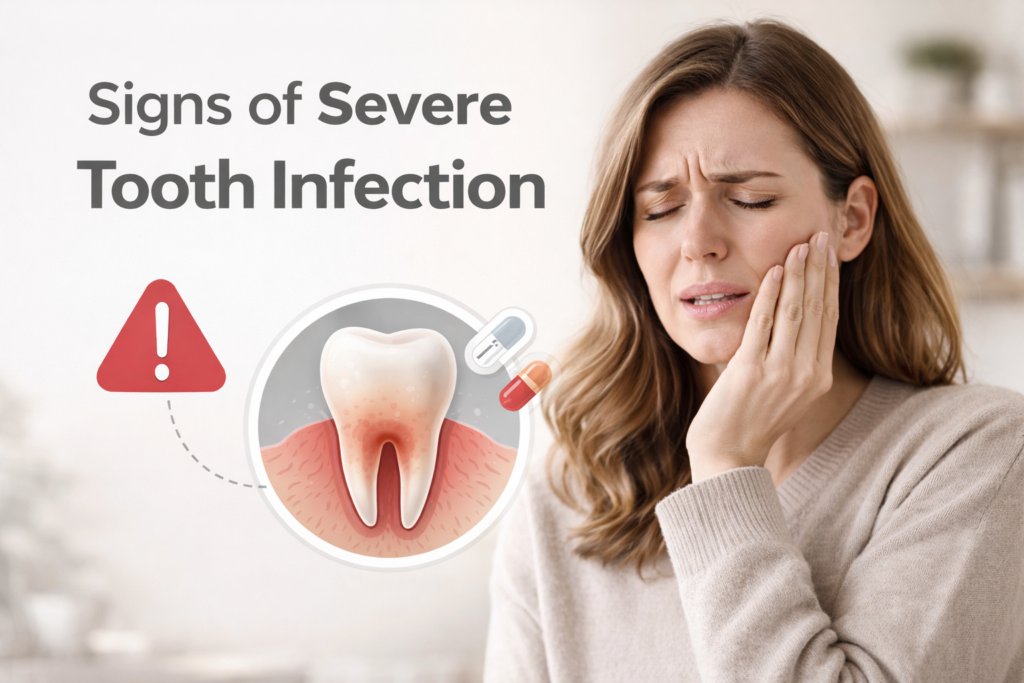
Think of this section as a checklist. If you spot one or more of these signs, it’s time to act. Don’t wait it out.
Ready? Let’s look at each one in detail
Throbbing Tooth Pain
This is the big one. A deep, pounding pain that comes and goes. It throbs. It pulses. It nags at you all day.
Sometimes it stays in the tooth. Other times it spreads. You might feel it in your jaw, your ear, or even your neck.
And here’s a cruel twist. It often gets worse when you lie down. So just when you want to rest, the pain flares up. If that sounds familiar, take it seriously.
Swelling in the Face or Gums
Next up, swelling. The area near the bad tooth may puff up. Your gum might look red and angry.
Sometimes the swelling doesn’t stop there. It can reach your cheek or jaw. Your face might look a little lopsided.
A swollen face is a clear signal. Call a dentist fast. That kind of swelling means the infection is spreading, and that’s not something to sit on.
Fever and Feeling Unwell
A fever means your body is at war. It’s fighting the infection with everything it’s got.
You might notice more than a warm forehead, too. Chills. Tiredness. That general “off” feeling where you just don’t feel like yourself.
Here’s the rule to remember. Fever plus tooth pain should never wait. Together, those two signs point to a real problem. Get checked right away.
Bad Taste or Bad Breath
This one’s a bit gross, but it matters. You might get a sour or foul taste in your mouth. That’s draining pus. Not pleasant, I know.
Bad breath can hang around too. And it sticks. No matter how much you brush or rinse, it just won’t quit.
Why does this happen? Often it means the abscess has started to leak. It’s another sign your mouth needs help, and soon.
Sensitivity to Hot and Cold
Ever take a sip of coffee and feel a sharp zing? Or bite into ice cream and wince? That’s sensitivity, and it can point to an abscess.
Pressure can hurt, too. Chewing on that side becomes a chore. Even a gentle bite might send a jolt through the tooth.
Occasional tooth sensitivity is usually normal. But lasting, sharp sensitivity? That’s worth a closer look from your dentist.
Tender or Swollen Lymph Nodes
Now this one’s easy to miss. Check the glands under your jaw and along your neck. Are they sore? Puffy? Tender to the touch?
Swollen lymph nodes are a big clue. They tell you the infection may be spreading beyond the tooth.
When your body’s defense system kicks in like this, listen. It’s a strong signal to get checked without delay.
When to See a Dentist
Some signs mean you should book a visit right now. Not next week. Now.
Here’s a quick “call now” list to keep handy:
Pain that keeps you up at night
Swelling that spreads or grows fast
A high fever paired with tooth pain
Trouble breathing or swallowing (head to the ER for this one)
That last one is serious. If you can’t breathe or swallow well, don’t wait for a dentist appointment. Get emergency help right away.
Good news, though. Quick care keeps things simple. Catch an abscess early, and treatment is usually easy. Delaying treatment can make the problem worse. So when in doubt, make the call.
Folks in Houston have solid options close to home. A quick trip to the dentist beats days of misery every time.
How a Tooth Abscess Is Treated
Feeling nervous about treatment? Don’t be. Dentists handle this every single day. It’s routine for them.
Let’s walk through what usually happens. Step by step, nice and easy.
Draining the Infection
First, the dentist gets rid of the pus. They open the abscess and let it drain. Sounds intense, but it brings fast relief.
All that pressure? Gone. The throbbing pain often eases up right after. It’s the first big step toward feeling human again.
Root Canal or Tooth Removal
Next, the dentist figures out how to save the tooth. Often that means a root canal. They clear out the infection, clean the inside, and seal it up. Your tooth stays put.
But sometimes a tooth is too far gone. If the damage is bad, it may need to come out. That’s okay. Your dentist picks the best option for your case. You won’t be left guessing.
Antibiotics and Aftercare
Sometimes the infection tries to spread. That’s when antibiotics step in. A common one is augmentin for tooth infection, which helps knock out the bacteria. If you’re allergic to that, your dentist might suggest a z-pack for tooth infection instead. Both work to stop the spread.
One key rule. Finish the whole course. Even if you feel better, take every pill as told. Stopping early lets the infection bounce back.
Aftercare is simple, too. Rest up. Rinse gently with warm salt water. Skip hard, crunchy foods for a bit. Give your mouth time to heal.
How to Prevent a Tooth Abscess
Here’s the best news yet. Most abscesses are preventable. Good habits stop them before they start. Really.
Start with a solid daily routine:
Brush twice a day with fluoride toothpaste
Floss once a day to clear out hidden bits
Rinse with a dentist-approved mouthwash
Simple stuff, but it works. Now add a few smart moves:
Cut back on sugary drinks and snacks
Fix small cavities before they grow into big ones
See your dentist for regular checkups
That last tip is huge. Routine dental care in Houston or your own hometown catches problems early. A tiny cavity today is way easier than an abscess later.
Here’s the recap. Clean daily. Eat smart. Don’t skip your dental visits. Do those three things, and you’ll dodge most tooth trouble. For patients around Houston, keeping up with regular visits is one of the easiest ways to stay pain-free.
Final Thoughts
Let’s tie it all together. A tooth abscess sends clear warning signs. Throbbing pain. Swelling. Fever. Bad taste. Sensitivity. Sore glands. Any of these? Pay attention.
Tooth pain is not something to push through. It’s not a badge of toughness. It’s your body waving a red flag.
Here’s the truth. Early action saves you time, money, and a whole lot of stress. Catch an abscess early, and the fix is simple. Wait, and it gets messy.
So take heart. Help is easy to find, and it works. The team at Smile4Ever Dental Clinic is ready when you need them.
Got a warning sign right now? Here’s your one clear next step. Call a dentist. Whether you need routine dental care in Houston, urgent Emergency Dental Care in Houston, or a trusted local dentist in Houston, don’t wait. Your smile and your health are worth it.
FAQs
Will a tooth abscess heal on its own?
No, it can’t. An abscess is an active infection, and it won’t clear up without treatment. Ignoring it lets bacteria spread to your jaw, neck, or bloodstream. See a dentist to drain it and stop the infection safely.
How long can you wait to treat an abscess?
Not long at all. Fast care matters because the infection can spread within days. Putting it off risks serious problems, including bone damage or a body-wide infection. If you spot the signs, book a dental visit as soon as you can.
Does a tooth abscess always cause pain?
Not always. Some abscesses cause little or no pain, especially if the nerve has died. But other signs still show up, like swelling, bad taste, or fever. Watch for those clues and get checked even when pain is missing.
✨ Want smarter takes like this? Tap follow on newtopy.