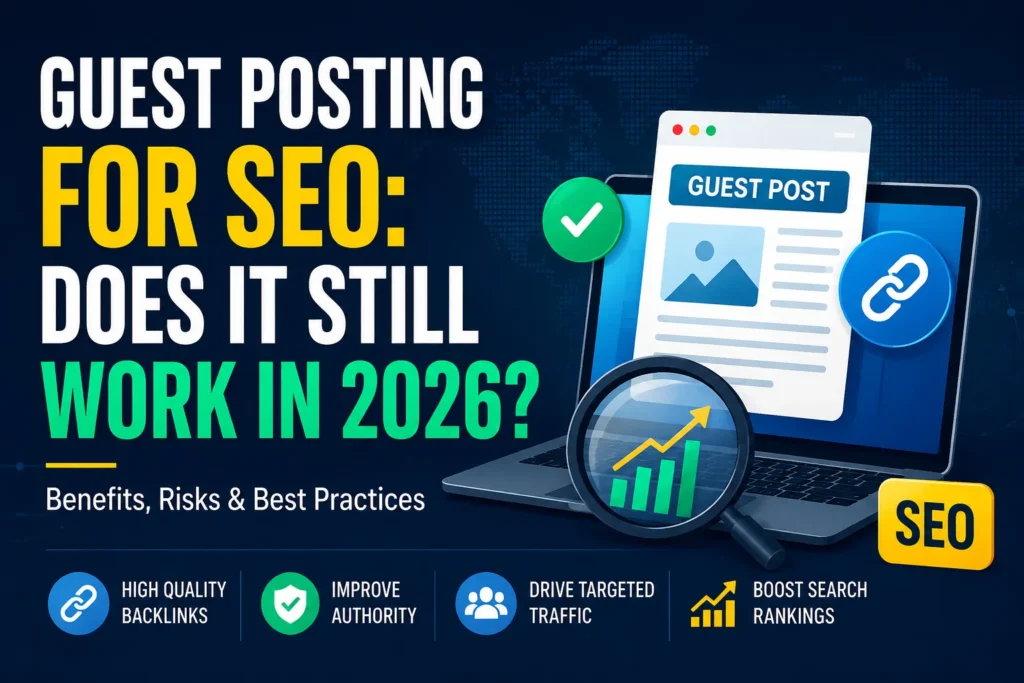

Guest Posting in 2026: The Truth About SEO Benefits
Guest posting is the practice of creating an original article for publication on another website, usually one that already has an established audience in your industry or niche. For SEO, guest posting can contribute to off-page visibility by putting your brand, expertise, and relevant website resources in front of a new audience. However, modern guest posting is no longer simply about placing as many backlinks as possible. Google’s current guidance emphasizes helpful, original, people-first content, while its spam policies specifically address links created primarily to manipulate rankings.
Guest Posting vs. Guest Blogging vs. Contributor Content
Guest posting, guest blogging, and contributor content are often used interchangeably because they describe a similar publishing model: an author creates content for a website other than their own. The difference is usually contextual rather than technical. A guest post may be a one-time contribution, while a contributor arrangement can involve publishing regularly. The important SEO distinction is not the label but the purpose and quality of the publication. A useful article written for a relevant audience is fundamentally different from thin content created only to obtain a backlink.
How Guest Posting Fits Into an Off-Page SEO Strategy
Guest posting sits within off-page SEO because the publication happens outside your own website. Instead of changing your site’s title tags, internal links, or page structure, you build visibility through external publications, relationships, references, and audiences. A strong guest-posting strategy can support brand awareness, referral traffic, topical credibility, and potentially useful links. The key is to treat guest posting as part of a broader authority-building strategy rather than making backlinks the only objective. That approach also aligns with Google’s people-first content guidance.
The Role of Backlinks, Referral Traffic, and Brand Exposure
Backlinks are only one possible outcome of a successful guest post. A well-placed article can introduce your business to readers who have never encountered your brand, generate referral visits, and establish your expertise within a particular topic. For example, a detailed marketing article published on a relevant industry website may attract readers who are already interested in SEO services. Even when a link does not provide ranking credit, the exposure itself can still have business value. The strongest campaigns therefore evaluate visibility, audience relevance, traffic, relationships, and conversions alongside links.
How a Typical Guest Posting Campaign Works From Start to Finish
A professional guest posting campaign usually starts with defining the target audience and identifying relevant publishers. Next comes website evaluation, topic research, personalized outreach, content creation, editorial review, publication, and performance tracking. Quality control should happen at every stage. Before accepting a publishing opportunity, check whether the site is genuinely relevant, maintains useful editorial content, and appears to serve real readers. After publication, monitor referral traffic, link status, rankings, and engagement. This process turns guest posting from a simple link-placement activity into a structured content and digital PR campaign.
Guest Posting for SEO in 2026: What Still Works?
Yes, but the answer depends heavily on what you mean by “work.” Guest posting can still contribute to SEO and online visibility in 2026 when it involves relevant websites, genuinely useful content, legitimate editorial relationships, and natural references. What has become far less defensible is mass-producing guest posts simply to accumulate ranking-focused backlinks. Google has stated that it has become significantly better at detecting and nullifying link schemes, while its current spam policies continue to prohibit links created primarily to manipulate rankings.
What Has Changed About Guest Posting Over the Years
Guest posting has moved from a volume-driven link-building tactic toward a quality-driven publishing strategy. Years ago, marketers could place large numbers of articles across loosely related websites and focus heavily on metrics such as domain authority or link counts. Search systems have become considerably better at identifying manipulative patterns. Google has specifically said that the effectiveness of link spam has been greatly reduced over the past two decades and that its systems have improved at detecting and nullifying link schemes.
Today, the surrounding context matters much more. A relevant publication with a real audience, useful editorial standards, and genuinely valuable content is far more meaningful than a random website offering hundreds of easy placements.
Why Quality and Relevance Matter More Than Link Volume
More backlinks do not automatically mean better SEO. A single relevant publication can be more valuable from a strategic perspective than dozens of unrelated placements, especially when the article reaches the right audience and strengthens your brand’s topical credibility. Google advises creators to produce original, helpful content rather than content designed primarily to attract search-engine traffic.
Relevance is therefore critical. A cybersecurity company contributing a practical article to a technology publication makes logical sense. The same company appearing on an unrelated website with an obviously inserted commercial link creates a much weaker editorial signal. In 2026, the goal should be relevance, usefulness, and credibility, not simply increasing the number shown in a backlink report.
When Guest Posts Can Benefit Your Organic SEO Strategy
Guest posts can support an SEO strategy when they are genuinely useful and published in places where the target audience actually exists. They can strengthen brand recognition, attract referral visitors, create legitimate editorial references, and help a company become more visible within its industry. They can also support content discovery when readers follow relevant references back to useful resources on your site.
The important point is that a guest post should make sense even without the SEO benefit. Ask a simple question: “Would this article still be worth publishing if the backlink did not exist?” If the answer is yes, the strategy is generally heading in a healthier direction. Google’s current guidance similarly emphasizes unique, valuable, people-first content rather than search-engine-first publishing.
When Guest Posting Is Unlikely to Produce Meaningful SEO Results
Guest posting becomes much less effective when the primary objective is simply acquiring links at scale. Publishing on unrelated sites, using repetitive anchor text, accepting low-quality articles, or targeting websites that exist mainly to sell links can create little genuine value. Google explicitly identifies buying or selling links for ranking purposes, advertorial links that pass ranking credit, and low-value content created primarily to manipulate rankings as link-spam practices.
There is also a practical business problem: a link from a site with no meaningful audience may send almost no referral traffic or brand exposure. Even if the placement looks impressive in an SEO report, it may contribute very little to actual growth. Quality control is therefore essential.
The Difference Between Modern Guest Posting and Outdated Link Building
Modern guest posting is centered on publishing value first and earning visibility as a result. Outdated link building often starts with a desired backlink, selects any website willing to publish it, and creates an article around that link. The difference may look small, but strategically it is huge.
A modern approach considers the publisher’s audience, topic relevance, editorial standards, reader intent, author expertise, and the usefulness of the finished article. If a placement is paid, the link should also be properly qualified according to Google’s guidance; Google recommends rel=”sponsored” for paid placements, with nofollow remaining an acceptable qualification.
The bigger lesson for 2026 is simple: guest posting can still work, but link manipulation is not a sustainable SEO strategy. Build publications that readers would actually want to read, and let the SEO value come from the quality and relevance of the overall contribution.
You might also like: How to Optimize Your Website for AI Search in 2026
How Google Treats Guest Posts and SEO Backlinks
Google does not treat every guest post or backlink as spam. The key issue is why the link exists and whether the content provides genuine value. Google’s current spam policies define link spam as creating links primarily to manipulate search rankings, and they specifically include paid articles, guest posts with optimized links, and low-value content created mainly to manipulate ranking signals. For publishers and marketers, this means guest posting should be approached as editorial content and audience development, not as a shortcut for manufacturing ranking signals. In 2026, Google’s systems also use automated spam detection, including SpamBrain, alongside manual actions.
Google’s Historical Concerns About Guest Blogging for Links
Google’s concern with guest blogging has never been that experts should not contribute useful articles to other websites. The problem has been the large-scale use of guest posts primarily to obtain ranking-focused links. This distinction is important: genuine contribution is different from publishing articles simply because a website agrees to place a backlink. The more a campaign resembles manufactured link acquisition, the greater the SEO risk.
Why Google Discourages Manipulative Link Building
Google discourages manipulative link building because search results are supposed to help users find useful and trustworthy information, not pages that have artificially manufactured ranking signals. Its current spam documentation defines link spam as creating links primarily to manipulate search rankings. Examples include buying or selling links for ranking purposes, excessive link exchanges, automated link creation, and low-value content produced mainly to manipulate links and rankings. Google also states that policy violations can lead to lower rankings or removal from Search.
Paid Guest Posts and the Importance of Proper Link Attributes
Paid publishing itself is not automatically a problem. The important issue is how the commercial relationship is communicated to Google. Google recommends using rel=”sponsored” for links that are advertisements or paid placements. rel=”nofollow” is also an acceptable way to qualify such links. This matters when a publisher charges for a sponsored article or placement. A transparent paid relationship should not be disguised as an editorial endorsement designed to pass ranking credit. Google specifically identifies paid guest posts and advertorials with links that pass ranking credit as examples of link spam.
Natural Editorial Links vs. Links Created Primarily for SEO
A natural editorial link exists because it helps readers understand or explore a topic. For example, an author discussing keyword research might reference a detailed research guide because it adds useful context. A link created primarily for SEO works differently: the article is produced mainly because someone wants a particular backlink, and the surrounding content exists to support that placement. Google has said that links can help it understand content when they are well deserved, while warning against methods designed to manipulate ranking systems. The practical goal should therefore be to make every link genuinely useful within the article.
How Link Spam Policies Should Influence Your Guest Posting Strategy
Google’s link spam policies should change how you evaluate guest posting from the beginning. Instead of asking, “How many backlinks can we build this month?” ask whether the publisher is relevant, whether the article would benefit its readers, and whether the link has a legitimate editorial reason to exist. Avoid campaigns built around excessive paid placements, manipulative anchor text, unrelated websites, or low-value articles. Google’s current policies explicitly mention optimized links in guest posts and low-value content created primarily for ranking manipulation. A quality-first approach also protects your strategy as Google’s automated spam systems continue to evolve.
What Makes a Guest Post Valuable for SEO in 2026?
A valuable guest post is more than an article with a backlink attached to it. In 2026, the strongest opportunities combine topic relevance, audience value, credible expertise, editorial quality, useful references, and genuine publishing standards. Google’s people-first guidance asks whether content provides original information, research, analysis, or a substantial and complete treatment of the subject. That same mindset works well for guest posting. Instead of evaluating a website only through SEO metrics, look at the entire publishing environment: who reads it, what subjects it covers, how consistently it publishes, whether its content is useful, and whether your contribution naturally belongs there.
Topical Relevance Between the Publisher and Your Website
Topical relevance is one of the first things to examine when choosing a guest posting opportunity. Your article should make sense on the website where it will appear, and the audience should have a legitimate reason to care about your subject. An SEO agency contributing a technical article to a marketing publication is naturally relevant; publishing the same article on an unrelated website simply because it accepts guest posts is much harder to justify. Relevance also improves the likelihood of meaningful referral traffic because readers are already interested in the broader subject surrounding your brand.
Real Organic Traffic and a Genuine Target Audience
A website can have impressive-looking SEO metrics and still provide little real-world value. Before pursuing a guest post, examine whether the publisher attracts an actual audience, publishes consistently, and receives organic visibility for topics related to your industry. Real readers matter because they create opportunities for referral traffic, brand discovery, engagement, and potential customers. Traffic should not be treated as a single magic number, either. Look at whether the site’s visitors are relevant to your business. A smaller, highly targeted publication can be more useful than a much larger site whose audience has little connection to your subject.
Editorial Standards, Expertise, and Content Quality
Strong editorial standards are another important quality signal. Look for publishers that maintain clear topics, readable articles, consistent formatting, author credibility, and meaningful editorial review. Your contribution should add something useful rather than repeating information readers can find everywhere else. Google’s people-first documentation encourages original information, research, analysis, and comprehensive coverage rather than content created primarily for search-engine manipulation. In practice, that means a guest article should demonstrate knowledge, answer real questions, and provide enough substance that readers would consider it valuable even if there were no backlink.
Natural Contextual Link Placement
A contextual link works best when it naturally supports the point being discussed. The surrounding sentence should explain why the resource is relevant instead of forcing a commercial keyword into an unrelated paragraph. Avoid stuffing several links into a short article or repeatedly using exact-match commercial anchor text. Google’s spam policies specifically identify optimized anchor text in paid articles, guest posts, and press releases as a potential form of link spam when used to manipulate ranking signals. A useful test is simple: if removing the link makes the paragraph substantially less useful, the reference probably has a legitimate contextual purpose.
Original Insights, Data, Examples, and Expert Contributions
Originality gives a guest post a reason to exist. Instead of rewriting the same advice already published across hundreds of websites, bring something new to the discussion. That could be first-hand observations, original research, industry data, practical examples, expert commentary, case-based lessons, or a fresh framework for solving a common problem. Google explicitly encourages content containing original information, reporting, research, or analysis. This is also where human expertise becomes especially valuable. A contributor who can explain what they have actually learned through experience can create content that is much harder to replace with generic, surface-level writing.
Why Domain Metrics Alone Should Not Determine Site Quality
Metrics such as Domain Authority, Domain Rating, or similar third-party scores can be useful for comparing websites, but they should never be the entire qualification process. These metrics are proprietary third-party measurements rather than Google ranking factors. A site can have a strong metric while offering little relevant traffic, weak editorial standards, or an obvious pattern of publishing paid links. Google’s own guidance focuses on the quality and legitimacy of links rather than a particular third-party domain score. For a smarter 2026 strategy, combine SEO metrics with relevance, organic visibility, audience quality, content standards, publishing history, and editorial credibility.
You might also like: Best AI SEO Tools for Small Businesses in 2026
How to Find and Evaluate High-Quality Guest Posting Websites
Finding guest posting websites is easy; finding websites worth publishing on is the real SEO skill. A large list of sites with high DA or DR does not automatically mean you have a valuable backlink opportunity. In 2026, site evaluation should combine topical relevance, organic visibility, audience quality, editorial standards, publishing history, and link patterns. Google’s documentation makes clear that links created primarily to manipulate rankings can fall under link spam, so quality should be evaluated before outreach, not after publication.
Finding Relevant Publishers Within Your Industry
Start by looking for publishers that already cover your industry, target audience, or closely related subjects. Search Google for industry-specific publications, contributor opportunities, expert roundups, and websites publishing content similar to your proposed topic. Relevance should come before domain metrics. A technology company, for example, should prioritize technology, software, cybersecurity, or business publications where its expertise naturally fits. Review several recent articles before contacting a publisher. If the site’s content has little connection to your niche, accepting a guest post simply because the site has a high authority score is usually a weak strategy.
Using Organic Traffic and Keyword Visibility as Quality Signals
Organic traffic can help determine whether a website has genuine search visibility, but it should never be treated as the only quality signal. Look at the keywords for which the site ranks, whether those keywords are relevant to your industry, and whether traffic appears distributed across useful pages rather than coming from a handful of unrelated terms. A sudden traffic decline can also deserve investigation before you commit to a placement. Remember that third-party SEO platforms estimate traffic rather than providing Google’s actual Search data. Use traffic and keyword visibility as evidence to investigate, not as guaranteed measurements of a site’s SEO value.
Checking Publishing History and Editorial Consistency
A website’s publishing history can reveal a surprising amount about its quality. Check whether it has consistently published useful content over time, whether articles have identifiable authors, and whether topics remain reasonably focused. Also look at recent posts rather than judging the site from its homepage alone. If the website suddenly publishes dozens of articles about unrelated industries, cryptocurrency, casinos, technology, health, and finance, that pattern may indicate a broad guest-post marketplace rather than a focused publication. Consistent editorial direction is generally a stronger quality signal than simply having a large number of indexed pages.
Identifying Link Farms, PBNs, and Low-Quality Guest Post Networks
Be cautious when a website appears to exist primarily for manipulating search rankings or selling backlinks. Warning signs can include large numbers of unrelated topics, excessive outbound commercial links, repetitive guest-post patterns, thin articles, anonymous publishing, and websites that openly advertise guaranteed ranking benefits. Private Blog Networks (PBNs) are particularly risky because they are designed to manipulate link signals through networks of controlled websites. Google’s spam policies specifically prohibit link schemes intended to manipulate rankings and include various forms of artificial link creation within its guidance. The goal should be to find real publications—not websites whose primary product is a backlink.
Evaluating Domain Authority, Domain Rating, and Other SEO Metrics
DA, DR, authority scores, referring domains, organic keywords, and estimated traffic can all be useful when comparing potential publishers, but none should be treated as Google’s official score for ranking a website. These metrics are created by third-party SEO platforms and use their own methodologies. A website with DR 70 is not automatically better than one with DR 35. Check the site’s relevance, traffic quality, backlink profile, content standards, and audience before making a decision. Think of SEO metrics as screening tools, not final verdicts. The strongest evaluation combines quantitative data with a manual review of the actual publication.
Building a Practical Guest Post Site Qualification Checklist
A simple qualification process can prevent wasted outreach and poor placements. Before accepting a website, check its topical relevance, audience, organic visibility, publishing consistency, content quality, backlink profile, outbound-link behavior, and editorial standards. Then ask whether the site would still be valuable if the backlink were removed. If the answer is yes, that is a strong sign that the publication has genuine audience or brand value. You can also create a scoring system—for example, rate relevance, traffic quality, editorial quality, and trustworthiness separately—so decisions are based on several signals instead of one impressive-looking metric.
How to Create Guest Posts That Earn SEO and Business Value
A high-quality guest post should accomplish more than placing a link. It should educate the publisher’s audience, demonstrate genuine expertise, strengthen your brand, and give readers a reason to visit your website. Google’s people-first content guidance emphasizes original information, substantial value, first-hand expertise, and content created primarily to help people rather than manipulate search rankings. That makes the writing process especially important. Instead of starting with an anchor text and forcing an article around it, start with the audience’s problem. Build a genuinely useful solution, then include relevant references only where they improve the reader’s experience.
Choosing Topics That Match the Publisher’s Existing Audience
Before pitching an idea, study the publisher’s existing content. Look at recent articles, popular themes, recurring questions, and the level of expertise expected from its readers. Your topic should fill a genuine gap without being completely disconnected from what the publication normally covers. For example, an SEO website may welcome an article about optimizing content for AI-powered search, while a general technology publication might prefer a broader topic about how AI is changing digital marketing. The closer the topic matches the audience’s interests, the more natural the publication becomes—and the more likely readers are to engage with it.
Creating Original, Useful, and Search-Friendly Content
Guest content should offer something readers cannot easily get from a dozen generic articles. Add original explanations, practical examples, useful frameworks, expert observations, data, or a clearer process for solving the problem. Search-friendly does not mean filling every paragraph with keywords. It means understanding the topic, covering the important subtopics, answering the user’s intent, and making the content easy to navigate. Google’s people-first guidance specifically encourages original information, research, analysis, and comprehensive value. The best guest posts therefore read like genuinely useful editorial content first and SEO content second.
Optimizing Headlines, Structure, and Search Intent Without Over-Optimization
A strong headline should accurately communicate the article’s benefit without making exaggerated promises. Use clear headings, short paragraphs, logical sections, examples, and transitions so readers can quickly understand the information. Search intent should guide the structure: if readers want a practical solution, give them actionable steps; if they are researching a concept, explain it clearly before moving into advanced details. Avoid repeating the primary keyword in every heading or paragraph. Modern SEO is less about mechanical keyword placement and more about accurately satisfying the topic and the reader’s underlying questions.
Using Author Expertise and First-Hand Insights to Strengthen Content
First-hand experience can make a guest post significantly more useful. Instead of writing generic statements such as “SEO is important for businesses,” explain what practitioners actually observe, what mistakes commonly occur, or how a process works in a real situation. Include original examples, lessons learned, expert commentary, or data when you can verify it. Google’s guidance encourages content that demonstrates first-hand expertise and provides original value. A credible author perspective also helps distinguish a contribution from mass-produced articles that simply rewrite information already available across the web.
Adding Backlinks Naturally Without Keyword-Stuffed Anchor Text
Links should support the reader rather than interrupt the article. If your website contains a detailed resource that genuinely explains a concept mentioned in the guest post, linking to it can be useful. Keep the anchor text natural and descriptive instead of repeatedly forcing an exact-match commercial keyword. Google’s spam policies specifically identify optimized links in guest posts and other paid articles as a potential link-spam practice when they are intended to manipulate ranking signals. The safest editorial mindset is simple: write the article first, identify genuinely useful references second, and never build the entire article around a desired backlink.
Turning a Guest Post Into a Genuine Resource Instead of a Link Placement
The strongest guest posts are resources readers would value even if they never clicked a single link. Include clear explanations, relevant examples, original insights, practical steps, and trustworthy references. Make the article fit naturally within the publisher’s editorial style rather than looking like an advertisement disguised as educational content. This approach also creates more opportunities beyond rankings: readers may remember your brand, visit your website, share the article, or return to your content later. In 2026, that broader value is what separates strategic guest publishing from outdated backlink placement. The link should be part of the value, not the reason the article exists.
Guest Post Outreach: How to Get Quality Publications in 2026
Effective guest post outreach is less about sending hundreds of emails and more about finding the right publishers and giving them a reason to say yes. Editors receive plenty of generic pitches, so a message that simply says “I want to write for your website” is easy to ignore. A stronger approach starts with publisher research, identifies a genuine content opportunity, and proposes a topic that fits the site’s audience. In 2026, personalization, relevance, originality, and professionalism matter more than outreach volume. The objective is not merely to secure one backlink but to build relationships with publications that can provide lasting editorial and business value.
Researching Publishers Before Sending an Outreach Email
Spend a few minutes researching every publisher before contacting them. Review their recent articles, target audience, content categories, author guidelines, and existing contributor content. Look for evidence that they actually publish external contributors and check whether your proposed subject fits their editorial direction. You can also identify the editor or content manager responsible for the relevant section. This preparation makes your pitch more specific and prevents obvious mistakes, such as suggesting a topic they recently published. Good outreach starts with understanding the publication rather than treating every website as another backlink opportunity.
Finding Content Gaps and Relevant Topic Opportunities
A strong pitch solves a content problem for the publisher. Look through recent articles and identify questions they have not covered thoroughly, outdated information that could be refreshed, or related subjects their audience would naturally want next. Search engines can help you discover related questions, while the site’s own content can reveal what its readers already care about. The best opportunity is usually somewhere between relevance and originality: the topic should fit the publication but offer a fresh angle. When you show an editor exactly what is missing and how your article will fill that gap, your pitch becomes much more compelling.
Writing Personalized Guest Post Pitches Editors Actually Want to Read
A good pitch should be short, specific, and focused on the publisher’s audience. Start by showing that you understand the publication, then introduce one or two relevant article ideas and briefly explain what makes each useful. Avoid sending a long biography or generic claims about being an “SEO expert.” Editors care primarily about whether the proposed article will be valuable to their readers. If you have relevant published work, include a small number of strong examples rather than a huge portfolio. Personalization does not mean writing an essay for every prospect; it means demonstrating that the email was actually written for that publication.
Following Up Without Becoming Spammy
Follow-ups can improve the chances of getting a response, but persistence should not become pressure. If an editor does not respond, send a brief and polite follow-up after a reasonable interval, reminding them of the proposed topic and making it easy to respond. Avoid sending repeated messages every few days or changing the subject line simply to get attention. A professional outreach process should have a clear stopping point. If there is still no response after a small number of follow-ups, move on. Respecting an editor’s inbox protects your reputation and keeps future communication possible.
Building Long-Term Relationships With Publishers and Editors
The most valuable outreach relationships often continue beyond a single guest post. If an editor accepts your contribution, deliver exactly what you promised, meet the deadline, respond professionally to revisions, and avoid unnecessary promotional language. After publication, share the article through your relevant channels and thank the editor for the opportunity. Over time, reliable contributors can become trusted sources for future topics, expert quotes, updates, or recurring contributions. This relationship-based approach can produce better opportunities than constantly searching for new websites. In practical terms, one trusted publisher can be more valuable than dozens of anonymous placement opportunities.
Common Outreach Mistakes That Reduce Acceptance Rates
Several mistakes can make an otherwise good pitch easy to reject. Common examples include using the wrong editor’s name, pitching irrelevant topics, sending identical emails to every website, requesting multiple commercial backlinks immediately, ignoring contributor guidelines, and writing vague subject lines. Another mistake is focusing entirely on what you want rather than what the publication gains. Editors are managing an audience and an editorial calendar, not running a backlink service. Your pitch should therefore answer a simple question: Why would publishing this article make the website better? If that answer is clear, your outreach becomes much stronger.
You might also like: How to Get Cited in AI Search Results in 2026
Guest Posting Mistakes to Avoid for Better SEO Results
Guest posting can become expensive when campaigns prioritize quantity, metrics, and backlink counts over actual publishing quality. Paying for placements is especially risky when websites have little relevance, weak audiences, or obvious patterns of selling links. Google’s spam policies identify links created primarily to manipulate rankings as link spam and specifically discuss practices involving paid links, optimized guest-post links, and low-value content created for ranking manipulation. A successful campaign therefore needs quality controls before money is spent. Every placement should have a clear reason to exist beyond the backlink itself, whether that value comes from relevant readership, brand exposure, referral traffic, or legitimate editorial contribution.
Publishing on Irrelevant or Low-Quality Websites
One of the easiest ways to waste a guest posting budget is choosing websites simply because they accept submissions. A high-authority domain in an unrelated industry may provide little meaningful value to your business. Examine the site’s topics, audience, traffic sources, publishing standards, and recent content before accepting an opportunity. Also watch for websites publishing large quantities of unrelated commercial articles. Relevance matters because the right audience is more likely to read, trust, and act on your content. A smaller publication that genuinely serves your niche can often be more strategically useful than a large but completely unrelated website.
Buying Large Numbers of Guest Posts for Link Volume
Buying large quantities of placements creates a dangerous incentive: once you have committed to a monthly backlink target, quality can easily become secondary. Google’s documentation states that buying or selling links for the purpose of manipulating search rankings can fall under link spam. A better approach is to evaluate each opportunity individually and publish fewer, stronger contributions. If a paid publication is legitimate advertising or sponsorship, it should be treated transparently and use appropriate link qualification. but “Which publications are genuinely worth being associated with?”
Using Exact-Match Anchor Text Too Aggressively
Exact-match anchor text becomes problematic when the same commercial keyword is repeatedly inserted into guest posts solely to influence rankings. Google’s spam documentation specifically identifies optimized anchor text in guest posts and other articles as a potential link-spam tactic when used for ranking manipulation. Natural linking is usually more varied because real writers choose anchor text based on context. Sometimes a brand name makes sense; sometimes a descriptive phrase works better; sometimes a plain URL or no link at all is appropriate. The anchor should help the reader understand where the link leads rather than act as a forced ranking signal.
Publishing Thin, Generic, or AI-Generated Content Without Editorial Value
AI can assist with research, brainstorming, outlining, and editing, but simply generating large numbers of generic guest posts creates little competitive advantage. Google’s people-first guidance emphasizes original information, useful analysis, first-hand expertise, and content created to help users rather than primarily to manipulate search rankings. The issue is therefore not whether a tool was involved in producing the draft; the issue is whether the finished article provides genuine value. Add expert review, original examples, accurate information, useful data, and meaningful editorial judgment. A polished but generic article is still generic.
Ignoring Website Traffic, Audience Quality, and Publishing Patterns
Investigate where visitors come from, what topics generate visibility, whether the traffic is relevant to your industry, and whether the site has a stable publishing pattern A website that appears powerful through a single SEO metric may have very little audience value. Before paying for a placement, ask whether the people reading that publication are actually potential customers, industry professionals, or relevant members of your target audience.
Measuring Success by DA or DR Instead of Business Outcomes
DA and DR can be useful for prospecting, but they are not business outcomes and should not become the main KPI for a guest posting campaign. Track metrics that tell you whether the investment is accomplishing something meaningful: referral visits, engaged sessions, relevant audience exposure, leads, assisted conversions, brand mentions, and improvements in overall visibility. Also monitor the quality and indexation status of published links where relevant. A DR 70 placement that sends zero relevant visitors may be less useful than a lower-metric publication that consistently introduces your brand to potential customers. SEO metrics should support your decision-making, not replace it.
Scaling Guest Posting Without Sacrificing Quality
Scaling does not mean publishing as many guest posts as possible. It means creating a repeatable process that maintains the same quality standards as volume increases. Build a vetted publisher database, define minimum qualification criteria, standardize research and editorial checks, and maintain a manageable publishing schedule. Keep each article original and tailored to its publication instead of recycling the same content across multiple websites. Google’s spam guidance makes it particularly important to avoid patterns that resemble mass-produced or manipulative link acquisition. The best scalable system is therefore process-driven, but still quality-controlled by humans.
How to Measure the SEO Impact of Guest Posting
Measuring guest posting properly requires looking beyond the number of backlinks acquired. A successful campaign should be evaluated through a combination of link quality, referral traffic, organic visibility, brand exposure, conversions, and overall business impact. Google Search Console can help website owners monitor Search performance through impressions, clicks, queries, pages, and countries, while newer 2026 reporting also includes dedicated visibility data for generative AI features on Search for a subset of sites. This broader measurement approach helps separate placements that merely look impressive in an SEO spreadsheet from publications that actually contribute to meaningful growth.
Tracking Backlink Indexation and Link Quality
After a guest post is published, check that the page is accessible to search engines and that the intended link appears correctly. However, don’t assume that every published backlink will be indexed or pass ranking value. Google does not guarantee that every page it discovers will be included in its index, and spammy links can be ignored or have their effects neutralized. Review the linking page, destination URL, anchor text, placement, and link attribute. If the placement is sponsored or paid, Google recommends using rel=”sponsored”; nofollow remains an acceptable qualification.
Measuring Referral Traffic From Published Guest Posts
Referral traffic is one of the clearest ways to determine whether a guest post is reaching real people. Use analytics to monitor visits arriving from the publisher, then examine engagement rather than focusing only on sessions. Look at engaged visits, pages viewed, returning visitors, sign-ups, and other meaningful actions. A publication that consistently sends relevant visitors can have genuine business value even when its backlink provides little or no direct ranking benefit. This is why a good guest post should be useful to readers first. If people actually click through because the article helped them, the placement is doing something valuable beyond simply appearing in a backlink report.
Monitoring Keyword Rankings and Organic Visibility
Guest posting should not be judged by ranking changes alone because organic visibility is influenced by many factors, including content quality, competition, technical SEO, internal linking, search demand, and algorithmic changes. Still, track important target queries before and after a campaign to identify broader trends. Google Search Console provides data on impressions, clicks, queries, and pages, making it useful for monitoring Search performance over time. Keep the analysis realistic: a ranking improvement occurring after several guest posts does not prove that one specific link caused it. Look for consistent patterns across multiple campaigns and time periods instead of assuming direct causation.
Evaluating Brand Mentions, Leads, and Assisted Conversions
Not every guest post produces an immediate sale, and that’s perfectly normal. Some publications primarily create awareness and introduce your brand to people who may convert later through another channel. Track branded searches, direct visits, referral conversions, newsletter sign-ups, inquiries, and other relevant actions where possible. UTM parameters can make referral campaigns easier to distinguish in analytics. Also consider assisted conversions when evaluating the full customer journey. A reader might discover your company through a guest article, return through Google several days later, and eventually become a customer. Looking only at the final click would hide the original contribution.
Comparing Guest Posting With Other Link-Building Strategies
Guest posting should compete for your SEO budget against other authority-building activities, including digital PR, expert contributions, original research, linkable assets, industry partnerships, and content promotion. Compare strategies using the same core outcomes: cost, qualified referral traffic, earned mentions, relevant links, leads, conversions, and long-term visibility. A strategy that produces fewer links but substantially more qualified visitors may be more valuable than one that produces hundreds of low-engagement placements. Google’s guidance consistently emphasizes high-quality content and discourages manipulating links for ranking purposes. The right strategy is therefore the one that creates the strongest overall value, not simply the largest backlink count.
How to Decide Whether a Guest Posting Campaign Is Worth Continuing
Review the campaign at regular intervals and classify placements into strong, average, and weak performers. Strong placements usually combine relevant audiences, quality content, legitimate editorial standards, useful referral traffic, and measurable business value. If a campaign produces only low-quality links, little traffic, and no meaningful brand or conversion impact, continuing simply because you have a monthly publishing target makes little sense. Also review whether the campaign remains compliant with Google’s spam policies. Google says spammy links can be neutralized, meaning previously obtained ranking benefits may disappear when those links are reassessed. Keep investing where the evidence shows genuine value.
The Future of Guest Posting and the Best SEO Strategy for 2026
Guest posting is unlikely to disappear, but its role in SEO is changing. The future belongs less to mass backlink acquisition and more to expert publishing, brand visibility, topical relevance, digital PR, and genuinely useful content. Google’s 2026 guidance for generative AI search reinforces that existing SEO fundamentals remain relevant because AI features rely on Google’s core Search systems to retrieve useful information. Google also recommends creating unique, non-commodity content that satisfies visitors rather than content produced simply to gain search exposure. That means guest posting can remain useful, but only when it contributes real value to the web ecosystem.
Guest Posting vs. Digital PR and Earned Media
Guest posting and digital PR overlap, but their objectives can be different. Guest publishing typically involves creating useful content for a relevant publication, while digital PR often focuses on earning media coverage, expert mentions, news exposure, original research citations, or brand references. Digital PR can create wider visibility when a story or research finding attracts journalists and publications organically. Guest posting offers more control over the topic and contribution, while earned media generally provides less control but can produce significant brand exposure. A modern SEO strategy does not need to choose only one. The two approaches can complement each other when both prioritize relevance and genuine editorial value.
Guest Posting vs. Linkable Assets and Organic Link Earning
Linkable assets are resources specifically valuable enough that other websites may want to reference them naturally. Examples include original research, industry surveys, useful calculators, detailed studies, unique datasets, comprehensive resources, and genuinely valuable visual resources. Guest posts can introduce these assets to relevant audiences, while the assets themselves can continue earning references over time. This creates a useful distinction: instead of building every backlink manually, you create something worth citing and then promote it to the right people. The combination of high-quality content + strategic promotion + natural editorial references can create a more durable authority-building system than relying entirely on paid placements.
How AI Search and Changing SERPs Affect Guest Posting
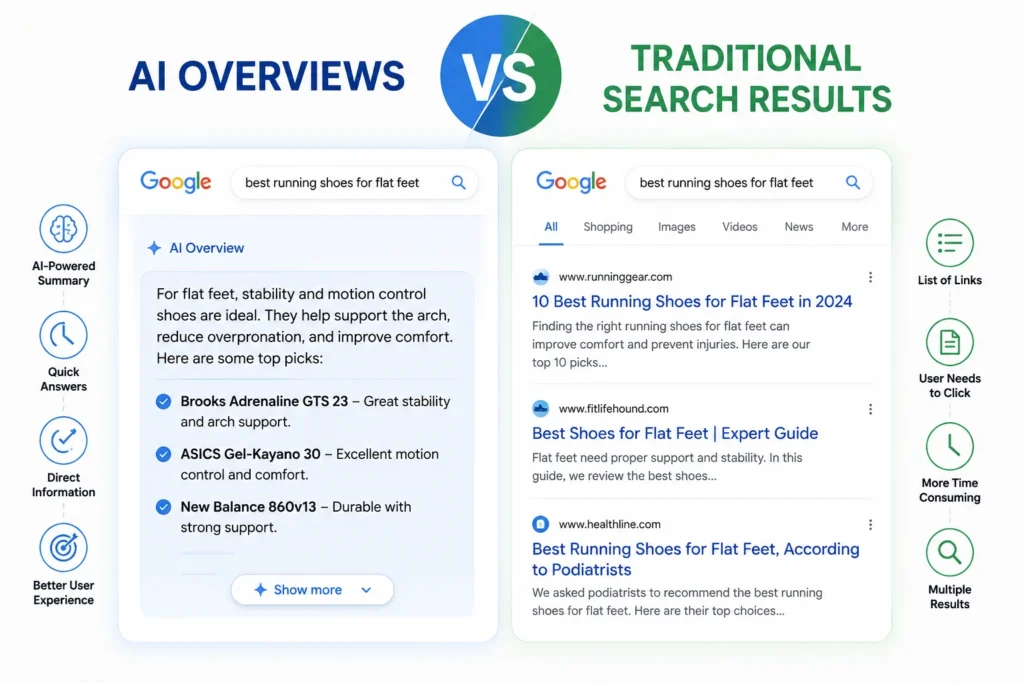
Google’s search experience is increasingly incorporating AI-generated features, including AI Overviews and AI Mode. Google says its generative AI experiences are grounded in its Search index and core ranking and quality systems, meaning established SEO principles remain relevant. For guest posting, this makes brand credibility, distinctive expertise, original information, and strong topical associations increasingly important. Publishing generic articles simply to obtain links is unlikely to be a strong long-term strategy in an increasingly AI-driven search environment.
Why Brand Authority and Topical Relevance Matter More Than Link Quantity
Link quantity can be an easy metric to report, but it does not tell the complete story. A large number of unrelated or manipulative links can be ignored by Google’s systems, while a relevant publication can introduce your expertise to exactly the audience you want to reach. Google explicitly states that link spam can be detected and that its systems can neutralize the effects of spammy links. This makes topical relevance and brand credibility increasingly important strategic assets. Instead of asking how many links your competitors have, ask where they are mentioned, what subjects they are associated with, and whether respected publications recognize their expertise.
Building a Sustainable Guest Posting Strategy That Prioritizes Users
A sustainable strategy starts with the audience rather than the backlink. Build a list of relevant publications, research their readers, identify genuine content gaps, and pitch useful topics. Create original articles with expert input, accurate information, practical examples, and clear editorial value. Keep links limited to places where they genuinely help the reader, and properly qualify paid or sponsored links according to Google’s guidance. Most importantly, avoid creating large volumes of nearly identical content. Google’s current guidance warns that using generative AI or other systems to produce many pages without adding value can violate its scaled content abuse policy. Quality control should remain central as the campaign grows.
Conclusion
Guest posting remains a valuable SEO and digital marketing strategy in 2026, but its success depends entirely on quality, relevance, and genuine editorial value. The days of publishing large numbers of low-quality articles solely for backlinks are largely over. Google’s spam policies and increasingly sophisticated ranking systems continue to reduce the effectiveness of manipulative link-building tactics while rewarding content that serves real users.
The most successful guest posting campaigns focus on reaching the right audience, contributing useful expertise, building industry relationships, and strengthening brand authority. A high-quality guest post can generate referral traffic, improve visibility, increase trust, and create long-term business opportunities beyond SEO alone.
Rather than asking how many backlinks a guest post can provide, businesses should ask whether the publication reaches their ideal audience and whether the content genuinely adds value. When guest posting is treated as a content marketing and authority-building strategy instead of a shortcut for rankings, it can still play an important role in a modern SEO campaign.
Ultimately, guest posting still works in 2026, but only when it prioritizes readers, relevance, expertise, and long-term credibility.
FAQs
Does Guest Posting Still Work for SEO in 2026?
Yes. Guest posting can still support SEO when it involves relevant websites, useful content, and genuine editorial value. However, low-quality guest posting campaigns focused solely on acquiring backlinks are far less effective than they were in the past.
Does Google allow guest posting for SEO?
Google allows guest posting as long as the primary purpose is to provide valuable content for readers. Problems arise when guest posts are created mainly to manipulate search rankings through artificial link-building practices.
How Often Should You Publish Guest Posts for SEO?
There is no ideal number. Publishing a few high-quality guest posts on relevant websites is usually more beneficial than publishing dozens of low-quality articles on unrelated sites. Focus on quality over quantity.
Are paid guest posts bad for SEO?
Not necessarily. Paid placements can be legitimate advertising opportunities. However, Google recommends properly qualifying paid links using attributes such as rel=”sponsored” or nofollow when appropriate.
What makes a guest posting website high quality?
A high-quality guest posting website typically has topical relevance, real organic traffic, consistent publishing standards, useful content, and an engaged audience. Editorial quality and audience relevance are often more important than domain metrics alone.
Should I focus on DA or DR when selecting guest posting sites?
DA and DR can help compare websites, but they should not be the only factors used when evaluating opportunities. Relevance, traffic quality, editorial standards, and audience value are equally important.
Can guest posting increase website traffic?
Yes. Guest posts can generate referral traffic from readers who click through to your website. They can also increase brand awareness and expose your business to new audiences.
What is the biggest guest posting mistake to avoid?
The biggest mistake is prioritizing backlinks over value. Publishing on irrelevant websites, using overly optimized anchor text, and creating content solely for link placement can reduce the effectiveness of a guest posting strategy.
Is guest posting better than digital PR?
They serve different purposes. Guest posting provides more control over the content and message, while digital PR focuses on earning mentions, media coverage, and editorial attention. Many successful SEO strategies combine both approaches.
What is the future of guest posting?
The future of guest posting will focus more on expertise, topical authority, audience relevance, and content quality. As AI-powered search continues to evolve, websites that provide unique insights and genuine value are likely to benefit the most.
✨ Don’t stop here, follow newtopy for daily upgrades.